Yu Garden and Yuyuan Bazaar get treated as one attraction in most photos, but they're genuinely two different things, and knowing which is which changes how you plan the visit.
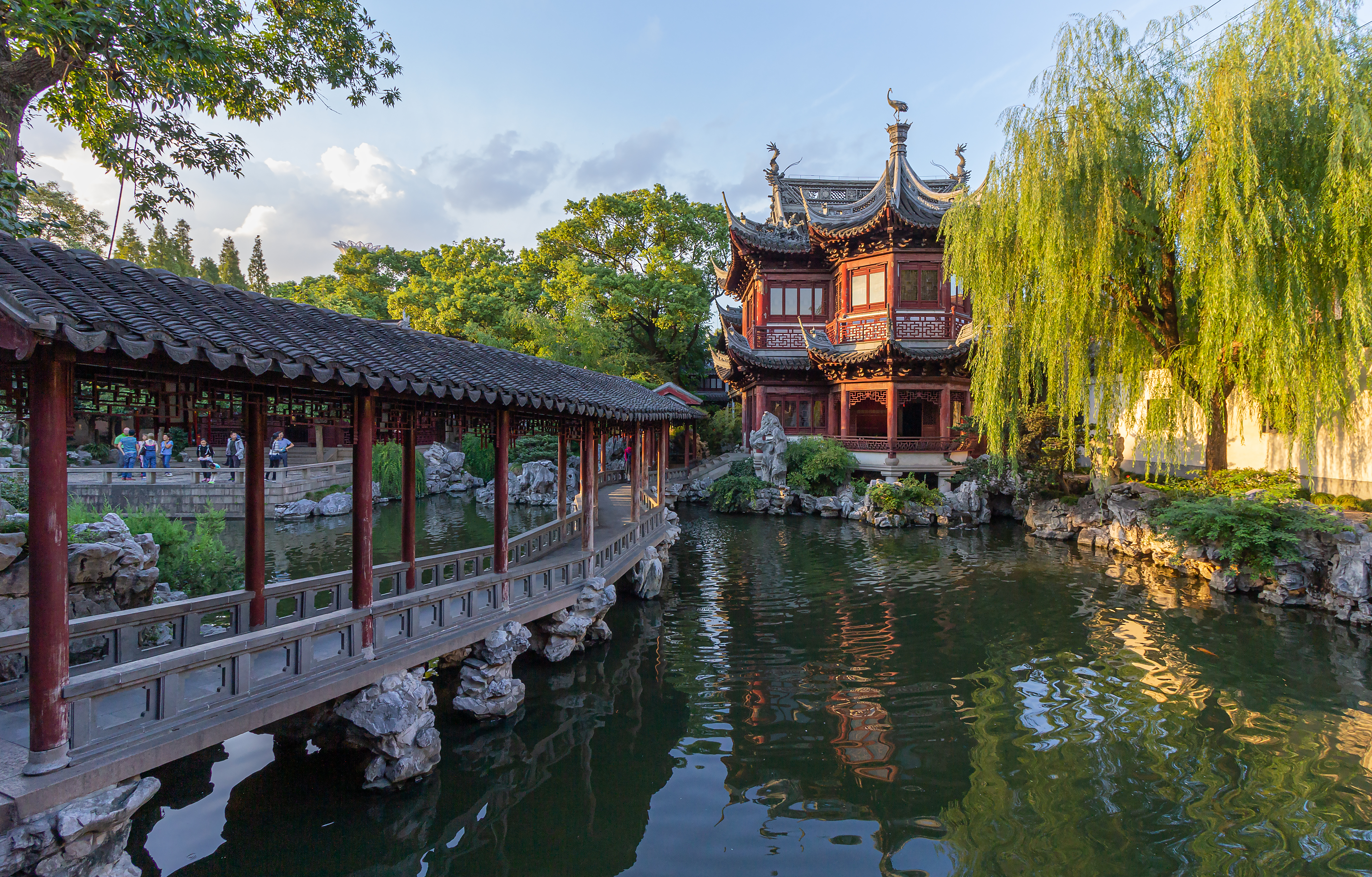
The garden itself is the real historical site — a walled Ming-dynasty classical garden, built by Pan Yunduan starting in 1559 as a retreat for his aging father. "Yu" means peace and comfort, and Pan's perfectionism over the design meant construction dragged on nearly 20 years, phase by phase, before the garden was finished in 1590. Every pavilion and courtyard was named after a line of poetry, and the layout is Shanghai's only fully preserved example of classical South China garden design — rockeries, ponds, covered walkways, and sightlines built to reveal a new composed view around every corner rather than one open vista.
Everything around the garden's walls — the crowded lanes, the snack stalls, the shops selling everything from silk to souvenirs — is Yuyuan Bazaar, a separate, free, open-late market that most first-time visitors assume is part of the ticketed garden. It isn't. You can spend a full evening in the bazaar without ever buying a garden ticket, and plenty of visitors do exactly that.
The garden itself is ticketed: ¥40 April-June and September-November, ¥30 July-August and December-March, open 8:30am-5:30pm in the warmer months (5pm November-February), closed Mondays except on national holidays. The bazaar around it stays open until roughly 10pm, well past the garden's own closing time.
Visit the garden itself in the morning on a weekday if you can — it draws real crowds, and the composed, quiet-garden effect the original design was built for is easiest to actually experience before the lanes fill up. Save the bazaar for evening, when the lantern lighting and street-food crowds are part of the atmosphere rather than an obstacle to it.
Why it's special
Most of what a first-time visitor calls "Yu Garden" is actually the free bazaar around it — genuinely worth the visit on its own, but a different experience entirely from the ticketed Ming garden inside the walls. Knowing the two are separate, and that one rewards a quiet morning while the other rewards a crowded evening, is the difference between visiting Yu Garden well and visiting it by accident on the way to dinner.
Insider tips
- 1