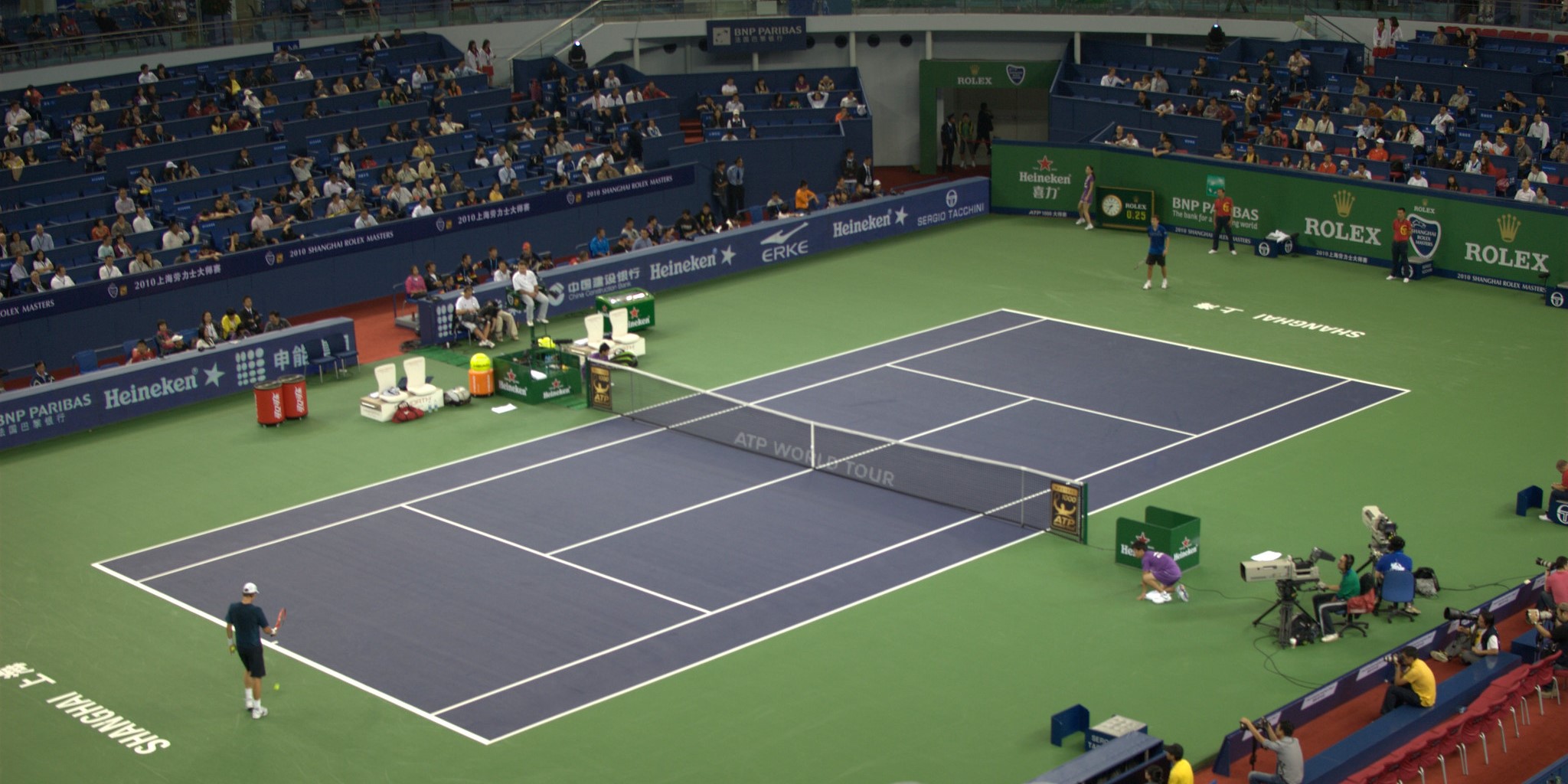
Qizhong opened on 5 October 2005, purpose-built for that year's Tennis Masters Cup — the same event that's now the Nitto ATP Finals, before it moved to London's O2 Arena in 2009 and then Turin in 2021. Shanghai hosted the Masters Cup through 2008, and in 2009 the city kept the building and gave it a new tenant: the Shanghai Masters, still the only ATP Masters 1000 not played in Europe or North America.
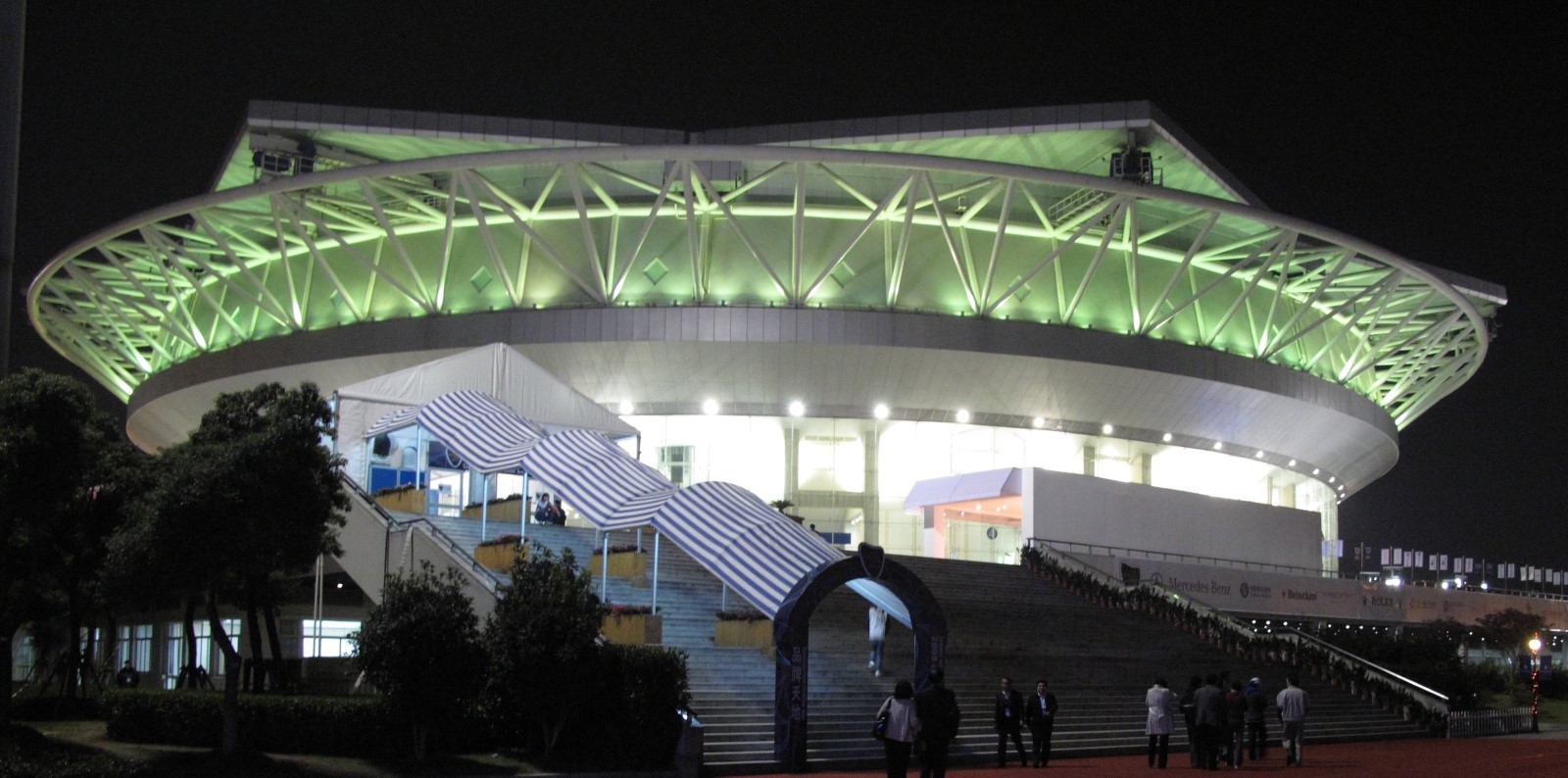
The roof is the reason people photograph this place before they've watched a single point. Eight steel petals, each weighing two tons, open and close in a spiral that takes about eight minutes, styled after a blooming magnolia — Shanghai's official city flower. It isn't decoration bolted on for the photos; the retractable design is what lets Qizhong host outdoor sessions in good weather and fully covered play when it rains, which matters more in early October than the marketing shots suggest.
Center Court seats 13,779 — smaller than it looks on TV, which is exactly why the atmosphere runs tighter and louder than most Masters 1000 venues. Two more show courts back it up: Grandstand 2 holds 5,000 under its own retractable canopy, and Grandstand 3 seats 3,000. Beyond the three showcourts, the wider 80-hectare complex carries dozens more practice and qualifying courts, part of why the walk between matches can take longer than a first-time visitor expects — this isn't a compact European stadium footprint.
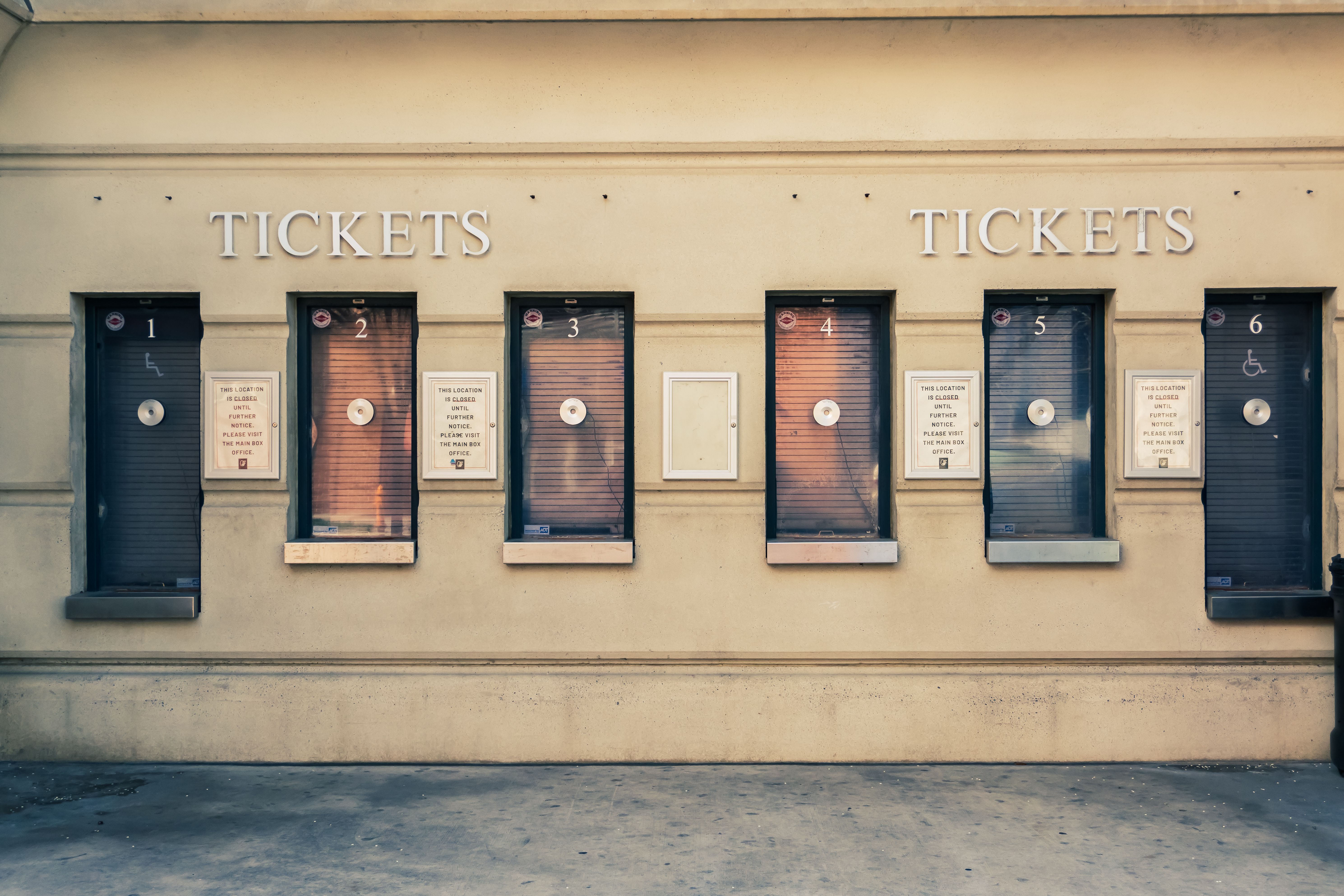
The ticketing structure lets you flex around the draw rather than commit everything to one court. A grounds pass gets you into the outer courts and practice areas, where you can watch top-20 players warm up from a few metres away with none of the queueing Center Court requires in the tournament's second week.
Why it's special
This is the arena where the ATP's marquee November finale used to live before Europe won it back — and the fact that Shanghai kept building on that legacy rather than treating 2009 as a downgrade is exactly why the roof still works overtime today. You're not watching tennis in a repurposed multi-use dome; you're inside a building designed, from its first blueprint, around one sport and one spectacle. That specificity shows in details a generic arena wouldn't bother funding: sightlines built for tennis's low, fast trajectories, and a roof mechanism that exists purely because Shanghai's early-October weather can't be trusted for eight straight days of outdoor play.