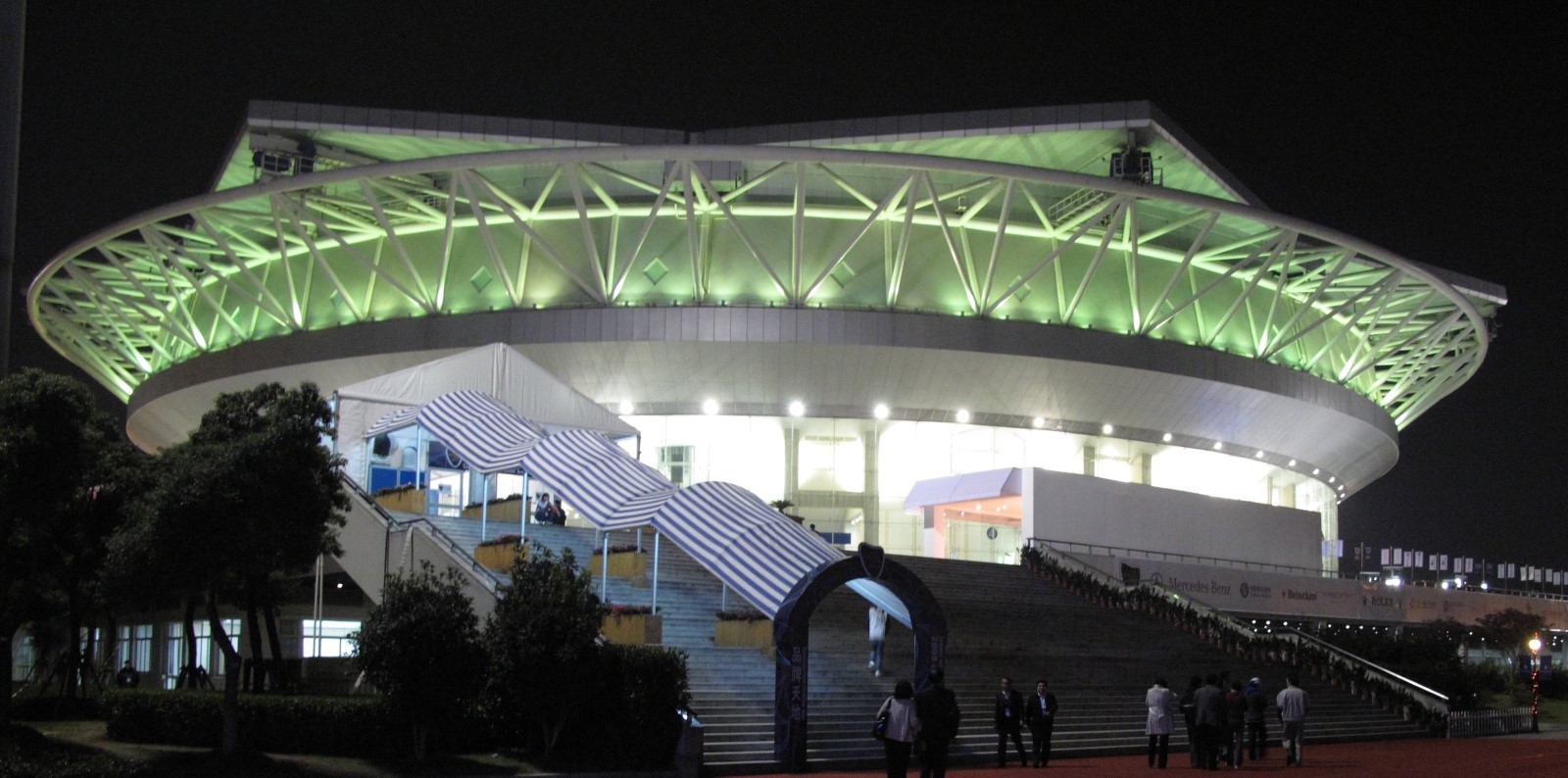
Center Court is Qizhong's marquee stadium and the reason the venue looks the way it does from above — an indoor arena seating 13,779, topped by a retractable steel roof built from eight petal-shaped sections, each weighing two tons, that rotate open and closed around a central shaft in a deliberate pinwheel motion modeled on Shanghai's official city flower, the magnolia. The full roof takes eight minutes to open or close, and watching it move — usually before a match if rain is a possibility, or reversed at day's end — is a genuine spectacle in its own right, distinct from anything else on the tournament calendar.
The roof isn't just architectural theatre. It's a real functional advantage in a city with real October rain risk: Center Court sessions can continue under a closed roof when an outer-court match would be suspended, which matters if you've built a trip around watching specific players and don't want a downpour to cost you a day.
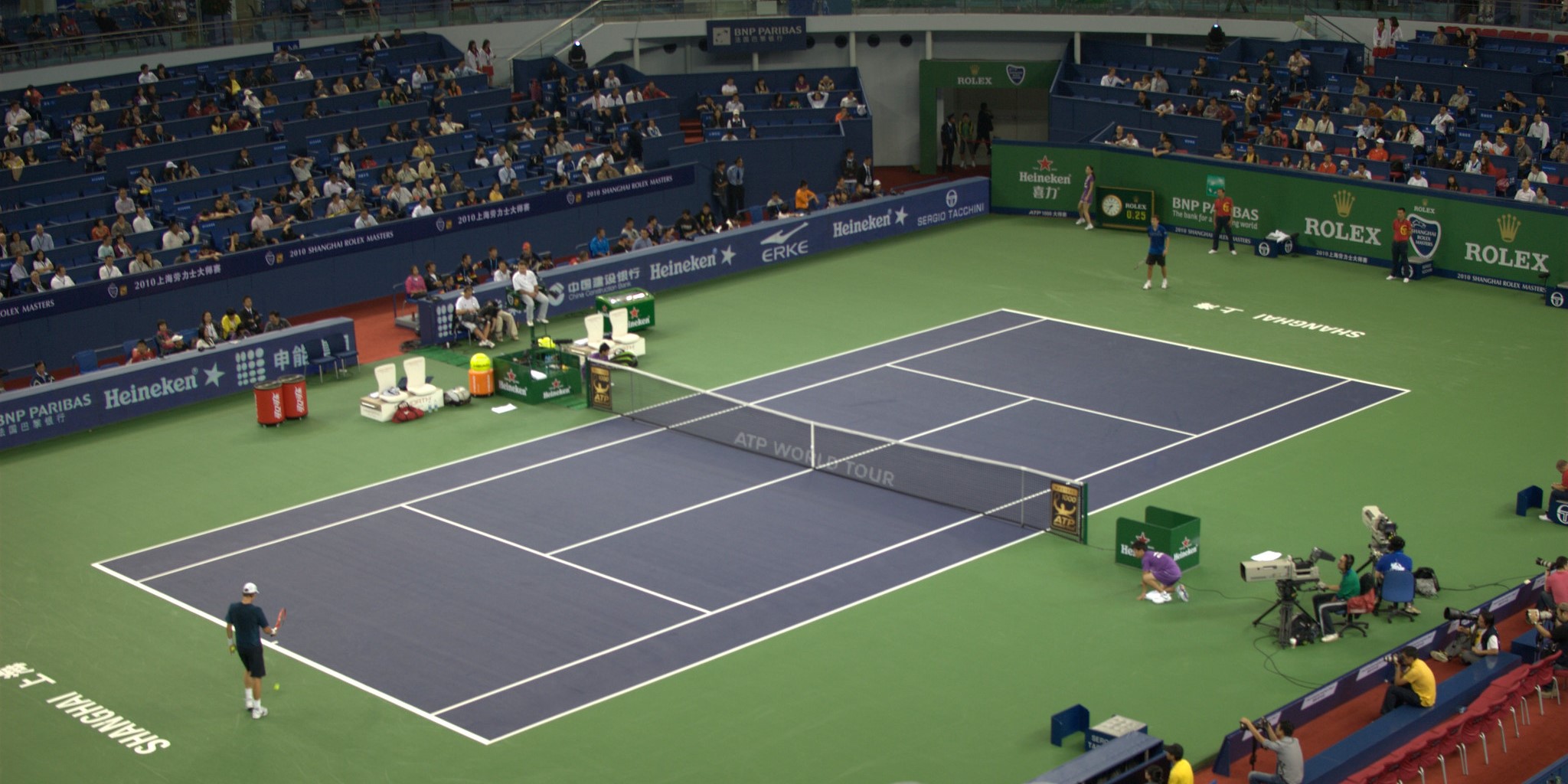
Inside, the bowl is steep and close by big-stadium standards — nothing here approaches Arthur Ashe's scale, and that's a genuine advantage for atmosphere. Even the upper tiers stay meaningfully connected to the court, and the roof's acoustics tend to hold crowd noise in rather than letting it dissipate the way an open-air stadium does, so Center Court sessions here have a reputation for feeling louder and more contained than their seat count alone would suggest.
Why it's special
Most Masters 1000 venues are functional bowls that happen to host great tennis. Center Court is a real architectural statement first — the magnolia roof isn't decoration bolted onto a generic stadium, it's the building's entire organizing idea, and it produces a genuinely different in-person experience (the roof motion, the contained acoustics, the weather-proofing) than the tournament's own outer courts or any other stop on the tour.
Insider tips
- 1
If the roof is closed when you arrive and the forecast is clear, don't assume the match is delayed for weather — it's sometimes closed pre-emptively and reopened once the risk passes, so check the actual match status rather than reading the roof position as a signal on its own.
- 2