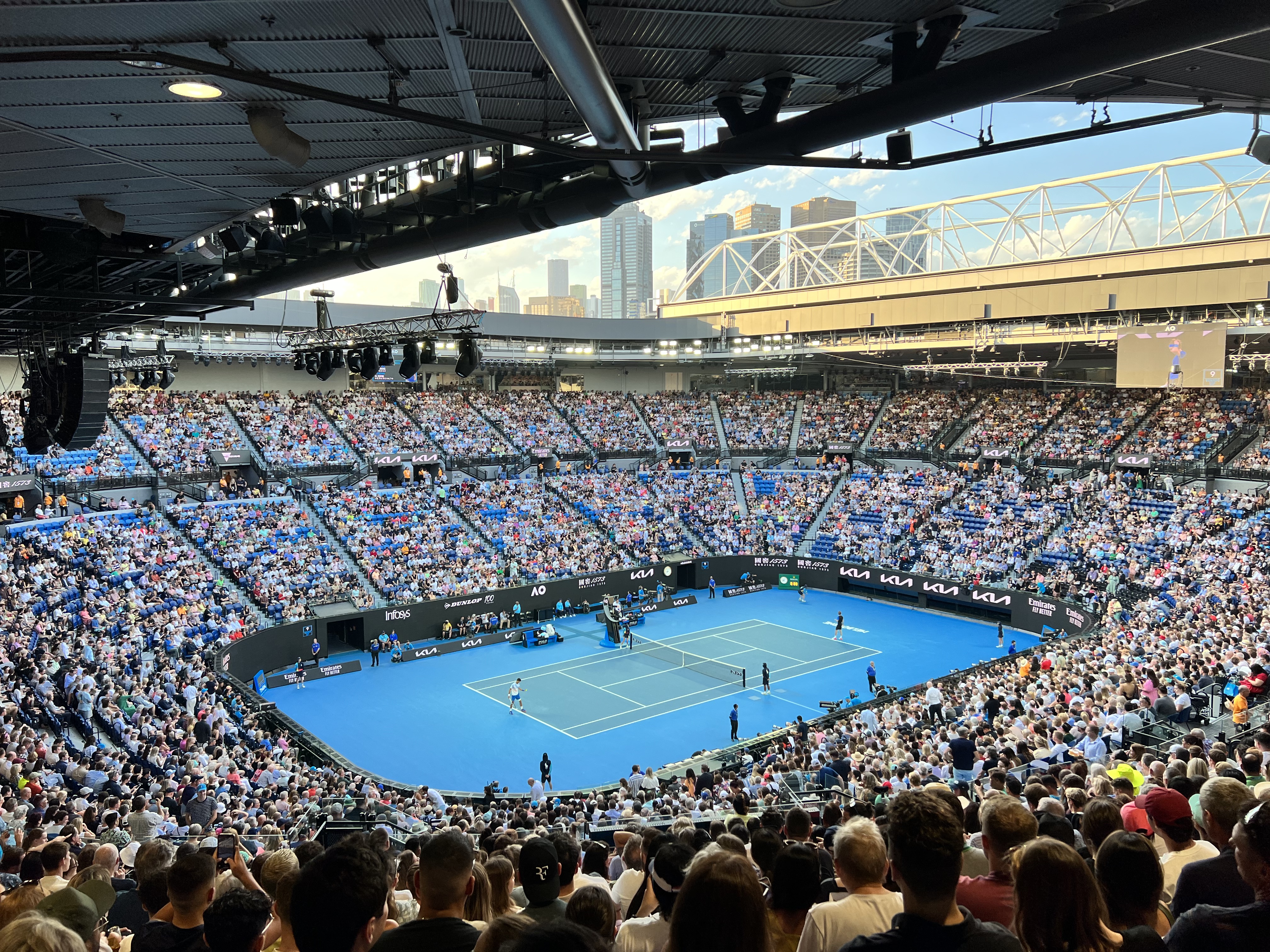
Rod Laver Arena is the reason Melbourne can promise you tennis rain or shine. When it opened in January 1988, replacing the old grass courts at Kooyong, it was the first tennis venue anywhere in the world built with a retractable roof — two arched, rolling sections that seal the court off from Melbourne's famously unpredictable January weather. The roof took 20 to 30 minutes to close in 1988; after a refurbishment it now shuts in about five, which matters when a storm cell rolls in mid-match and the tour needs to keep playing.
The arena held 14,820 people for tennis when it opened and still does. It was called the National Tennis Centre, then Centre Court, before Tennis Australia renamed it Rod Laver Arena in January 2000, honoring the only man to complete the calendar-year Grand Slam twice, in 1962 and 1969. Laver has been seen courtside at his namesake arena most years since. Australia's most recent Davis Cup win at home, the 2003 final against Spain, was played and won here.
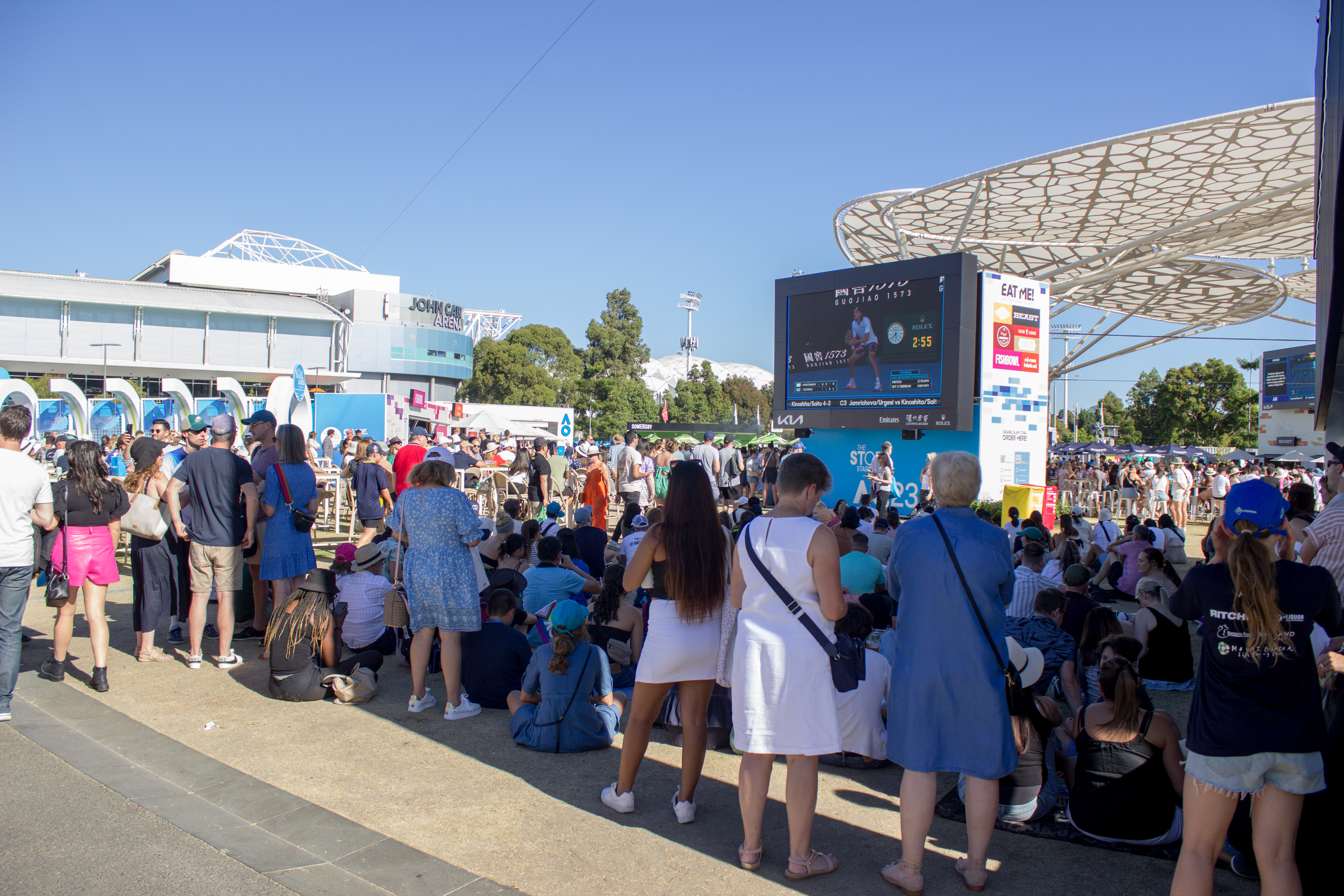
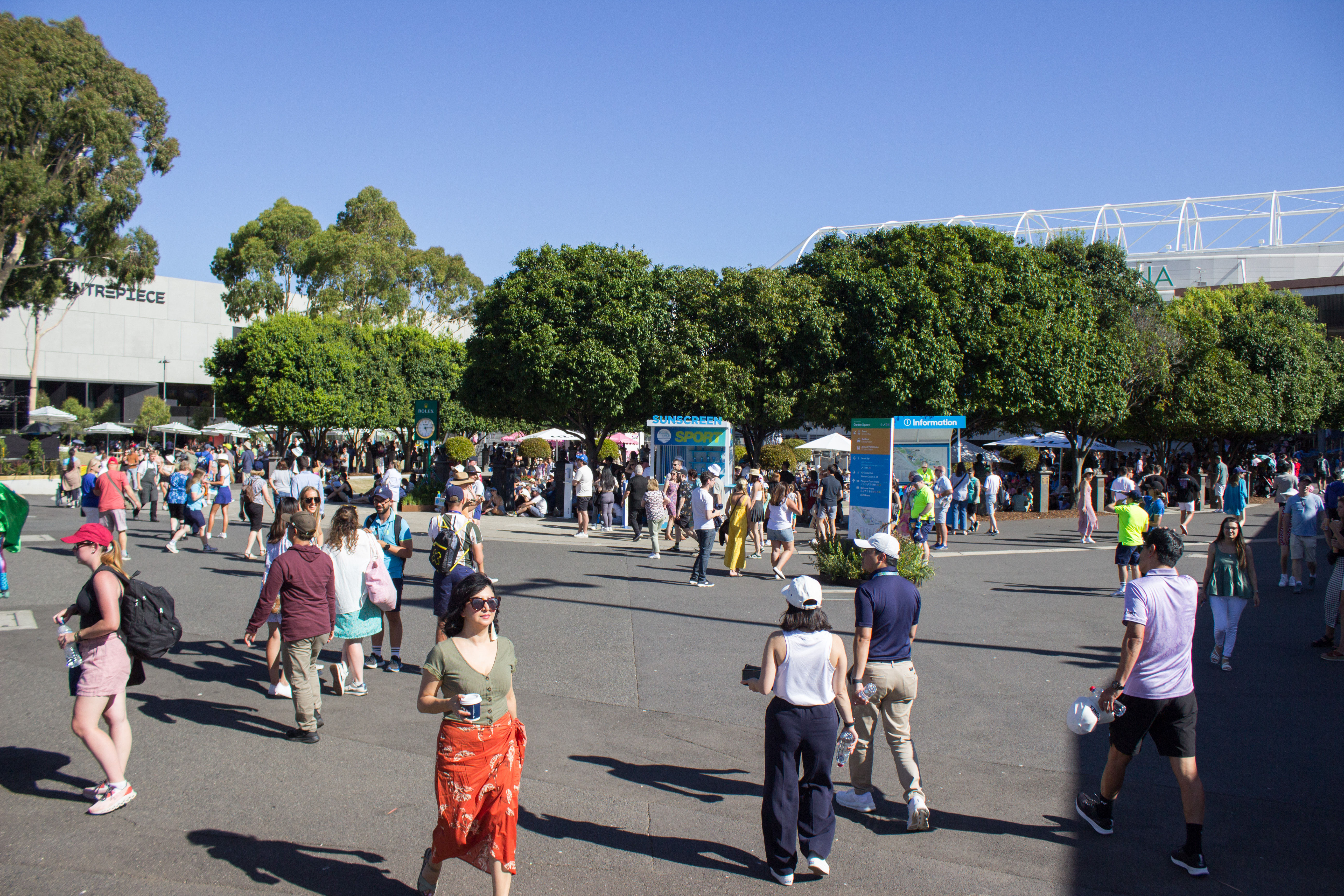
What you notice once you're inside isn't the roof, it's the steepness. The seating rises fast around the court, which is part of why night matches under lights feel louder than outside-court tennis usually does — sound has nowhere to go but down and in. Walk the concourse before a night session and you'll pass the Australian Tennis Hall of Fame busts in Garden Square just outside, then the Rod Laver Arena Walk of Champions leading toward the players' entrance, reworked for 2026 with projected visuals tracing past champions' paths to the court.
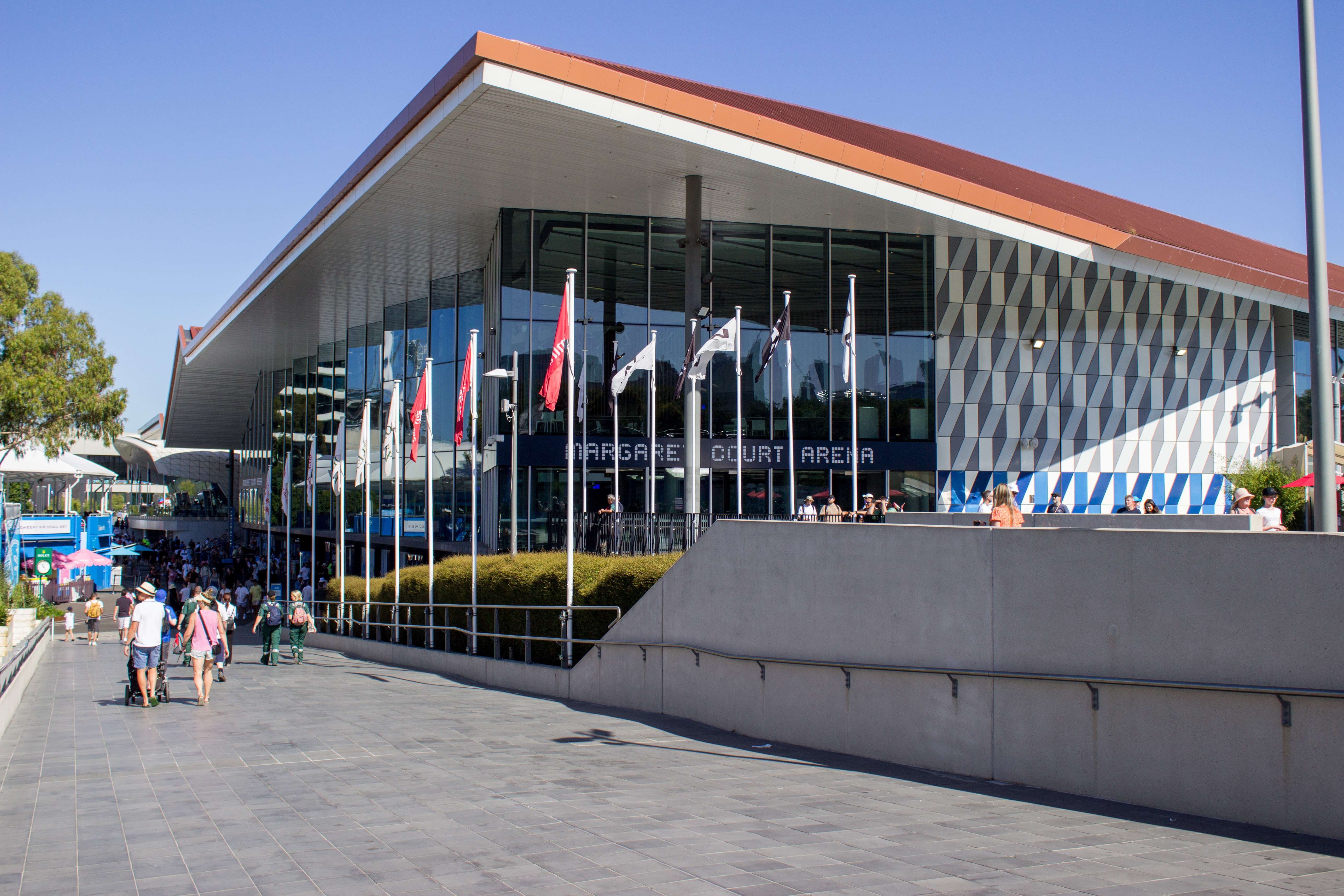
A reserved seat here is the only ticket type that also gets you into every other outside court and Melbourne Arena on the same day. It does not include Margaret Court Arena, which needs its own separate reserved ticket regardless of what you're holding for Rod Laver. That one distinction trips up more first-time visitors than anything else about the ticketing system, and it's worth knowing before you plan a day around "seeing everything."
The roof decision itself is made by tournament officials, not the weather app on your phone. Since 2019, the Australian Open has used a Heat Stress Scale from 1 to 5, combining air temperature, radiant heat, humidity, and wind — when it hits 5, outside-court play is suspended and the roof closes on Rod Laver, Margaret Court, and John Cain arenas, generally staying shut for the rest of that match. This has happened repeatedly on the tournament's hottest days, so a roof call made in the first set of an afternoon match can turn what started as an open-air session into something closer to an indoor arena show by the finish.
Why it's special