Rod Laver Arena gets the finals, but the Australian Open runs on three roofed courts, not one. Margaret Court Arena and John Cain Arena are both smaller, both genuinely good places to watch tennis, and both worth knowing before you plan your day around Rod Laver alone.
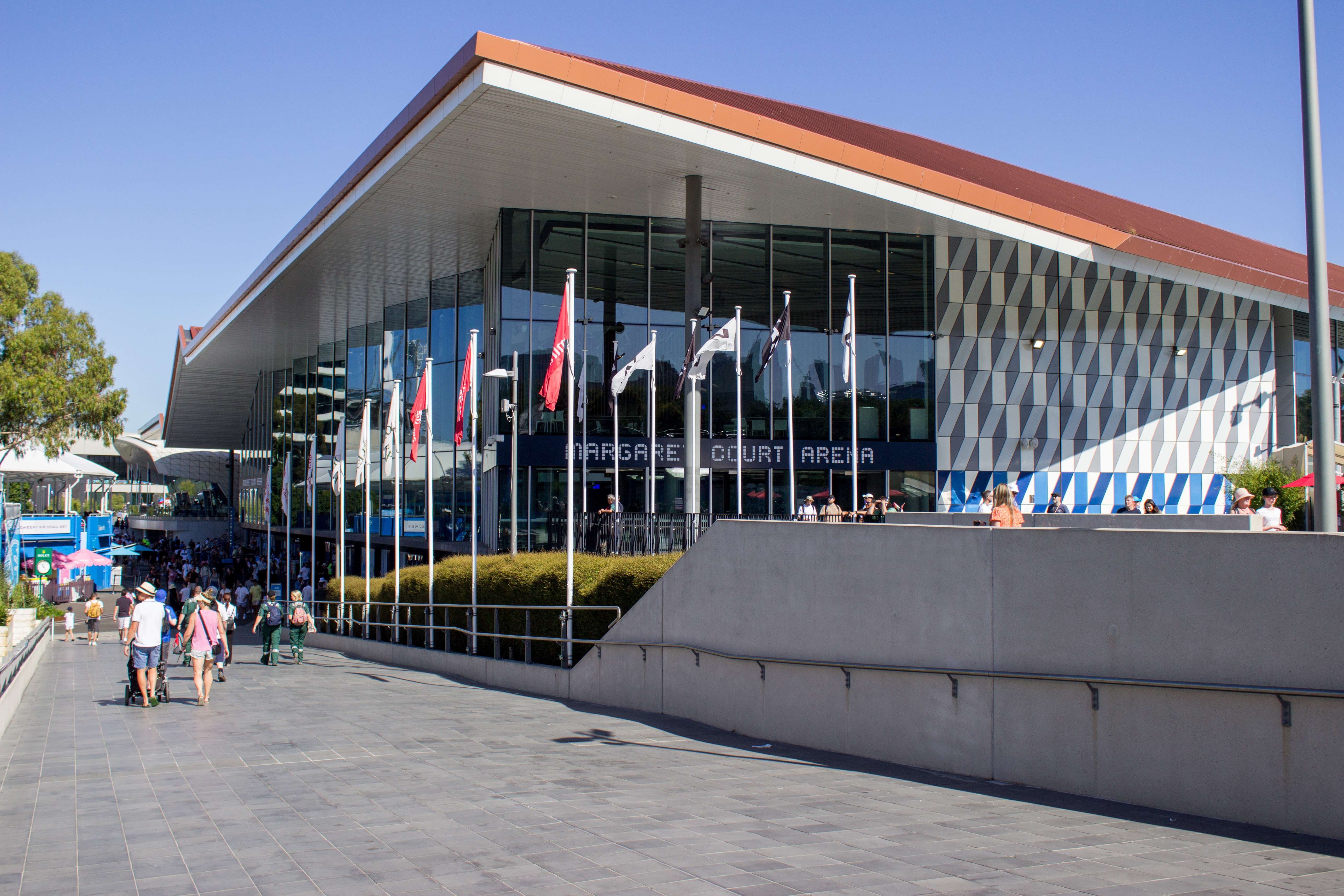
Margaret Court Arena opened in 1988 as "Show Court One," seating 6,000. A 2010-2014 redevelopment took it to 7,500 seats and added its own retractable roof, the fastest of its kind in the world at the time, closing in around five minutes. It was renamed for Margaret Court, Australia's most successful female player and holder of 24 Grand Slam singles titles, in January 2003. The name has been contested for years: Court's public opposition to same-sex marriage led Martina Navratilova and Billie Jean King to call publicly for a rename, and the debate resurfaces most Januarys when Court herself appears at the tournament. Tennis Australia has kept the name. Whatever your view of that, the court itself plays well: closer to the action than Rod Laver's steeper bowl, with a more intimate atmosphere for second-week matches that haven't yet earned Rod Laver billing. See live rating and reviews on Google Maps
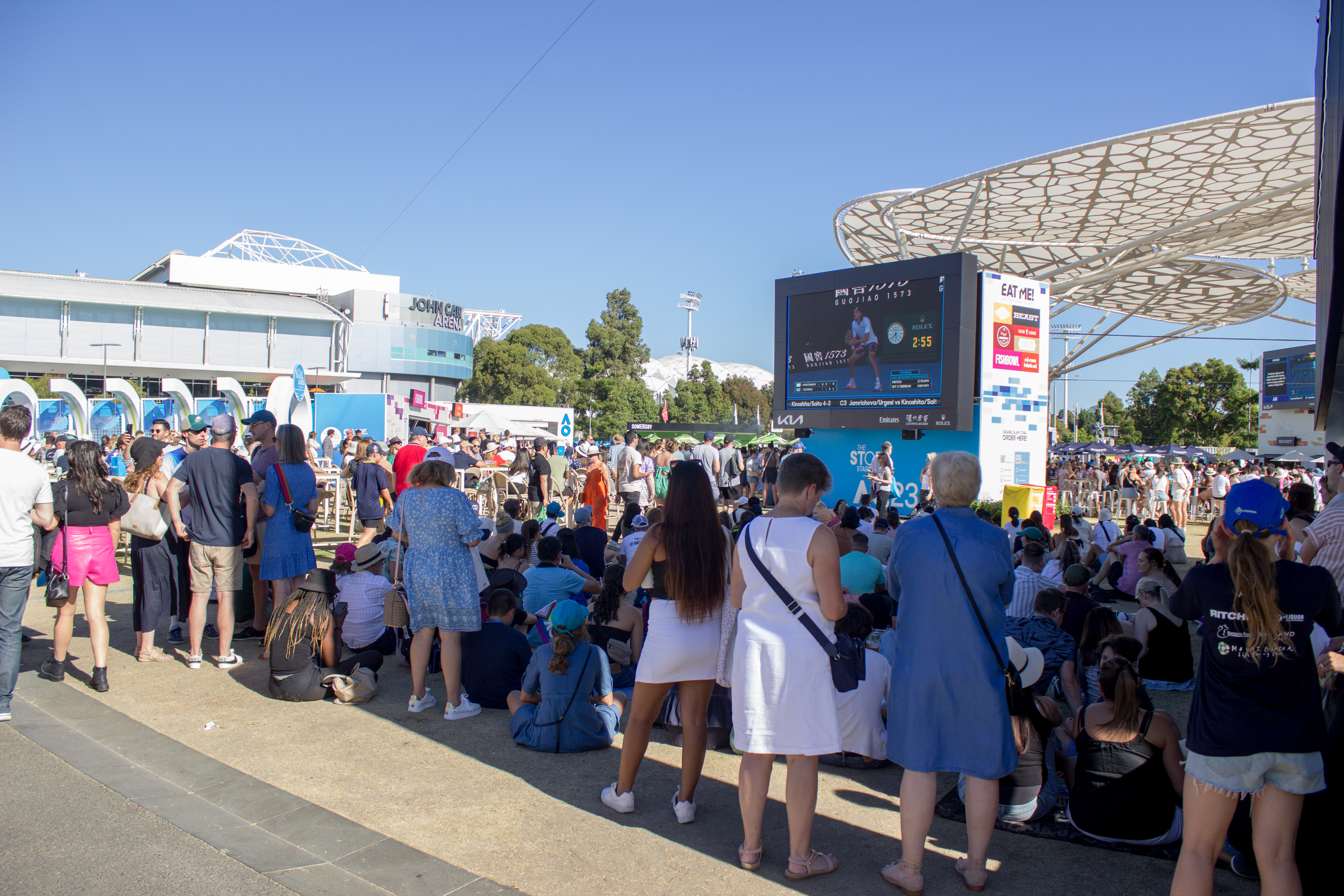
John Cain Arena is the third roofed court and the one most likely to catch a rising player or a good doubles match. It has changed names four times since opening in 2000: Vodafone Arena, Hisense Arena, Melbourne Arena, and John Cain Arena from December 2020, honoring the Victorian premier whose government backed building Melbourne Park in the first place. It holds around 10,500 for tennis, more than Margaret Court, and doubles as Melbourne's main indoor concert venue outside the tournament. During the Open it's typically where the tournament schedules mixed doubles, wheelchair events, and early-round singles that need indoor cover without needing Rod Laver's capacity. See live rating and reviews on Google Maps
Both arenas sit within a few minutes' walk of Rod Laver, inside the same Melbourne Park precinct, so moving between all three across a single day session is straightforward — the harder part is the ticketing, not the geography.
Both arenas also do genuine double duty outside the tournament itself. Margaret Court Arena hosts other sporting and entertainment events through the rest of the year, and John Cain Arena is Melbourne's primary indoor concert venue when tennis isn't in town — worth knowing if either name sounds familiar from a gig announcement rather than a tennis broadcast.