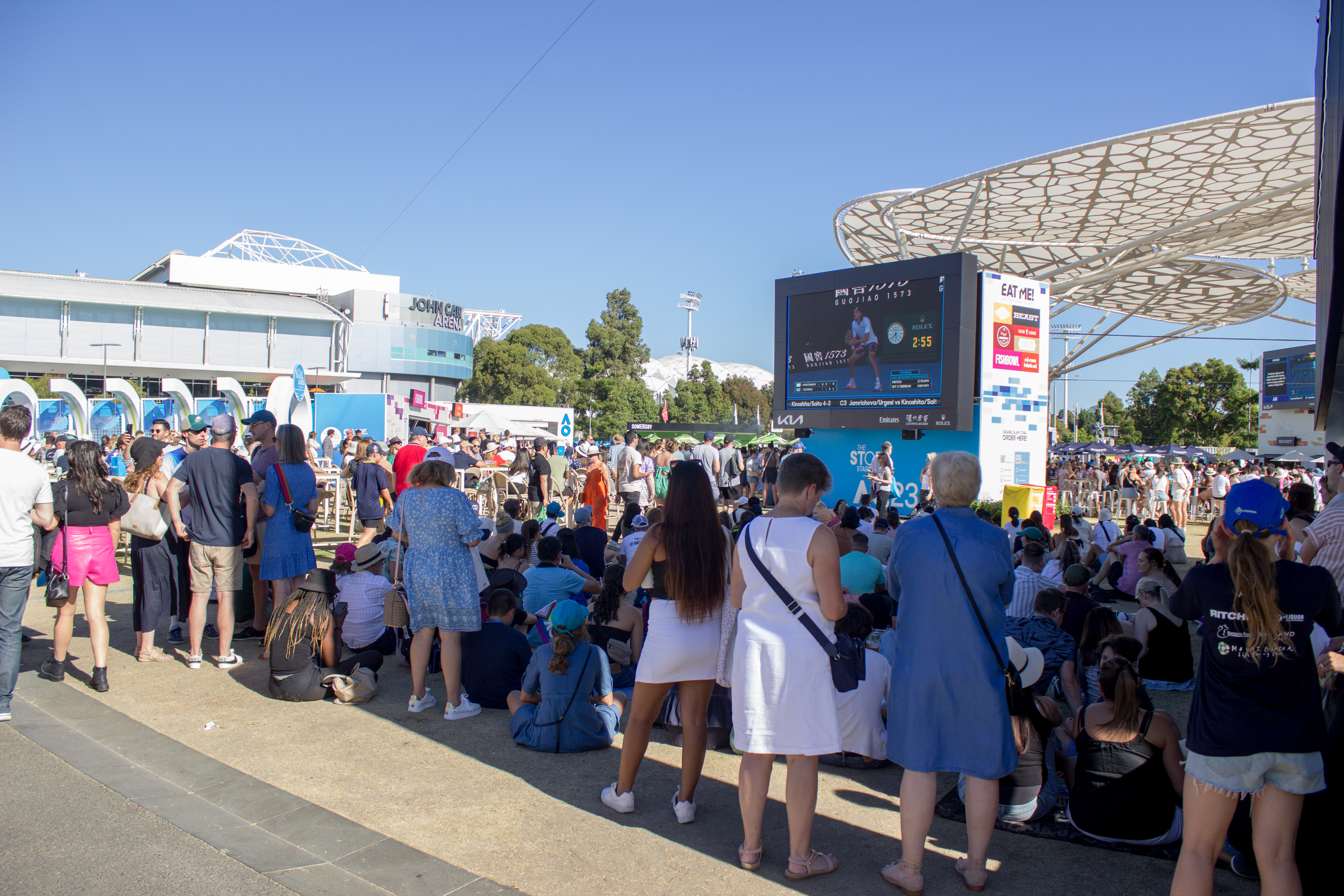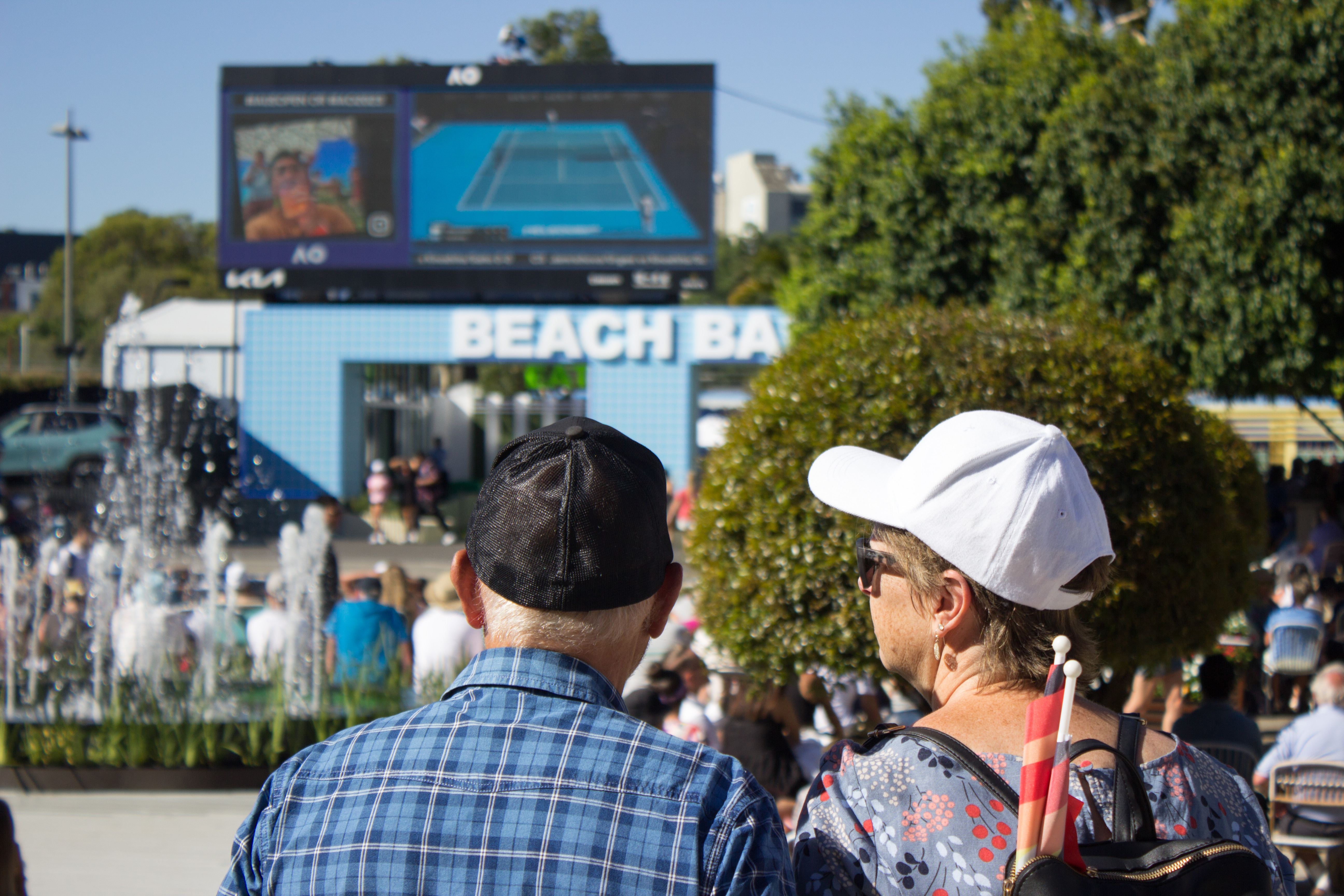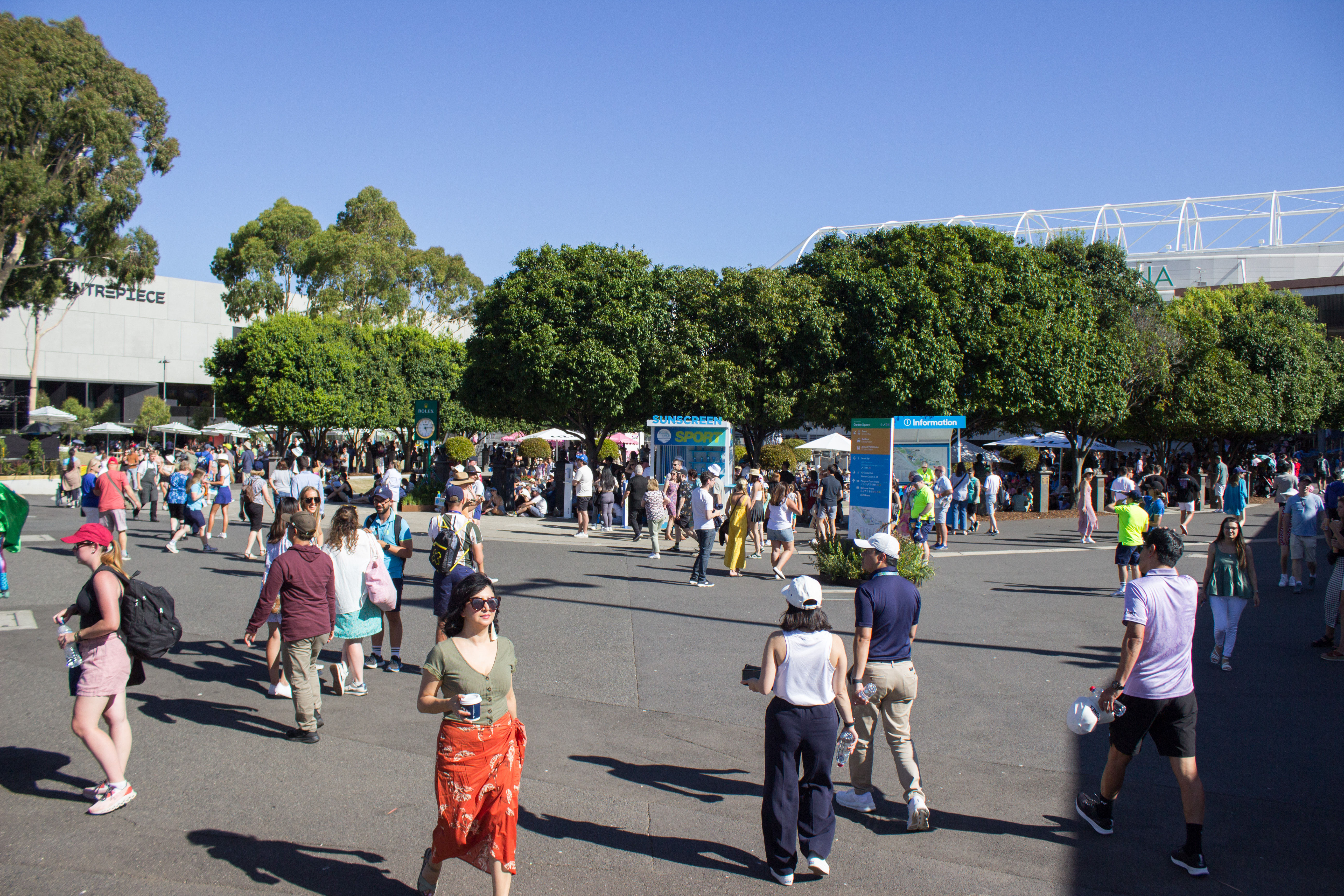
A grounds pass is the cheapest way into the Australian Open, and for the first week it might be the best value in tennis. It buys you the entire Melbourne Park precinct for the day: every outside court, all of Court 3 (3,000 seats), 1573 Arena (also 3,000, formerly Show Court 2), and first-come-first-served sections of Kia Arena and John Cain Arena when they're not sold out separately. What it doesn't buy is a reserved seat anywhere — every one of those seats is walk-up, and that's the entire game.
The outside courts themselves aren't numbered in a single obvious sequence from the entrance; they're spread across the northern end of the precinct, clustered close enough together that first-week days become a genuine court-hopping exercise. Early rounds put five matches on some of these courts in a single day, often featuring players ranked 50-150 who are frequently better value than the outside-court label suggests — plenty of future top-10 players have been watched for free from a plastic seat on an outside court in their first Melbourne appearance.
Timing is the whole strategy. Gates typically open around 10am, and the outside courts fill up in a predictable wave: quiet in the first hour, busiest once Rod Laver and Margaret Court day sessions let out around mid-afternoon and again as the night crowd arrives. Tennis Australia's own advice is blunt about this — get in early if you want first pick of seats on the popular courts, because the crowd genuinely does thin out again by early afternoon once the morning rush has settled into seats.
The Order of Play for the next day is published on the AO app and website the evening before, not the morning of. Checking it the night before, rather than scrambling on arrival, is the single biggest edge a grounds-pass holder has — you can walk straight to whichever outside court has the match you actually want instead of discovering it by accident three courts too late.
A myki card is worth having sorted before you arrive if you're planning to explore beyond the free AO-ticket tram benefit — cards and top-ups are available at over 800 retailers across Victoria, including every 7-Eleven and the visitor centres on Bourke Street and at Melbourne Town Hall, so it's a five-minute errand rather than a planning obstacle. Loading myki money once and topping up as needed via station machines or the app is the simplest approach for a short visit centered on court-hopping rather than working out exact fares train by train.
Why it's special
The reserved-seat courts get the marketing, but the grounds pass is where the Australian Open's actual value proposition lives. You're paying a fraction of a Rod Laver ticket for access to five or six simultaneous matches, the freedom to leave one mid-set for a better one two courts over, and a genuine chance at seeing a player before anyone outside the sport knows their name. I've watched more interesting tennis on a grounds pass, court-hopping through an afternoon, than I have from a single reserved seat watching one match start to finish. That's not a consolation-prize argument, it's a real structural feature of how first-week Grand Slam tennis works: there's more good tennis being played simultaneously than any one ticket can show you, and the grounds pass is the only ticket type built around that fact instead of against it.