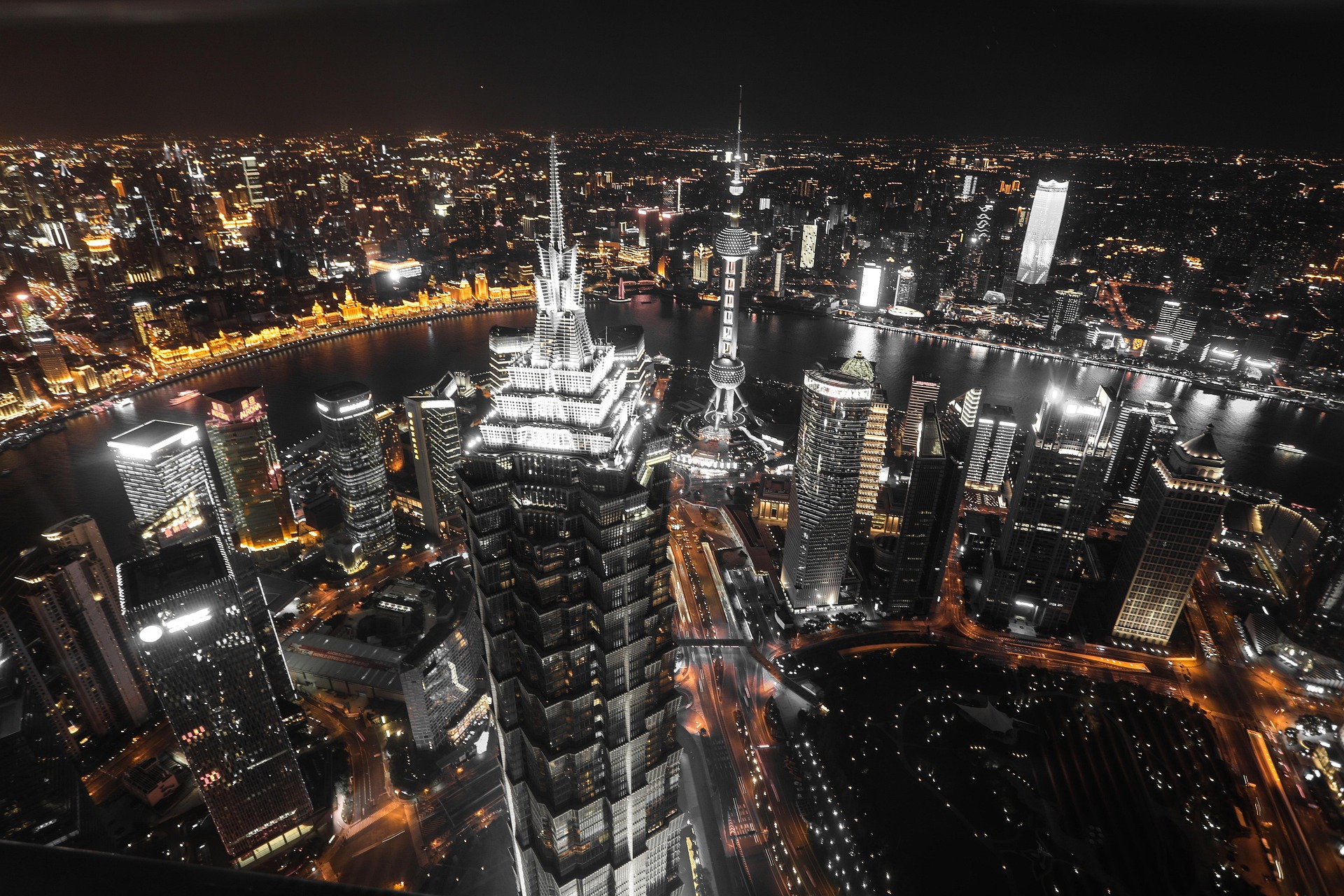
Lujiazui is the closest thing Shanghai has to a single physical symbol of the city's last three decades — three supertall towers built directly beside each other, the world's first grouping of adjacent supertall skyscrapers, planned as a cluster as far back as 1993.
Jin Mao Tower came first, finished in 1999: 88 storeys, 420.5 metres, designed by Skidmore Owings & Merrill with an observation deck on the top floor. See live rating and reviews on Google Maps
Shanghai World Financial Center followed in 2008, after construction actually paused mid-build during the 1997 Asian financial crisis and only resumed in 2003. SWFC is the one everyone calls "the bottle opener," for the trapezoid-shaped opening cut through its top third — and that shape exists because of a real design controversy: the original plan used a circular aperture, but Shanghai's then-mayor objected that it looked too close to the rising-sun motif on the Japanese flag, so the architects swapped it for the trapezoid that gave the building its nickname. See live rating and reviews on Google Maps
Shanghai Tower is the newest and tallest of the three: 632 metres, 128 storeys, the second-tallest building in the world, with its 118th-floor observation deck sitting at 546 metres — one of the highest observation decks anywhere. See live rating and reviews on Google Maps
You don't need to go up any of them to feel the scale — the three towers together, seen from The Bund across the river, are the view most people picture when they think "Shanghai skyline." But going up changes the experience genuinely, not just cosmetically: Shanghai Tower's deck gives unobstructed 360-degree sightlines directly across to its two shorter neighbours, an angle you can't replicate from ground level. SWFC's 100th-floor skywalk is its own distinct thing — a 55-metre glass-floored corridor suspended at 474 metres, looking straight down rather than out.
Sunset is the one time worth planning around specifically: you get daylight, the colour transition, and the full night skyline in a single visit, the same logic that makes The Bund worth timing for dusk.