France administered this district from 6 April 1849 until 1946 — the earliest and largest French concession anywhere in China, established after China's defeat in the Opium Wars. What started as roughly 986 acres grew into Shanghai's most prestigious residential quarter by the 1920s, and it's still the part of the city where you walk under plane trees on streets that genuinely feel unlike anywhere else in Shanghai.
The architecture is a real fusion, not a theme-park version of "European Shanghai": tree-lined boulevards and European-style villas sit alongside shikumen — literally "stone warehouse gate" — a hybrid lane-house style that fuses Chinese courtyard layouts with Western masonry detailing. Shikumen became the dominant residential form across Shanghai's old lilong neighbourhoods, and the French Concession has some of the best-preserved examples left standing.
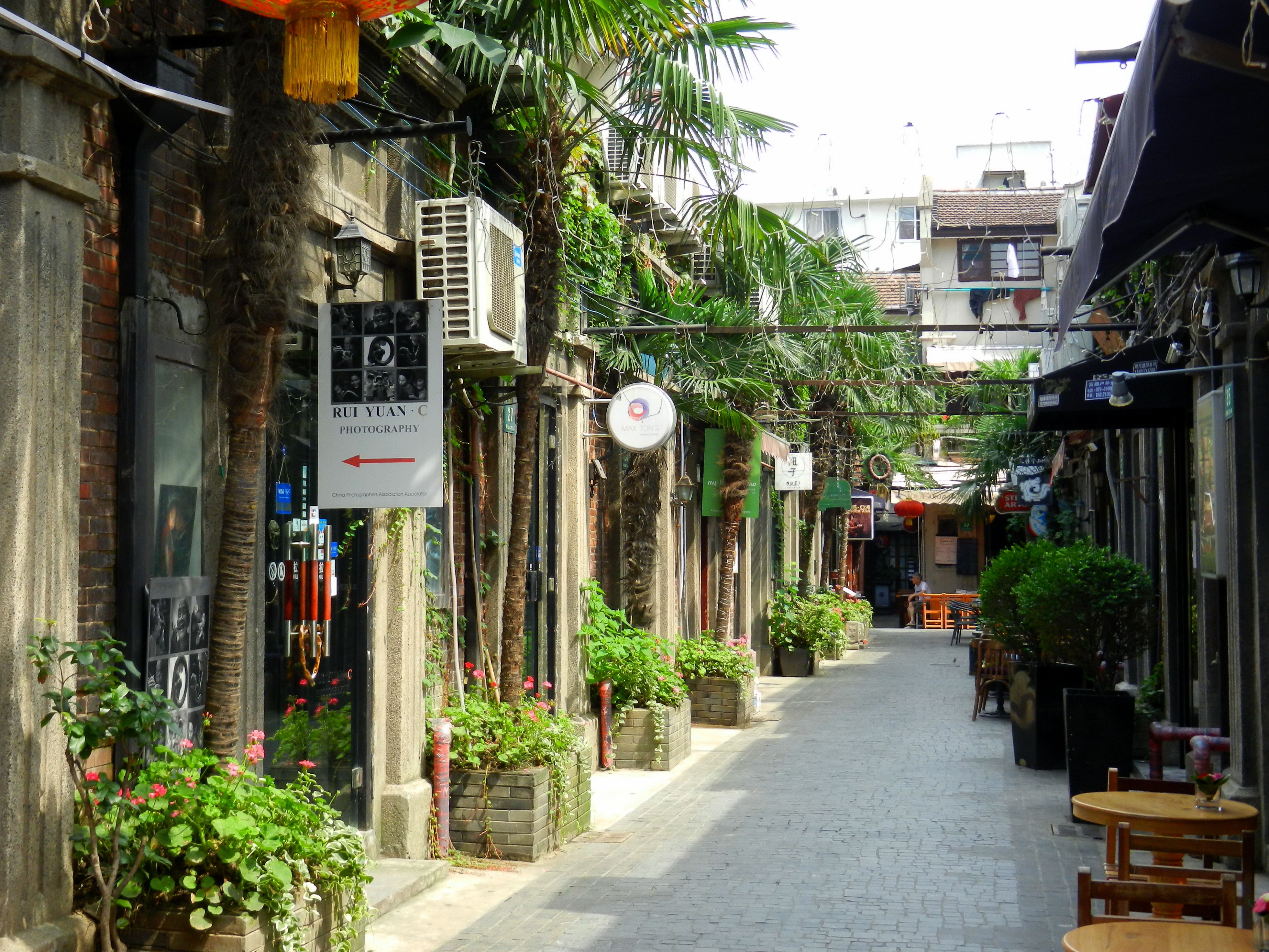
Tianzifang is the district's most-visited pocket, and its own history is a genuine second layer on top of the shikumen story. The lanes were built in the 1930s as ordinary residential shikumen housing — home to doctors, bankers, and office workers, not artists. That changed in 1998, when Chen Yifei, one of China's most significant contemporary artists, took over two abandoned factory buildings on Lane 210, Taikang Road, and converted them into working studios. By 2001 the whole maze of alleys had been rebranded Tianzifang, and today it's dense with art studios, galleries, boutique shops, and small cafés threaded through the original shikumen stone gateways — closer to a living neighbourhood that gradually became creative than a purpose-built arts district.
An afternoon here works best as an aimless walk rather than a checklist: start on the wider Concession streets to get the tree-lined villa scale, then drop into Tianzifang's narrower lanes, where the shikumen architecture is close enough to touch and the shops genuinely change block to block.
Why it's special
The French Concession is one of the only places in Shanghai where two very different histories are stacked on the same streets and both are still visible: a colonial-era residential district built for one class of resident, later inherited by artists who had nothing to do with its original purpose. Tianzifang didn't get planned into an arts district — it became one, inside buildings that were never meant to be galleries, which is exactly why it still feels like a real neighbourhood rather than a curated attraction.