History
The Voices You Hear at the US Open Aren't Real — Here's Why
Tennis·2 min read·July 19, 2026
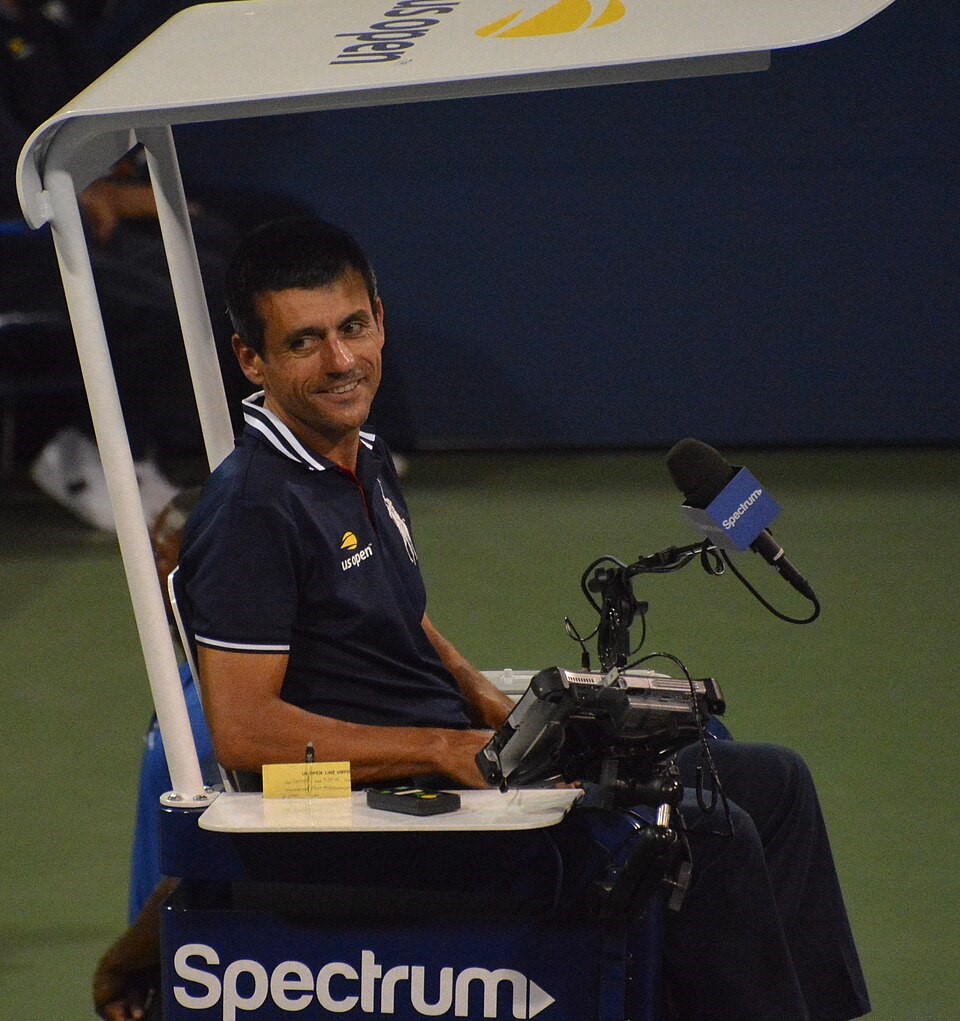
Stand courtside at the US Open today and you'll hear a call every time a ball lands close to the line. What you won't see is a single line judge making it. Since 2022, no human has stood on a US Open court to call a ball in or out. The job now belongs entirely to a system called Hawk-Eye Live — and the voice you hear isn't reacting to the shot in real time at all.
How it actually works
Two hundred and four cameras cover all 17 courts at the US Open — 12 tracking cameras per court, plus six dedicated to foot faults. They track the ball at 340 frames per second, feeding the footage instantly to an operations room known as the Hawk-Nest, where the system calculates whether the ball landed in or out. Hawk-Eye's own figures put the accuracy at effectively 100%, with the tracking itself millimeter-precise — a level of consistency no human eye, blinking and refocusing point after point for hours, was ever going to match.
The "voice" making the call is real, but it isn't live. Line-call audio was recorded in advance by real people, at different levels of urgency depending on how close the shot is — a routine call sounds different from a call on set point. When Hawk-Eye determines the outcome, it simply plays the matching clip. Nobody is reacting to your shot. The reaction was recorded years before you hit it.
Why it happened here first
The shift wasn't sudden. In 2020, the US Open dropped line judges from all but two of its courts, largely as a pandemic-era decision to reduce the number of people on site. The following year, the Australian Open became the first Grand Slam to go fully electronic. The US Open followed in 2022, and the change stuck — not because it was forced by circumstance anymore, but because the accuracy case had become impossible to argue with. Equipping a single court costs close to $100,000 and takes about three days to install. The tournament decided that was worth it, permanently.
What it changed, and what it didn't
The chair umpire is still there. The theater of the sport — the challenges, the replay shown on the big screen, the crowd groaning or cheering at a close call — hasn't gone anywhere. What's gone is the possibility of a human blinking at the wrong moment on set point. The calls are faster, they're not up for argument, and by most accounts, players have stopped missing the old system almost entirely. It's a strange thing to realize mid-match: the most consequential voice in the stadium isn't responding to what just happened. It already knew what was going to happen, the moment the ball crossed the line.