History
Arthur Ashe — The Man Behind Tennis's Biggest Stadium
Tennis·3 min read·July 15, 2026
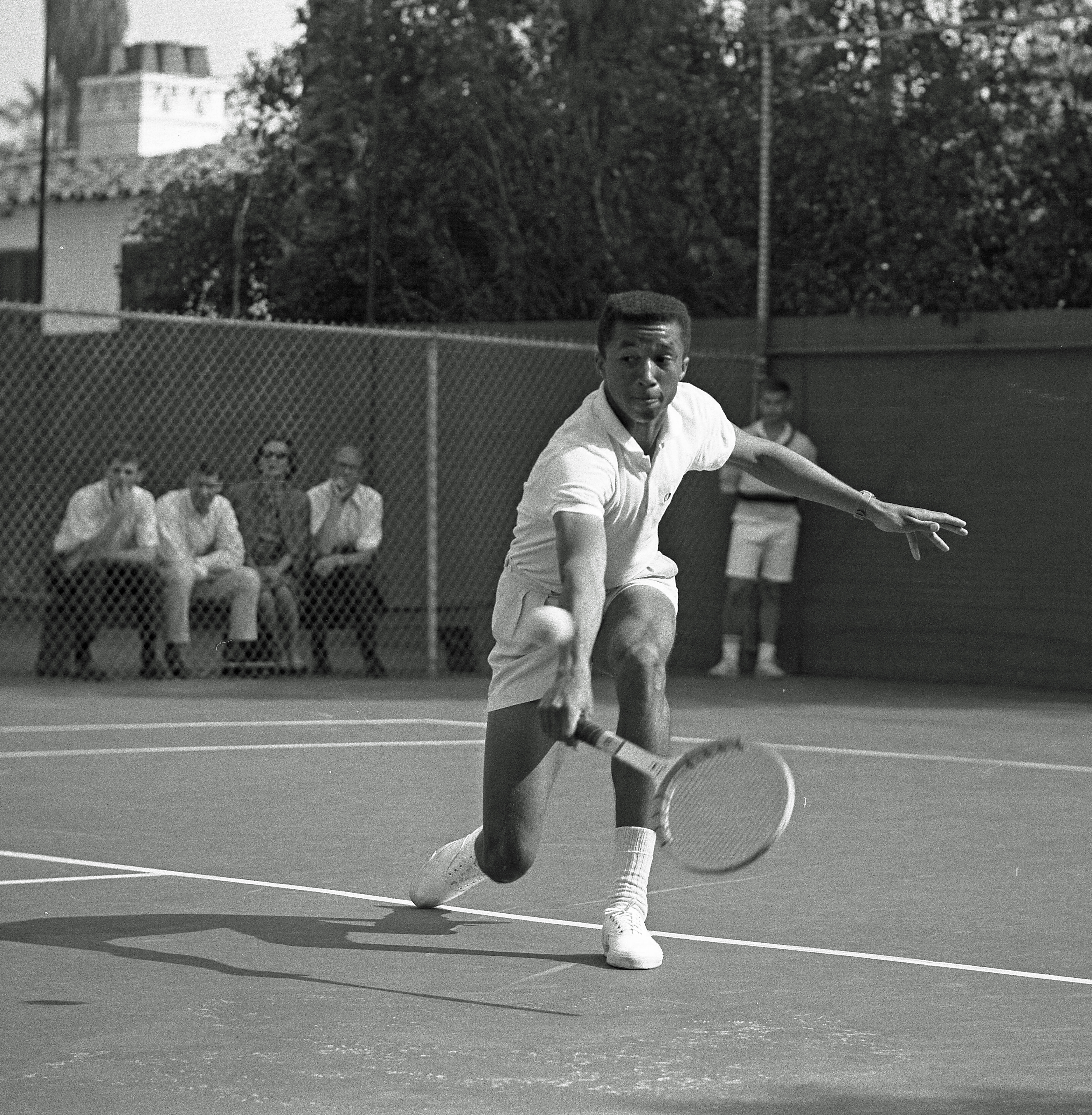
Art Rogers, Los Angeles Times / UCLA Library — CC BY 4.0
Arthur Ashe won the first US Open in 1968 and never saw a cent of the prize money. He was still an amateur — an Army lieutenant, technically, drawing a per diem as a member of the U.S. Davis Cup team — so the $14,000 winner's check went to the runner-up, Tom Okker, instead. Ashe beat him anyway, in five sets, 14-12, 5-7, 6-3, 3-6, 6-3, in front of 7,100 spectators at the West Side Tennis Club. He was the first Black man ever to win a Grand Slam singles title.
A win that outgrew the scoreline
The 1968 US Open final happened at the height of the civil rights movement, and Ashe's win read as something larger than a tennis result whether he wanted it to or not. He'd go on to win the Australian Open in 1970 and Wimbledon in 1975 — the only Black man in history to win all three — but 1968 was the one that changed what the sport's ceiling looked like.
Off the court, Ashe kept choosing the harder fight. In 1973, he became the first Black professional tennis player to compete in South Africa's national championships, and he used the platform to say, in public, that he would not play in front of a segregated crowd. Ten years later, he co-founded Artists and Athletes Against Apartheid with Harry Belafonte, pushing for the sanctions that eventually helped isolate the South African government internationally. This wasn't a retired athlete dabbling in causes — Ashe was still ranked, still playing, when he started doing this.
The diagnosis he didn't choose to make public
In 1988, doctors operating on Ashe for an unrelated brain infection discovered he was HIV-positive. He is believed to have contracted the virus from a blood transfusion during heart bypass surgery five years earlier, in an era before blood banks screened for it. Ashe kept the diagnosis private for years, on his own terms, until a USA Today reporter contacted him in April 1992 to confirm a story they were about to run. He called a press conference the next day rather than let someone else announce it for him.
What followed was, by most accounts, the last chapter of his life spent exactly the way the first chapters had been: choosing the fight nobody was making him take. Ashe became one of the most visible HIV/AIDS advocates in the country, founding the Arthur Ashe Foundation for the Defeat of AIDS and addressing the United Nations General Assembly on World AIDS Day, 1992. "We want to be able to look back and say to all concerned that we did what we had to do, when we had to do it, and with all the resources required," he told the assembly. He died two months later, on February 6, 1993, of AIDS-related pneumonia. He was 49.
A stadium that opened after he was gone
Arthur Ashe never played a match in the stadium that bears his name. The USTA opened it in 1997, four years after his death, as the new home of the US Open — at 23,771 seats, still the largest tennis stadium in the world. It's louder now than anything Ashe played in during his career: night sessions, a retractable roof, a crowd built for spectacle. None of that was really the point of naming it after him. The point was that the loudest room in tennis carries the name of a man who spent his career, and the rest of his life, insisting the sport account for more than just what happened on the court.