Why Go
Qatar's Night Race Wasn't Built for Formula 1 — and That's Exactly Why It Feels Different
Formula 1·2 min read·September 13, 2026
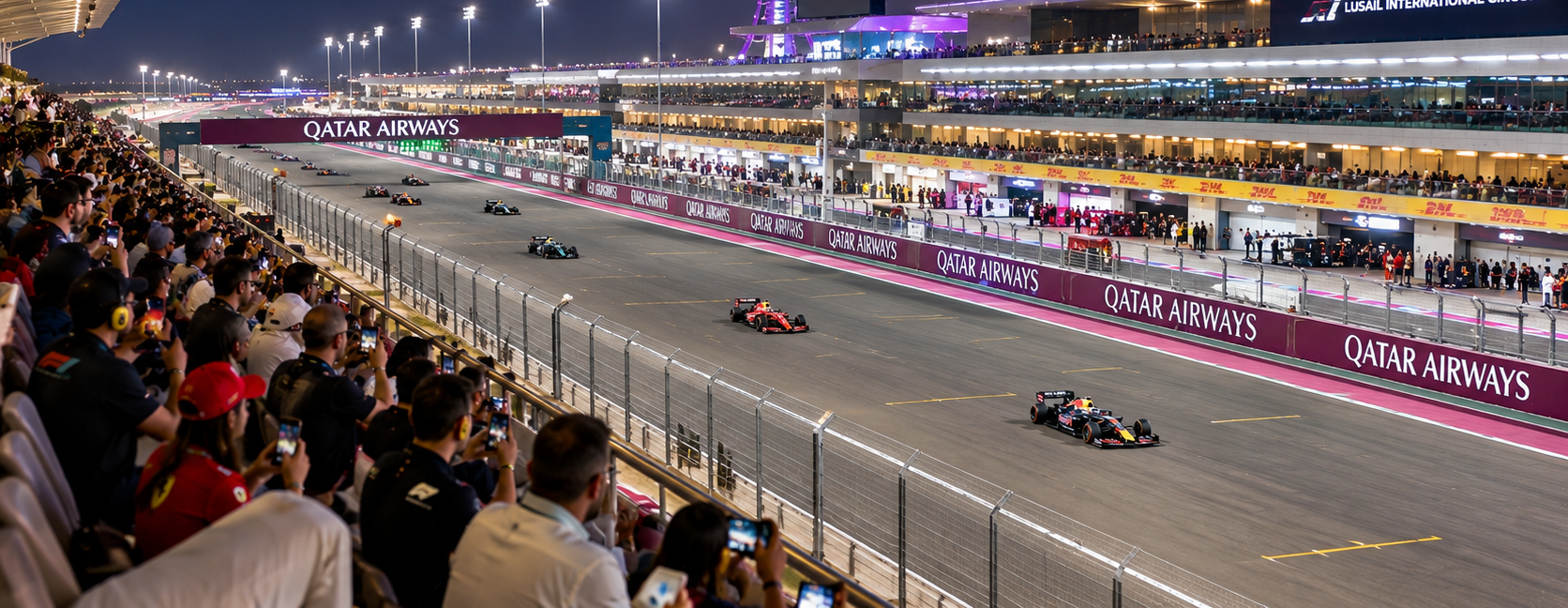
Every other night race on the F1 calendar was built to be watched. Singapore's 2008 race, F1's first ever under lights, was scheduled specifically to land in a European TV-friendly slot. Abu Dhabi's Yas Marina stages a deliberate sunset-to-darkness transition, timed for the cameras. Qatar's lights weren't built for any of that.
Lights that predate Formula 1 by 13 years
Lusail installed its floodlights in 2007, more than a decade before Formula 1 ever raced there. The reason had nothing to do with spectacle: MotoGP had been opening its season at the circuit since 2007, and a March race weekend in the Qatari desert meant finding a way to run outside the worst of the daytime heat. The following March, the 2008 Qatar motorcycle Grand Prix became the first night race in the history of motorcycle racing, six months before Singapore did the same for Formula 1. By the time F1 turned up at Lusail in 2021, the lights weren't a new addition designed to sell the race. They were already 13 years old, installed to solve someone else's scheduling problem.
What racing fully after dark actually looks like
Since 2024, the Qatar Grand Prix has run as a full night race, lights out at 19:00 local time, run start to finish under the floodlights rather than crossing from daylight into darkness mid-session the way Abu Dhabi does. That distinction is worth knowing if you're picking between the calendar's night races: Qatar isn't staging a sunset for you to watch, because the race was never scheduled around when the sun goes down in the first place. It's simply run after dark, the same way it has been for both cars and motorcycles for going on two decades.
Why the origin story is worth knowing before you go
This is the opinion part: a night race built to solve a real problem reads differently, trackside, than one built as a broadcast product. Singapore's lights are a genuine spectacle and Abu Dhabi's twilight transition is a real piece of theatre, and neither is worse for having been designed that way. But there's something to be said for watching a Grand Prix run entirely under a lighting rig that exists because riders and drivers actually needed it, not because a broadcaster did. If you want the night-race experience without it feeling like it was staged for the cameras, Lusail is the one place on the calendar where the lights came first, for reasons that had nothing to do with Formula 1 at all.