History
Lusail Was Built for MotoGP, Not F1 — How It Became a Grand Prix Track
Formula 1·2 min read·September 13, 2026
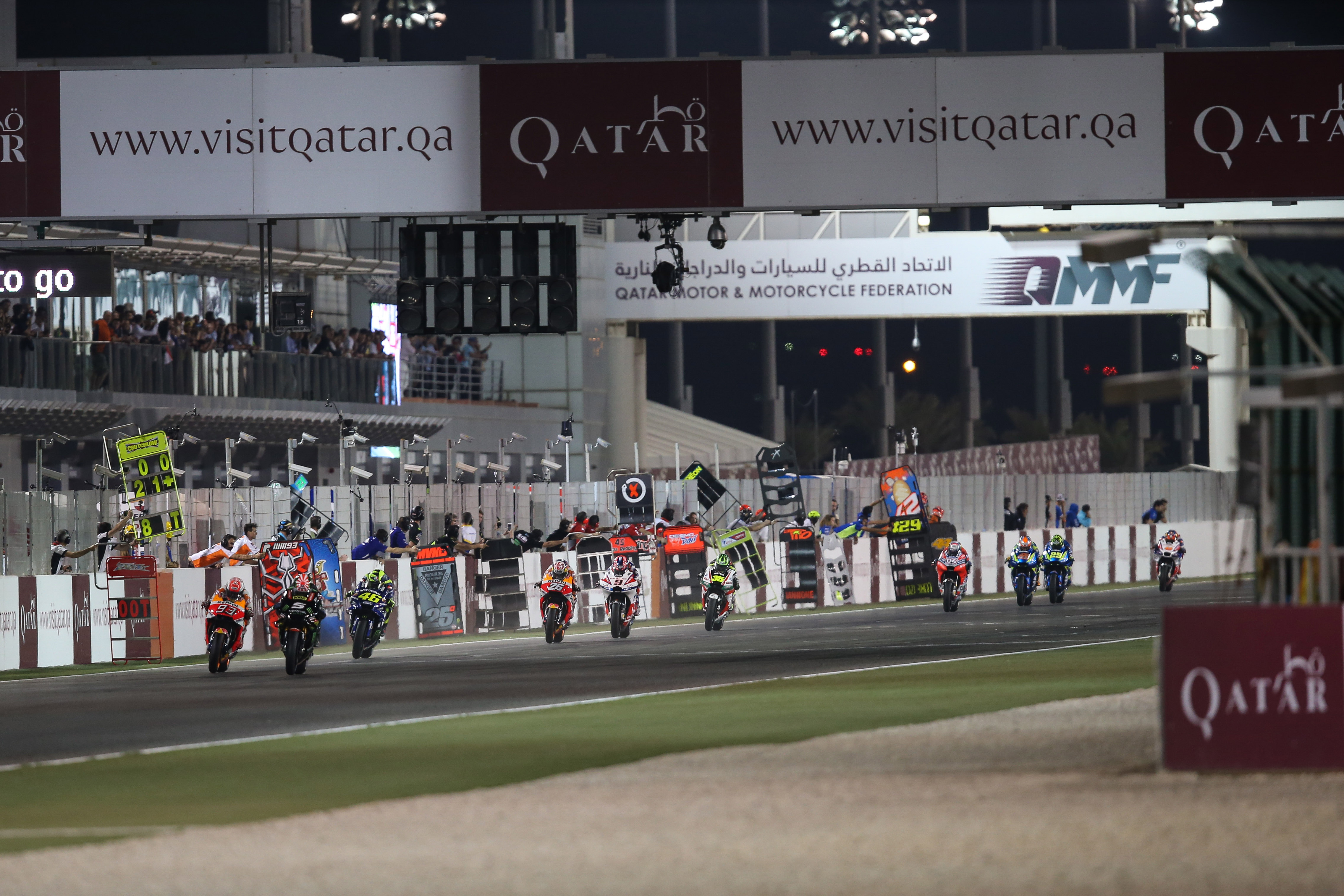
Friedemann Kirn / Box Repsol / CC BY 2.0
Formula 1 has raced at Lusail International Circuit since 2021. The circuit itself had already been running for 17 years by then, and it wasn't built with F1 in mind at all.
Built in a year, for a different sport entirely
Losail International Circuit, as it was originally spelled, went up in just over a year, at a cost of around $58 million, with nearly 1,000 workers on site around the clock to get it ready in time. Its first race, on 2 October 2004, was the Qatar motorcycle Grand Prix, won by Sete Gibernau in a race remembered as much for a mid-championship row between Gibernau and Valentino Rossi as for the circuit itself. Since 2007, Losail has opened the MotoGP season nearly every year, and that scheduling detail matters: a March season-opener in the Qatari desert meant the circuit needed a way to race outside the punishing daytime heat almost from the start.
The lights that came three years before F1 ever considered it
In 2007, the circuit installed permanent floodlights, a job that took contractor Musco Lighting 175 days and more than 1,000 lighting structures, 3 million kilos of concrete, and 500km of wiring. The payoff came the following March: the 2008 Qatar motorcycle Grand Prix was the first night race in MotoGP history. Formula 1 wouldn't hold its own first night race, in Singapore, for another six months, and that race was built for a completely different reason: to put the Grand Prix into a European TV-friendly time slot. Losail's lights existed for over a decade before F1 needed anything from them, built to solve MotoGP's own weather problem rather than to stage a spectacle for anyone watching from home.
What F1 actually inherited when it turned up
Formula 1 arrived at Lusail in 2021 as a late addition to a calendar disrupted by the pandemic, not as a planned expansion. Qatar signed a proper 10-year hosting deal from 2023, and that's when the circuit was upgraded specifically for F1 cars and teams, including what's now the longest pit lane building on the Formula 1 calendar: 402.1 metres long, with 50 pit boxes. But the track itself, 16 corners split 10 right and 6 left, wrapped around a kilometre-long main straight, is still fundamentally the layout designed for motorcycles two decades earlier. It rewards flowing, high-commitment corners over the stop-start braking zones more common on circuits purpose-built for F1.
Why that history is worth knowing before race weekend
Most Grand Prix circuits get built, or substantially rebuilt, because Formula 1 wants a race there. Lusail is one of the few on the calendar that F1 simply moved into, arriving two decades after the circuit's first event and inheriting both a layout and a set of floodlights designed for an entirely different set of machines. Watching an F1 car navigate a track built for motorcycles is, in a real sense, watching the sport adapt to somewhere else's terms for once.