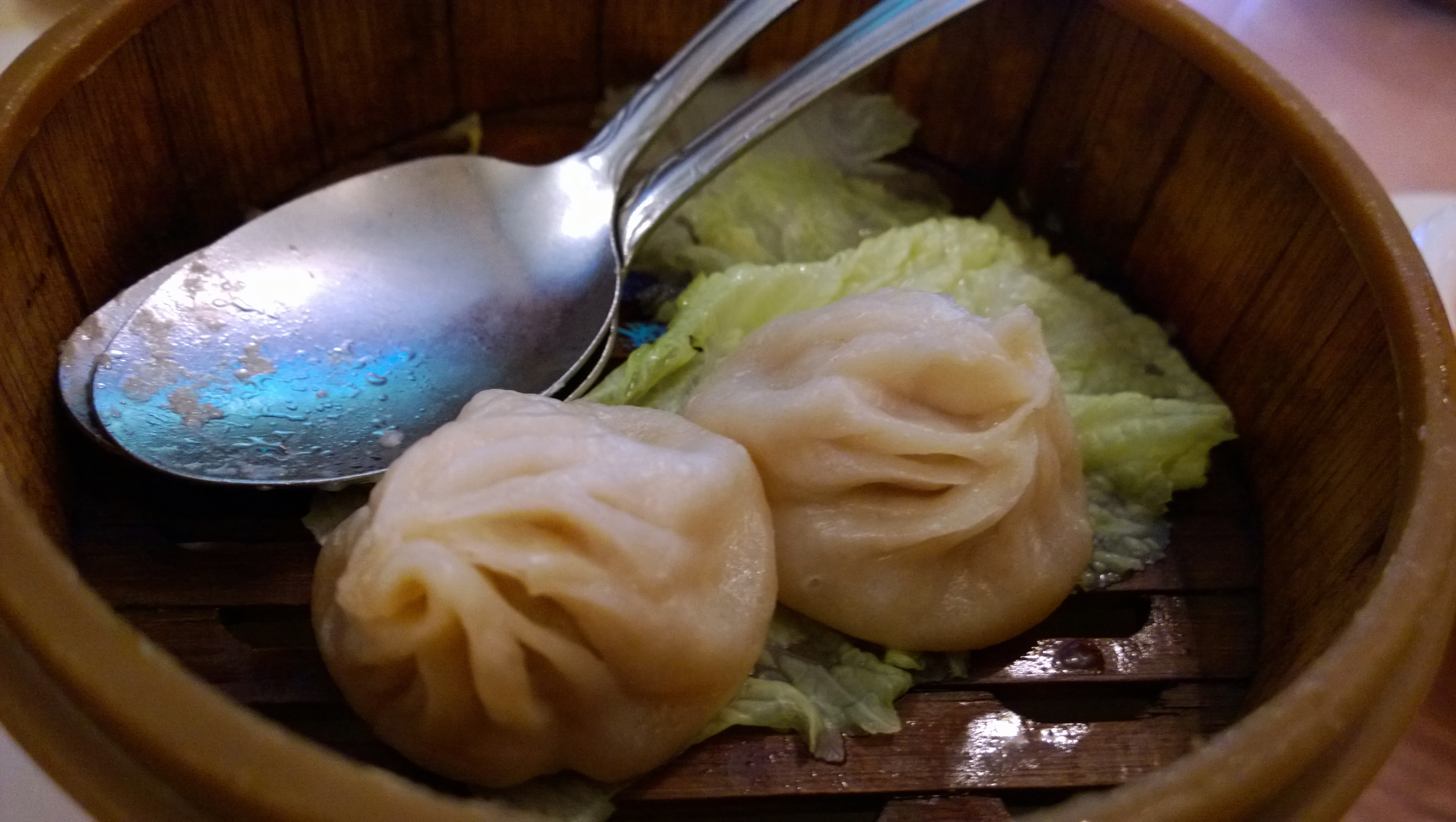
Xiaolongbao — soup dumplings, pork and hot broth sealed inside a thin steamed wrapper — is Shanghai's signature dish, and three very different places make the case for three very different reasons.
Nanxiang Mantou Dian, Yu Garden. This is the historic pick, the original Nanxiang-style xiaolongbao shop sitting inside the Yuyuan Bazaar itself. It trades on genuine history rather than technical polish, and weekend lunches routinely mean an hour-plus queue — go on a weekday afternoon instead, when it's walk-in friendly and you can actually enjoy the dumplings rather than defend your place in line for them. See live rating and reviews on Google Maps
Jia Jia Tang Bao. A no-frills, locals' favourite a short walk from People's Square — smaller, less touristed, and often cited by long-time Shanghai residents as the most consistent xiaolongbao in the city, not the most photographed. Expect a simple room and a fast turnover rather than any atmosphere beyond the food itself. See live rating and reviews on Google Maps
Din Tai Fung. Technically Taiwanese, not Shanghainese, but the brand's standardisation is exactly the point — each dumpling is made to a fixed 21-gram weight and an 18-pleat fold, so quality genuinely doesn't vary the way it can at a smaller independent shop. Din Tai Fung runs several branches across Shanghai, so confirm you're heading to the specific location nearest your hotel or itinerary rather than assuming one address for the whole chain — ratings and queue times vary noticeably branch to branch.
None of these is objectively "the best" — Nanxiang wins on history and setting, Jia Jia wins on being genuinely local, Din Tai Fung wins on reliability if you want zero risk of an off day. Pick based on what you actually want from the visit, not just the dumpling itself.
Why it's special
Xiaolongbao is easy to get wrong as a tourist checklist item — "eat one soup dumpling, tick the box" — when the real story is that Shanghai's dumpling culture genuinely spans a spectrum from tourist-facing history to locals-only consistency to industrial-grade technical precision. Choosing among these three, rather than defaulting to whichever one shows up first in a search, is the difference between eating a dumpling and understanding why this dish matters here.