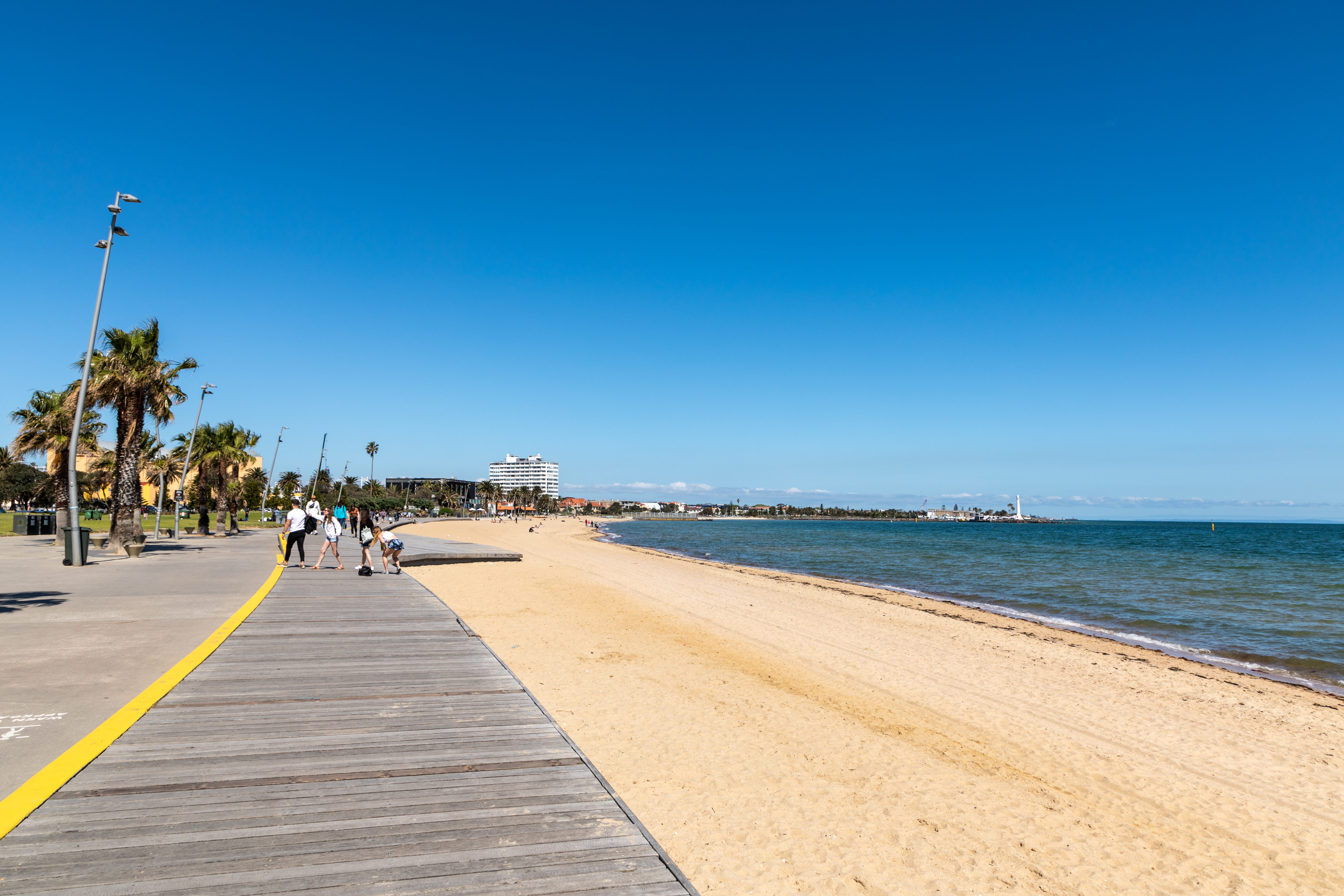
St Kilda sits about 6km southeast of the CBD, a 20-30 minute tram ride from the city center depending on route, which makes it a genuinely realistic half-day out from Melbourne Park on a day without a match, or a way to spend the hours before a night session cools the city down. It's Melbourne's classic seaside suburb, beach, pier, amusement park, and a strip of restaurants along Acland and Fitzroy Streets, all within walking distance of each other.
The pier itself has been rebuilt more than once. First built in 1853 as a private timber jetty, destroyed the same year, and rebuilt as a public pier by 1855, it got its breakwater in the 1950s for the 1956 Melbourne Olympics sailing events, and its current fully accessible walkway opened to the public in December 2024. What draws most visitors to the end of it now is the little penguin colony living in the rocks along the breakwater, roughly 1,400 birds that spend the day out feeding in the bay and come back to nest at sunset. Viewing is completely free, managed by Phillip Island Nature Parks, but sessions are capped at 150 people and booking ahead is genuinely essential, not just recommended, if you want a guaranteed spot at the viewing platform. See live rating and reviews on Google Maps
Luna Park sits right around the corner from the pier, Melbourne's heritage amusement park with its landmark grinning-face entrance, a legitimately fun couple of hours if you're traveling with kids or just want a change of pace from tennis. See live rating and reviews on Google Maps St Kilda's beach itself fills up fast on hot days during summer, which in late January means arriving reasonably early if a proper swim is the plan rather than just a walk along the sand.
Acland Street and Fitzroy Street both carry a genuine concentration of cafes and restaurants, from long-running cake shops to casual beachside dining, giving the whole trip a natural evening close before the tram back into the city.
Acland Street itself carries a real, specific history behind its cake-shop reputation. St Kilda became a center of Melbourne's Jewish community from the 1930s onward, as European refugees, many fleeing before and after the Second World War, settled in the area and opened bakeries, cafes, and small restaurants along the street. Monarch Cakes moved to its current Acland Street premises in 1934 and has stayed on the same site since; Acland Cake Shop followed in 1962, Le Bon in 1978, and Europa in 1982. That lineage is still visible in the street today, and it's a genuinely different, older story than the beach-and-amusement-park image St Kilda usually gets reduced to. A Sunday arts and crafts market runs along the nearby Esplanade, giving the whole strip an easy, unhurried weekend-morning character if your visit lines up with it.