Two real decisions face any visitor flying into Shanghai: which airport, and whether to actually ride the Maglev.
Pudong or Hongqiao. Shanghai runs two working international-scale airports, and which one you land at is decided by your flight, not your choice. Pudong (PVG) is the primary international hub — around 60% of all Shanghai flights route through it — sitting roughly 30km from the city centre. Hongqiao (SHA) handles more domestic and regional East Asian flights, and sits much closer in, roughly 13km from downtown. If you're flying internationally into Shanghai, expect Pudong; if you're connecting from elsewhere in China or nearby Asia, you may land at Hongqiao instead, which is genuinely more convenient for onward city travel given the shorter distance.
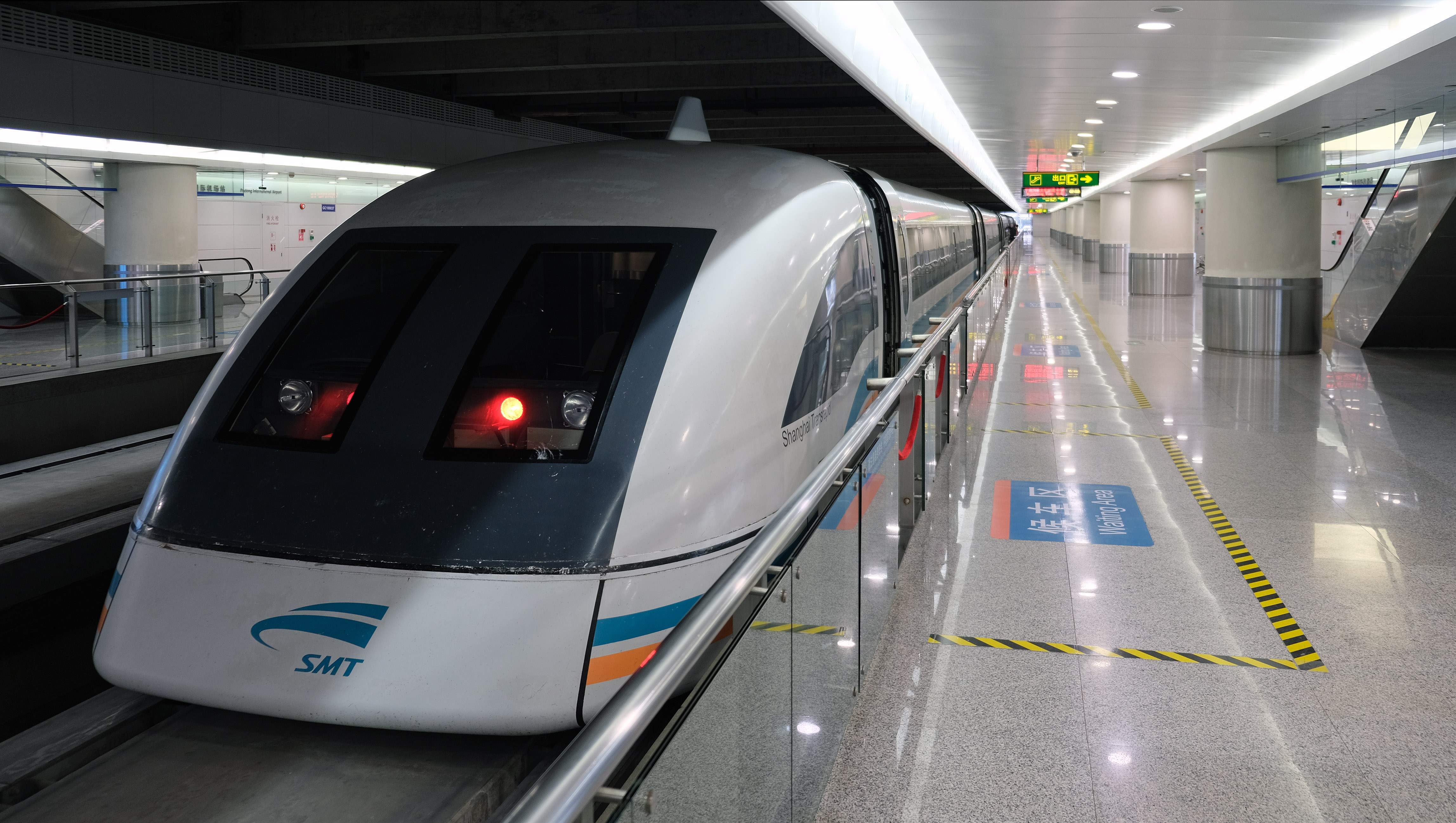
The Maglev is a genuine world record, not just a fast airport train. Opened 31 December 2002, the Shanghai Transrapid was the first commercial high-speed magnetic-levitation line ever built, and it still holds the Guinness World Record for fastest maglev train in regular public service. It runs a single, non-stop 30km route between Pudong Airport and Longyang Road station, covering the distance in about eight minutes at up to 300km/h in normal daily service — down from an even faster 431km/h top speed the line ran until 2021. During a 2003 test run, a maglev on this exact line hit 501km/h, still the Chinese speed record. A one-way standard ticket runs about ¥50 (roughly $7), first class about ¥100.
The real catch: Longyang Road station, where the Maglev ends, is itself still a proper metro ride from most central hotels and genuinely nowhere near Qizhong. So the Maglev solves the Pudong-to-city-edge leg brilliantly, but it doesn't replace your onward journey — you'll still need a metro transfer or taxi from Longyang Road to wherever you're actually staying, and a further metro-plus-shuttle or Didi to reach the tennis.
Given that, riding the Maglev is worth doing largely for what it is — eight minutes at 300km/h is a genuinely rare experience — rather than because it's dramatically faster door-to-door than a taxi once you factor in the transfer at the far end. If you're short on time or carrying heavy luggage, a direct Didi from Pudong may actually be simpler, even if it's slower on paper.
Why it's special
Most airport-to-city transport is purely functional — nobody plans a trip around riding the train from the airport. The Shanghai Maglev is a real exception: a genuine world-record-holding piece of transport infrastructure that happens to also be the fastest way off the tarmac. Riding it isn't just logistics, it's arguably its own small experience, the same way flying Concorde once was for a different generation of travellers.