National Museum of Qatar
Jean Nouvel's desert rose, built around a real royal palace
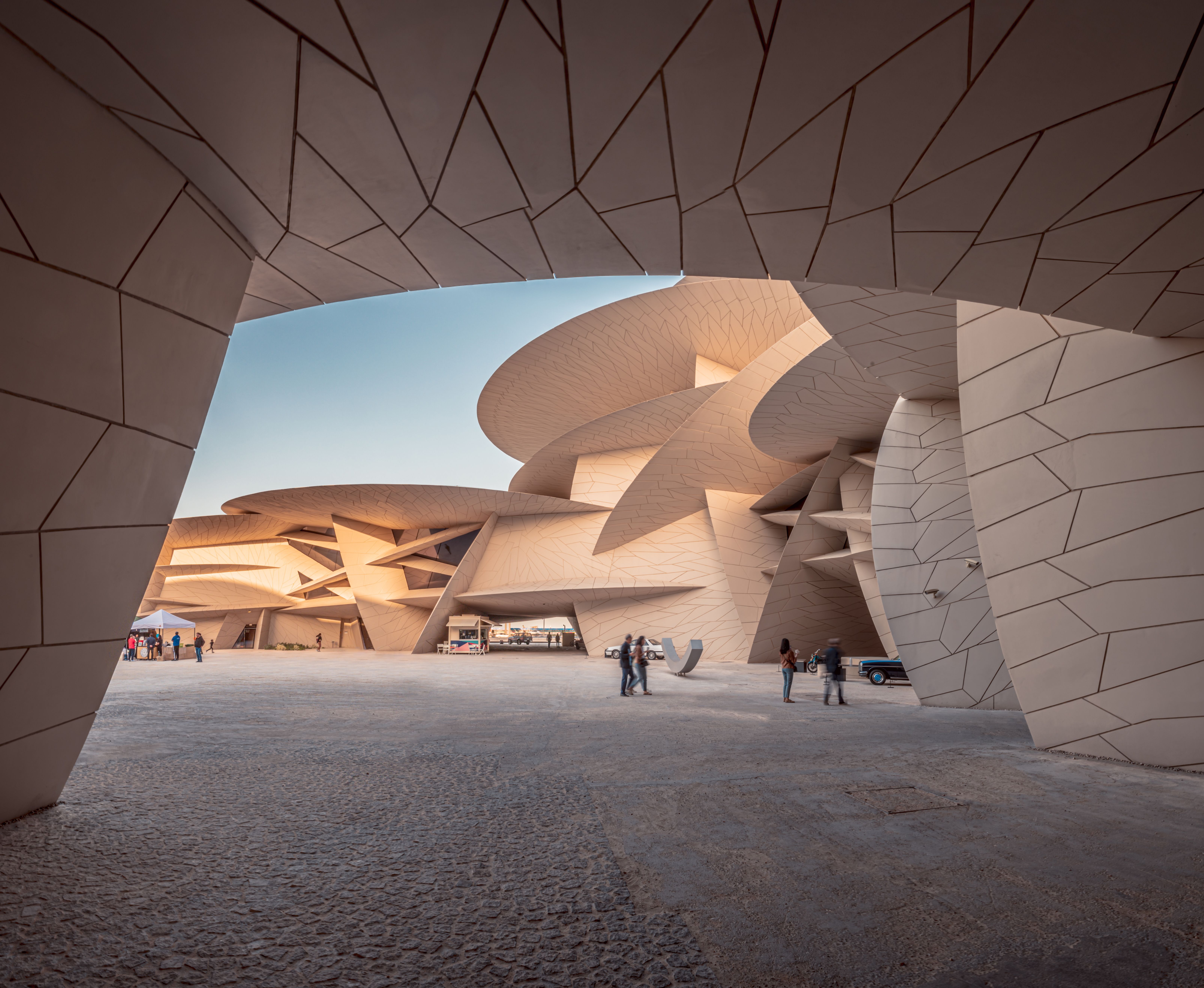
French architect Jean Nouvel designed the National Museum of Qatar around a single natural form: the desert rose, a crystalline mineral cluster that forms in arid ground like Qatar's own desert. The building translates that shape into architecture at genuine scale — a series of enormous, interlocking disks curving inward across a 350-metre structure, unlike anything else on Doha's skyline. Completed in 2019, the museum was built directly around the preserved centerpiece of Sheikh Abdullah bin Jassim Al Thani's original palace, folding a real piece of Qatari royal history into the new building rather than displacing it.
Inside, the galleries trace Qatar's own story — geology and natural history through to the pearling economy, oil discovery, and the country's rapid modern development — told through immersive, technology-forward exhibits rather than static cases. A 220-seat auditorium and a range of dining options sit within the building, and a landscaped park surrounding it is planted specifically with Qatar's indigenous flora, tying the grounds back to the same desert landscape that inspired Nouvel's design.
Hours run generously: Saturday to Thursday 8am-10pm, Friday 1pm-10pm — genuinely late by museum standards, useful for anyone whose days are built around race sessions. Admission is free for Qatar residents, QAR 25 for students, QAR 50 for adult non-residents.
Why it's special
Where the Museum of Islamic Art tells a story about the broader Islamic world, the National Museum of Qatar tells Qatar's own story specifically — and the building itself is part of that narrative, physically wrapped around a real royal palace rather than built on a cleared site. Nouvel's desert rose form isn't decorative flourish; it's a direct architectural translation of the same desert that shaped the country's history, which the museum's actual exhibits then walk you through room by room.
For anyone visiting Doha for a single race weekend and choosing between the city's two major museums, this is the one that answers "what is Qatar, actually" rather than "what has Qatar collected" — a genuinely different, complementary kind of visit to the Museum of Islamic Art, not a redundant one.
Insider tips
- 1
The late closing hours (10pm most days) make this the easier of Doha's two major museums to fit around a full day at the circuit — arrive in the evening after sessions wrap rather than trying to squeeze it into a packed daytime schedule.
- 2
The museum was built directly around the preserved original Al Thani palace — look for where the historic structure is visible within the new building, a detail easy to miss if you're moving quickly through the galleries.
Practical info
- Hours
- Sat-Thu 8am-10pm, Fri 1pm-10pm
- Cost
- QAR 50 adult non-resident, QAR 25 student, free for residents
- Access
- Walk-in, though advance online booking is available and recommended for peak periods.
- Book
Affiliate link — we may earn a small commission at no extra cost to you.
- Getting there
- Central Doha, near the Corniche — nearest metro is Qatar National Museum station, Gold Line. Roughly 30 minutes by car or taxi from Lusail International Circuit.
- Address
- Museum Park Street, Doha, Qatar
- Website
- nmoq.org.qa/
What to avoid
Don't treat this as interchangeable with the Museum of Islamic Art if you only have time for one — MIA covers 14 centuries of Islamic art broadly, while this museum is specifically Qatar's own national story, a genuinely different visit. Don't skip the surrounding park assuming it's just landscaping — it's planted specifically with Qatar's indigenous plants and ties directly into the museum's own narrative about the desert environment.