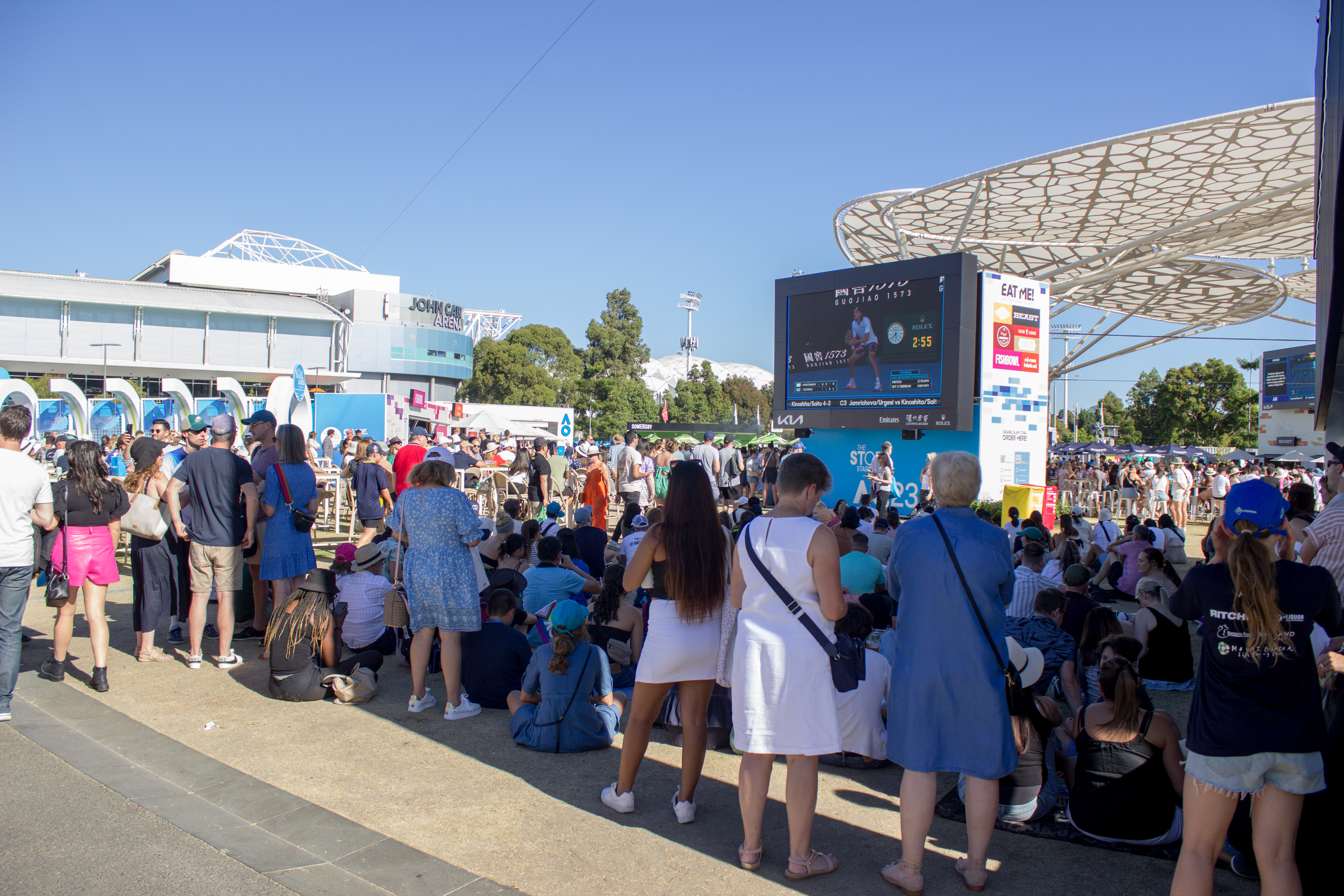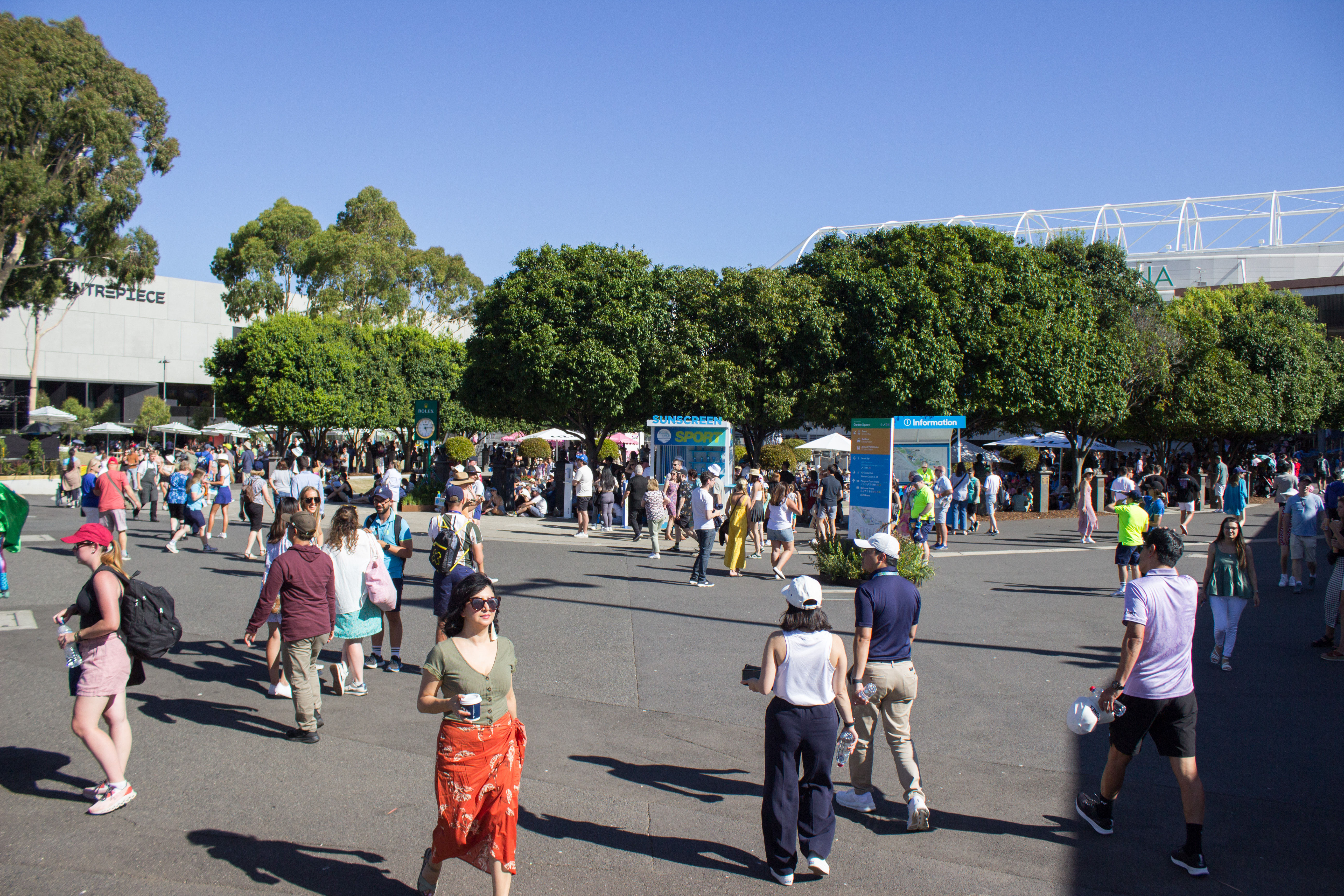
The Australian Open earned its "Happy Slam" nickname honestly. Where Wimbledon runs on decorum and hard-capped exclusivity, Melbourne leans into a loud, festival-adjacent atmosphere, and the crowd reflects it — plenty of people in the grounds are there as much for the day out as for the tennis itself. That doesn't mean etiquette disappears, it just means the rules are a little more relaxed than tennis's reputation suggests.
The core etiquette still holds: wait until a point is clearly finished before applauding, clap good shots from either player rather than only your favorite, and never cheer a double fault or unforced error. What's changed recently is movement. In a rule shift that's proven genuinely controversial among players, fans at Melbourne Park can now enter and exit their seats between games, not just at the traditional changeover breaks every two games. Some players have publicly pushed back on the extra in-match movement being distracting; officials have kept the rule regardless. As a spectator, the safe read is: moving between games is technically allowed here in a way it isn't at other majors, but using a proper changeover break when you can is still the more considerate choice, especially in the smaller arenas.
Day or night is the single biggest strategic decision for a first visit, and they're genuinely different experiences, not just different lighting. A day session on a grounds pass buys flexibility: multiple simultaneous matches, room to wander between courts, food, and a mix of seeded stars and rising names on the side courts. Night sessions run on Rod Laver Arena and Margaret Court Arena, carry the tournament's biggest scheduled matches, and deliver a cooler, louder, more theatrical atmosphere — this is the version of the Open that shows up on television. If you can only attend once, a mid-round night session is often cited as the single best first-time memory the tournament offers; if you have multiple days, pairing an early grounds-pass day with one arena night session gets you both sides of what the tournament actually is.
None of this requires memorizing a rulebook. The atmosphere itself will tell most first-timers what's expected within the first few points of watching the crowd around them.
The accessibility-over-exclusivity philosophy shows up in ticketing too, not just atmosphere. Where Wimbledon has historically hard-capped ticket sales to preserve a sense of scarcity and tradition, the Australian Open has leaned the opposite direction, prioritizing broader public access even as attendance records keep climbing. That's a deliberate identity choice, not an accident of geography or market size, and it's the throughline connecting the louder crowd, the relaxed movement rules, and the festival programming layered across the grounds — all of it points toward the same goal of making the tournament feel open rather than exclusive.