Free

What's the weather like at the US Open, and what should I pack?

Low 80s and real humidity, with one stadium's roof more rain-proof than the other

The US Open runs through the tail end of a New York summer — hot and humid rather than genuinely dangerous, but the humidity is the part most visitors underestimate. Late August afternoon highs typically sit in the low-to-mid 80s°F, cooling to upper 70s by early September, with overnight lows in the mid-to-upper 60s.

Typical conditions

Day highLow-to-mid 80s°F (upper 70s by early Sep)
Overnight lowMid-to-upper 60s°F
RainAfternoon thunderstorms a recurring feature of a late NY summer

The roof gap — Ashe vs. Armstrong

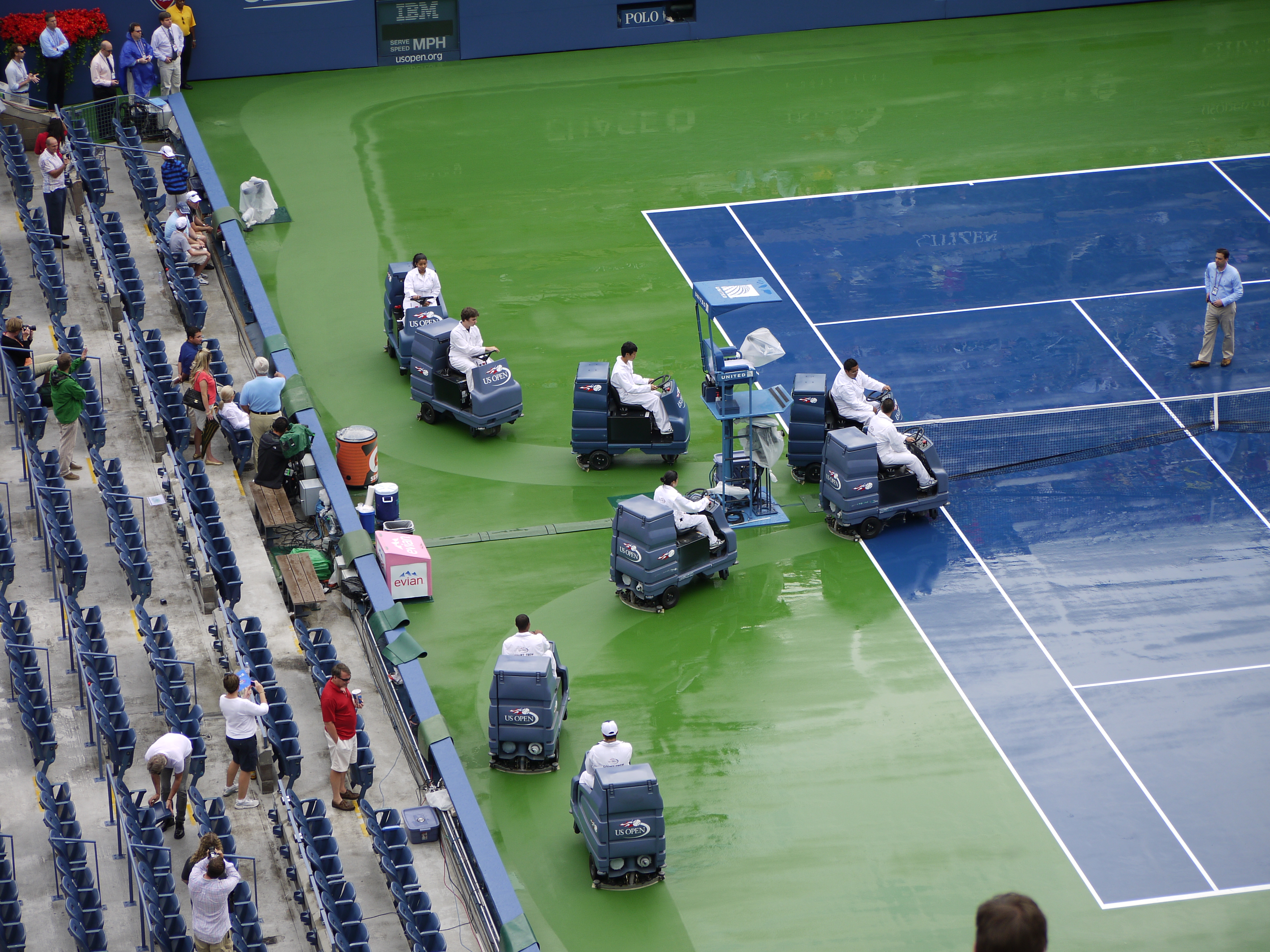
Arthur Ashe and Louis Armstrong Stadiums both have retractable roofs, but they are not equally weatherproof. Armstrong's roof, added in 2018, is naturally ventilated by design, with intentional gaps left for air circulation — functional for cooling, but it means rain can genuinely blow in sideways during a hard storm, which happened during Hurricane Ida's remnants in 2021 and forced a match to relocate to Ashe mid-way through. Ashe's roof seals more completely. The outer courts have no roof at all, so real rain stops play there outright until it clears.
Full details →
Weather at the US Open — Heat, Humidity, and the Roof Gap

Weather at the US Open — Heat, Humidity, and the Roof Gap

Low 80s and real humidity, with one stadium's roof more rain-proof than the other

Most tournament weather guides are really just packing lists with a thermometer reading attached, and that misses the one fact that actually changes how a US Open day goes: which stadium you're sitting in matters more than the forecast does. A spectator with an Ashe ticket and one with an Armstrong ticket can live through the exact same storm completely differently — one stays dry under a sealed roof, the other watches wind push rain through deliberate ventilation gaps that were built for airflow, not waterproofing. That's a genuinely counterintuitive fact for anyone who assumes "retractable roof" means the same thing at both buildings. New York's late-summer humidity is the duller, more predictable half of this story — real, worth planning for, but not the part that changes your actual experience of a rainy day at the grounds. The roof gap is.

Flushing Meadows-Corona Park, Queens

Worth knowing

  • —If real rain is forecast and you have a choice between an Armstrong and an Ashe ticket for the same day, Ashe's roof seals more completely — Armstrong's naturally-ventilated design (added 2018) has let wind-driven rain through during serious storms before, most notably during Hurricane Ida's remnants in 2021.
  • —Metal and plastic water bottles up to 24oz are the one specific exception to the US Open's otherwise strict one-bag policy — bring one rather than buying water on-site repeatedly across a long, humid day.

What to pack

Clothing

Breathable, lightweight layers for the humidity. A cap or sun hat for outer-court days with little shade. Comfortable, broken-in walking shoes — the grounds cover real distance, and a night session runs noticeably cooler than the day.

Wet weather

A compact umbrella — closed during play, since the US Open's guest code prohibits holding one open during a point. A light rain jacket for an outer-court day with no roof overhead.

On the grounds — what's allowed

Bags are capped at 12"W x 12"H x 16"L, one per guest, with backpacks barred (very limited exceptions). Metal or plastic water bottles up to 24oz are the one real exception — bring one rather than buying water repeatedly across a long, humid day.

The figures above are seasonal norms, not a forecast — check a live forecast once you're within range of your travel dates.

AccuWeather forecast for Flushing →