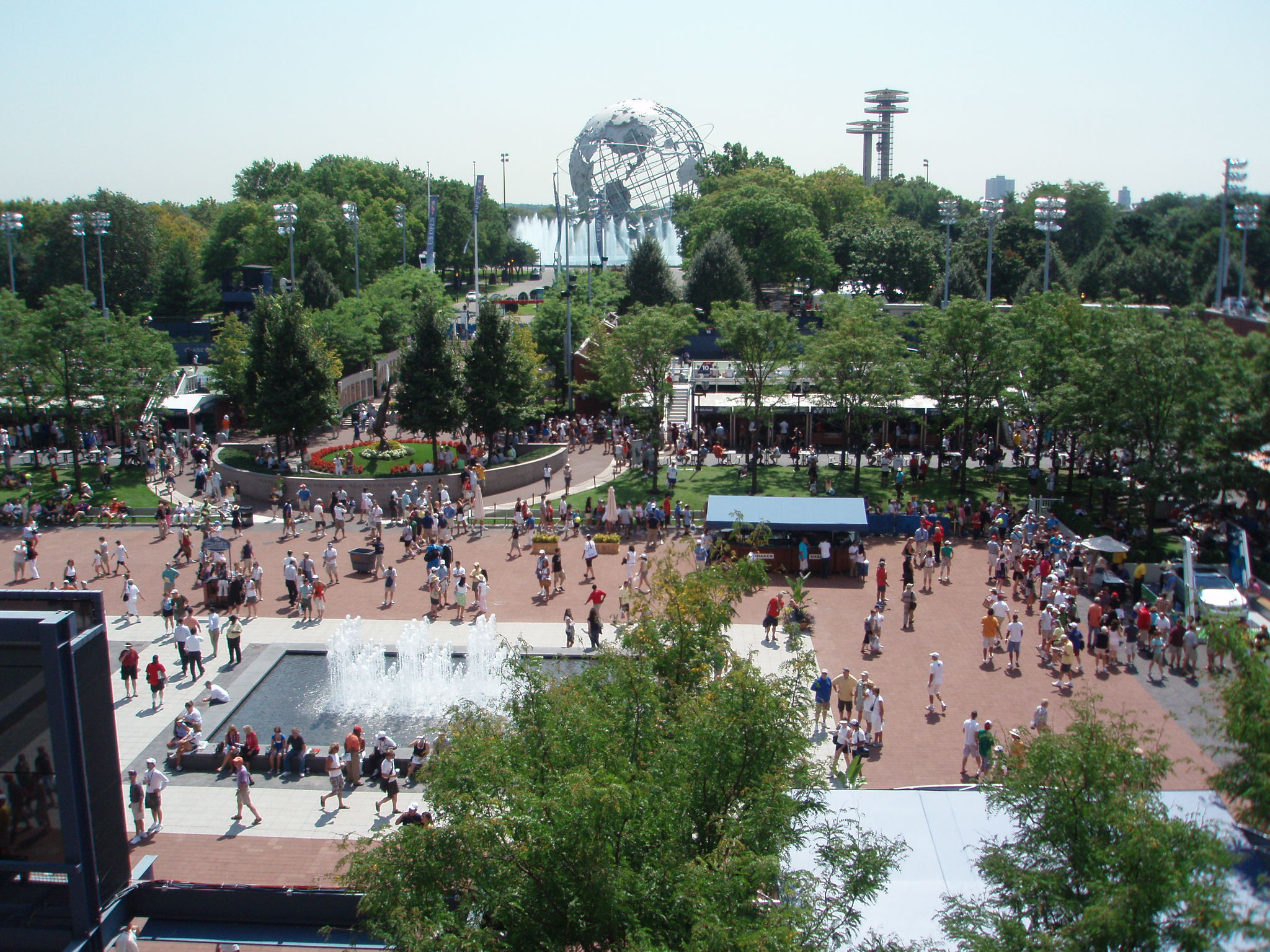
The US Open doesn't ask you to behave like you're at Wimbledon, and that's deliberate, not an oversight. Knowing what makes this Slam different before you arrive changes the whole trip from "am I allowed to do this" to "oh, this is the point."
What makes this tournament different
There's no formal spectator dress code
The tournament's own guidance is closer to "dress up if you want to" — shirts and shoes stay on, nothing offensive gets worn, and everything from tennis-core polish to shorts and a t-shirt reads as fine.
Music plays between points, on purpose
Most Grand Slams expect real quiet during points, with stewards actively enforcing it. The US Open runs the opposite philosophy — between-point music and a loud, active crowd are the intended experience, especially on Ashe at night, not a breach of etiquette.
Real rules still exist, and still get enforced
Bags capped at 12"x12"x16", backpacks barred, umbrellas can't be held open during play. Moving around the stands or extended filming during a point has led to real match stoppages — the looseness has a ceiling even on the loudest Slam.
Mistakes most first-timers make
Showing up without checking the Schedule of Play and missing a specific player's practice session — see the Arrival Guide for the real timing. Treating the grounds as a one-stadium visit and skipping the outer courts, where some of the closest, best-value tennis actually happens. Wearing shoes that aren't built for a full day of walking real distances between courts. And underestimating New York's late-summer humidity — see the Weather guide for the real numbers.
What happens when play stops
Rain, heat, and darkness all genuinely affect the schedule across a two-week Slam — worth knowing the real rules before a delay catches you off guard.
Essential apps
The official US Open app
Schedule of Play, live scores, IBM SlamTracker, and grounds navigation — genuinely the single most useful free tool for planning each day on-site.
MYmta
Real-time subway arrivals and service alerts for the 7 train — matters on a day with a planned service change.
Uber
The real fallback once a night session lets out and the 7 train gets packed — Flushing Meadows gets a surge of demand at the same few minutes every night, so request early rather than waiting for the crowd to thin.
A few things worth knowing upfront
The US Open deliberately plays music between points and tolerates a louder crowd than any other Grand Slam — join in rather than holding back. A Grounds Admission pass is a genuinely great first-timer day, not a consolation prize. And the city around the tournament is half the reason to make this trip, not a distraction from it.