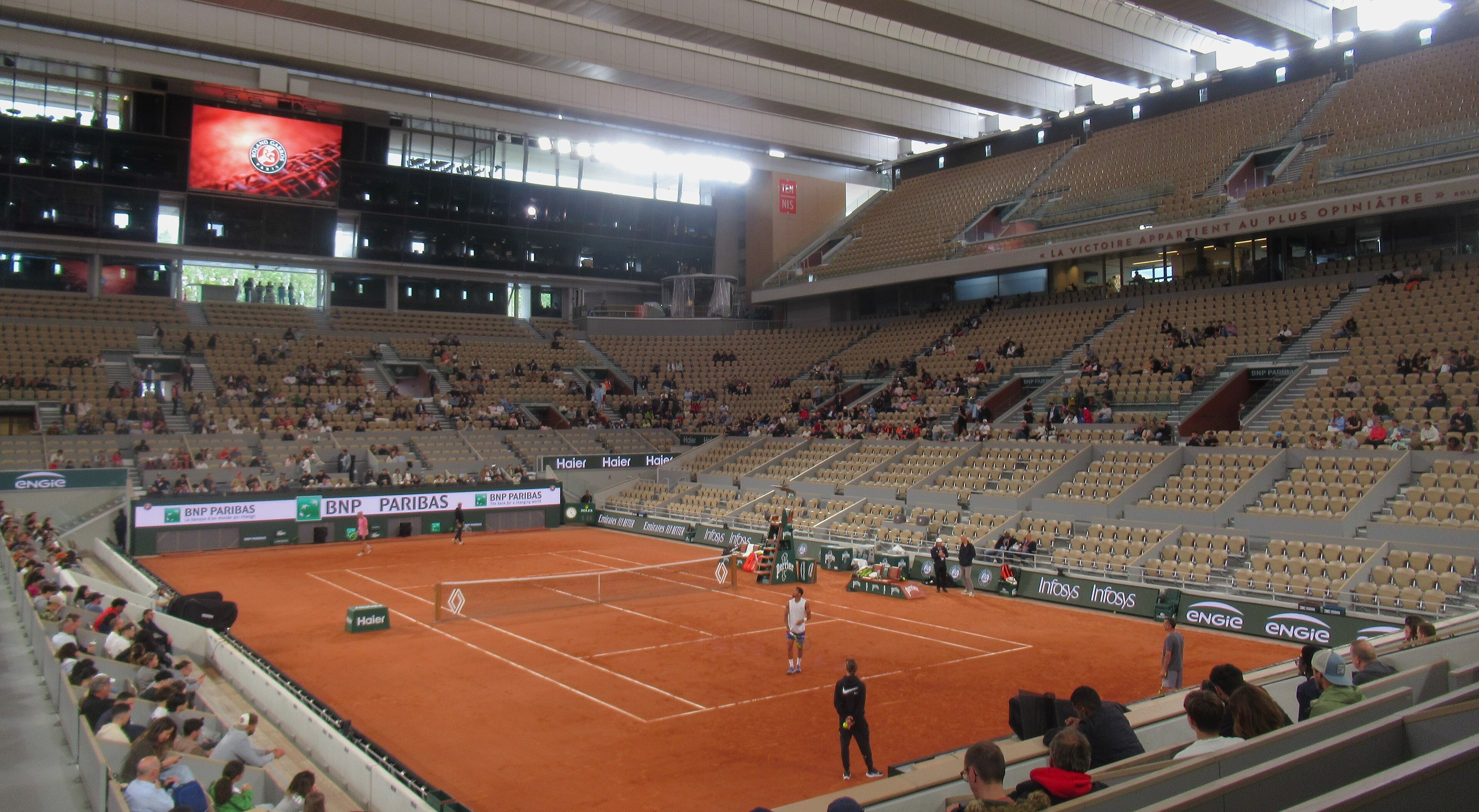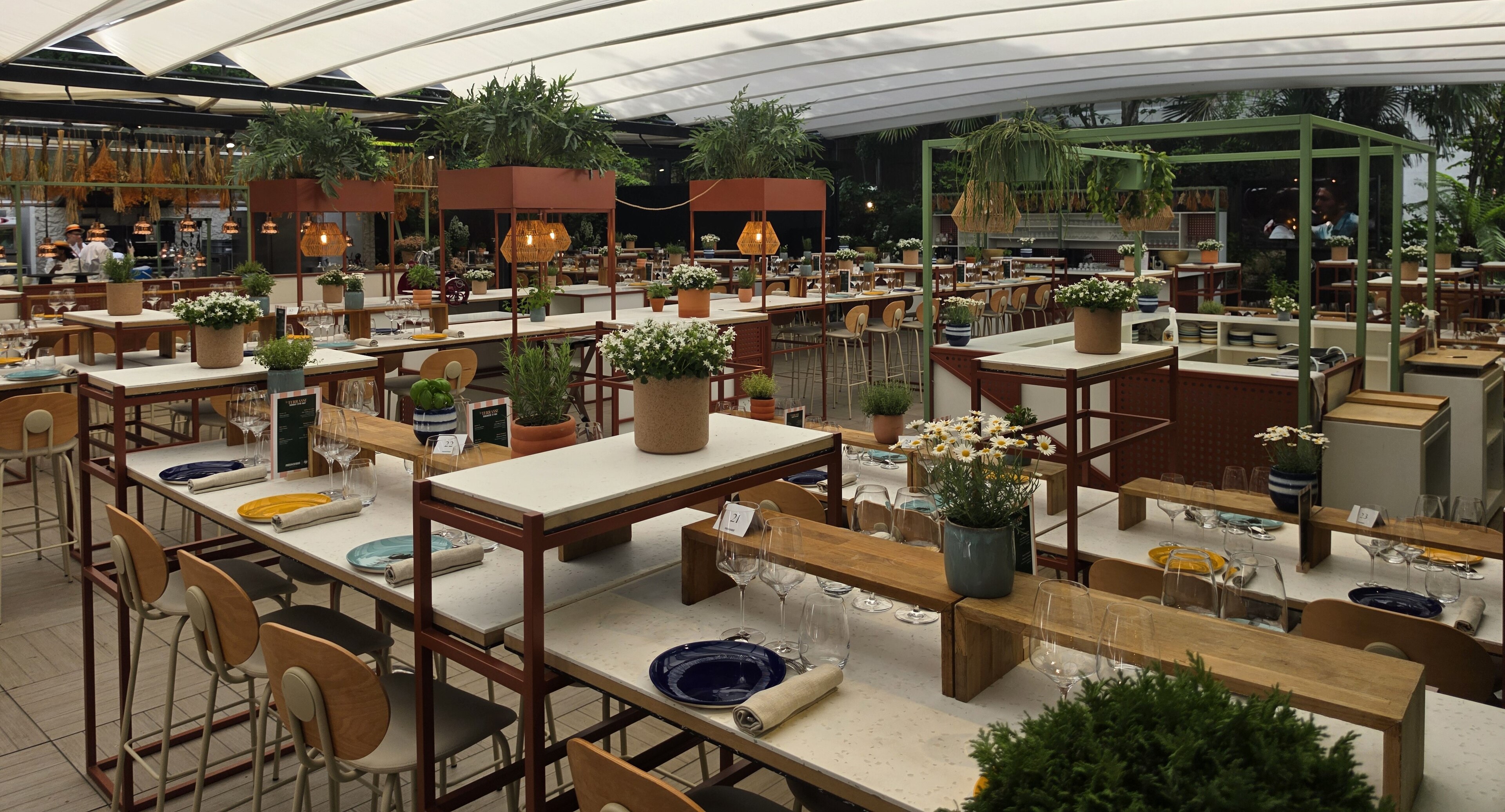
Official hospitality at Roland-Garros runs through Sodexo Live!, the FFT's own hospitality partner, and it comes in a handful of named rooms rather than one generic VIP tier. Le Pavillon is the flagship: a beach-house-styled dining room with a 500-square-metre terrace looking directly over the practice courts, built for a long, unhurried lunch between sessions. La Mezzanine sits one floor up inside L'Orangerie, a brighter, more informal lounge with screens showing live play and a steady rotation of canapés rather than a seated meal. L'Orangerie itself runs its own seating categories, Category 1 and Category Gold, both with premium Chatrier access built in.
The shape of the day is the same across all of them. Doors typically open around 10am, well ahead of the first match, and stay open through 5:30pm — long enough to eat properly, disappear for a match, come back for another course, and still catch the next session without rushing anywhere. A drinks package is standard: champagne, wine, beer, spirits and soft drinks on a flat rate rather than a tab, alongside sweet and savoury catering that runs from morning pastries through a full lunch to afternoon snacks. It's built explicitly around not queuing for food between matches, which on a hot day in week two of a Grand Slam is worth more than it sounds.
None of this is cheap, and the FFT doesn't pretend otherwise. A single hospitality day, across Le Pavillon, La Mezzanine and L'Orangerie's two seating tiers, runs into four figures in dollar terms once seat category and lunch service are both factored in — we put the range at roughly $917-1,428 per person per day depending on tier. What you're actually paying for is removing every piece of friction from a day at a Grand Slam: no ticket queue, no food queue, guaranteed seating, and a room to retreat to when the sun or the crowds get to be too much.
Sodexo Live! is the sole official hospitality operator — book through sodexolive-hospitality.com or via Roland-Garros's own hospitality.rolandgarros.com portal, both explicitly named among the FFT's four sanctioned sales channels.
Why it's special
A Grand Slam day session, done properly, is four to six hours of standing in queues between the tennis you actually came for: security, food, the bar, the bathroom, repeat. Official hospitality removes every one of those queues in one move, and the effect compounds. You're not choosing between watching the match and eating lunch. You do both, in the same afternoon, without either one eating into the other.
Le Pavillon's terrace over the practice courts is the detail that sells it for me. Match tennis is choreographed, tight, controlled. Practice tennis is loose, players trying things, coaches shouting corrections mid-rally. Watching that over lunch, half-attention on the plate and half on the courts below, is a different, more relaxed way to spend part of a tournament day than sitting rigidly in a grandstand seat.