MFonzatti, CC BY 4.0
La Terre Batue: Roland-Garros's two show courts — one roofed icon, one clay classic
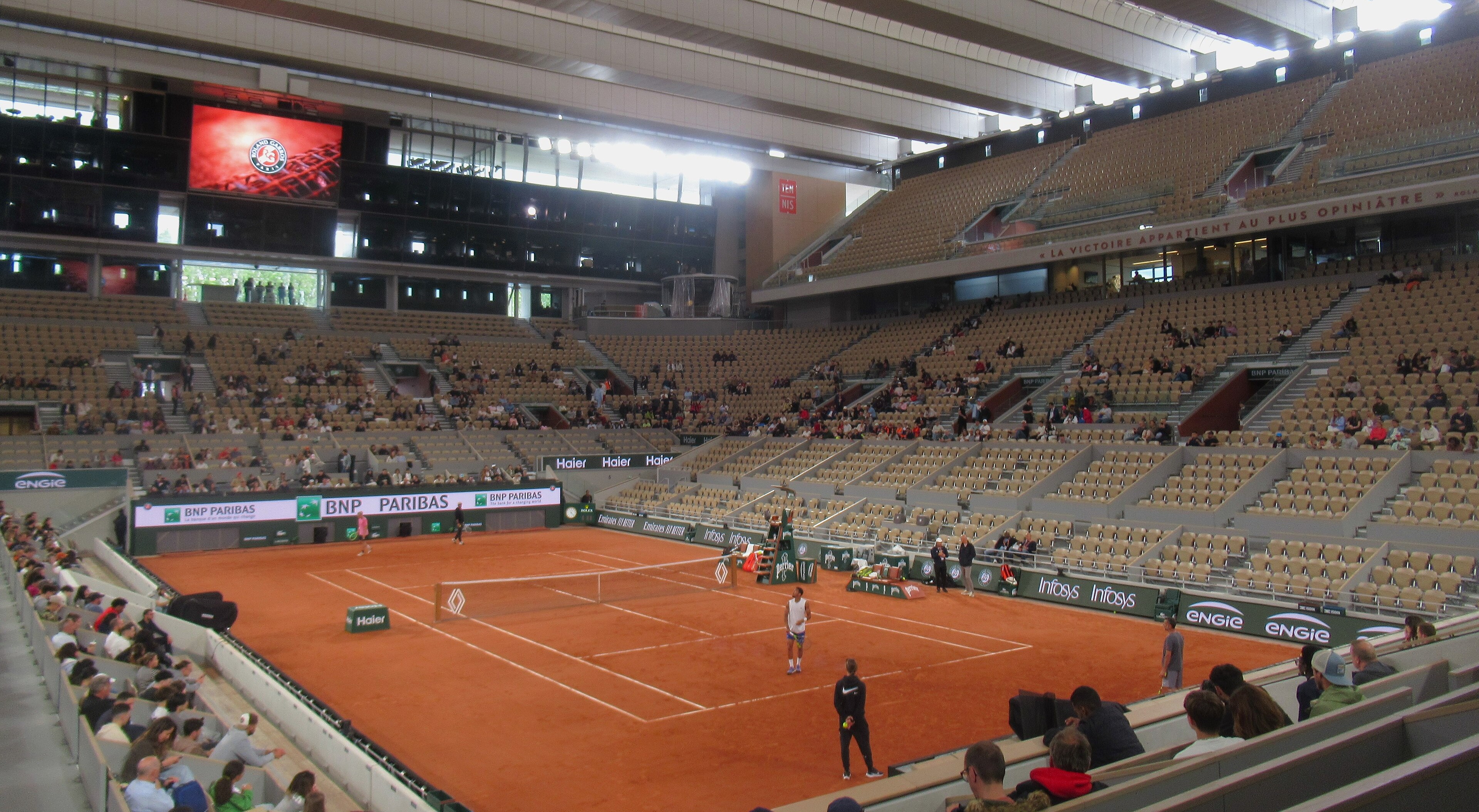
Roland-Garros has two show courts, and they don't feel like siblings. Court Philippe-Chatrier is the one everyone means when they say "Center Court" here: 15,225 seats, red clay that's been raked in this same corner of the 16th arrondissement since 1928, and a bowl that was almost entirely rebuilt between 2018 and 2020. It carried a plainer name for most of its life, Court Central, until 2001, when the FFT renamed it for Philippe Chatrier, the federation president who spent the 1970s and 80s fighting to get tennis back into the Olympics. He won that fight in 1988. The court named for him now closes with a roof.
That roof is the real story of the last renovation. Eleven steel trusses, 330 tonnes apiece, slide shut in about 15 minutes when the Paris sky does what it usually does in late May. Before 2020, rain meant a dead afternoon and a rescheduled match. Now Chatrier keeps playing, and something about watching clay-court tennis under an enclosed roof, muffled crowd noise bouncing off steel instead of open sky, changes the atmosphere in a way that's hard to predict until you're sitting in it.
Chatrier carries one more permanent mark now. In May 2025, Roland-Garros set a tile bearing Rafael Nadal's footprint into the ground beside the net, alongside a plaque engraved with the Musketeers' Cup and his record 14 titles. It's the only tribute of its kind on the court, and for the sport's biggest clay-court fanbase, finding it courtside is close to a pilgrimage stop in its own right.
Suzanne-Lenglen sits a short walk away and plays a different role entirely. Built in 1994 as "Court A" before earning Lenglen's name, it holds 10,068 people across an upper and lower circle and got its own retractable roof in the same 2020 project, the second court at Roland-Garros to have one. Lenglen won six Wimbledon titles and six French Championships in the 1920s, dominant enough that the French called her La Divine, and the surface named for her tends to produce the tournament's best second-tier matches: seeded players not yet at Chatrier level, former champions on the way down, the ones fighting hardest to be somewhere else next year.
Ticket categories map directly onto how close you sit to the baseline. On Chatrier and Lenglen, Category Gold and Category 1 run along the lower rows nearest the court, Category 2 climbs into the mid-tier, and outside courts like Simonne-Mathieu sit in their own cheaper bracket entirely. A single day on Chatrier or Lenglen runs somewhere in the €75-198 range depending on category and which day of the tournament, climbing sharply for the final weekend. Hospitality packages through the FFT's own Sodexo Live!-run tiers, Le Pavillon, La Mezzanine, L'Orangerie, sit well above that, with lunch and lounge access built into the price.
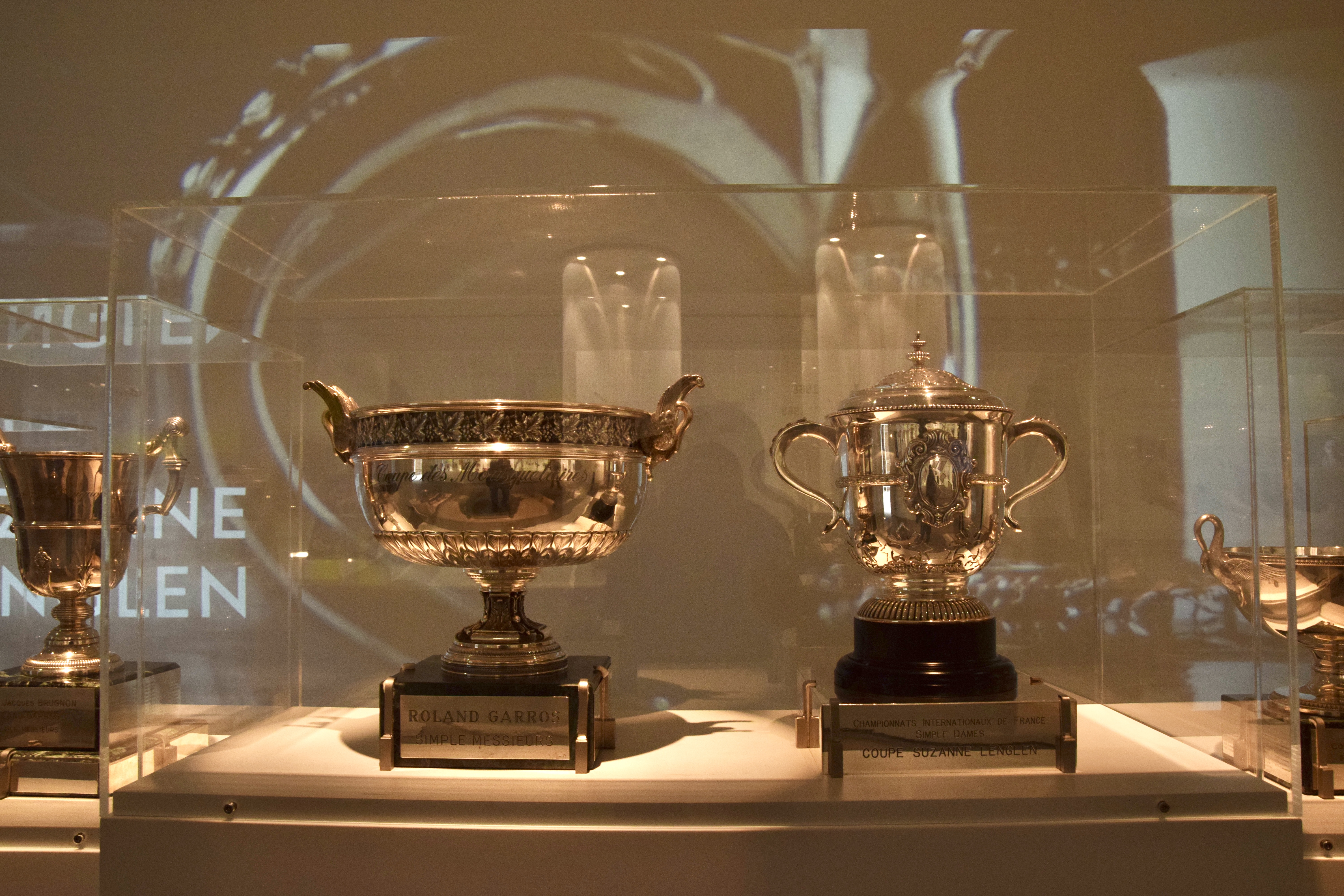
Buy through the official Roland-Garros ticketing site first. The FFT runs its own resale marketplace for tickets people can no longer use, sold back at face value, and that's the only resale channel worth trusting. Everything outside it, however official-sounding the name, is a gamble you don't need to take for a ticket this easy to get legitimately.
Why it's special
Wimbledon has its lawns and its dress code. The US Open has Ashe and its noise. Roland-Garros has clay, and clay changes everything about how these two courts play. The ball sits up higher, rallies run longer, and a five-set match on Chatrier in the tournament's second week can turn into a three-and-a-half-hour war of attrition that a hard court would have settled in half the time. Sitting in Chatrier for that kind of match, in a roofed bowl that didn't exist in this form eight years ago, is watching tennis's slowest, most demanding surface staged in one of its newest arenas.
Lenglen is the better watch for anyone who actually wants to see tennis rather than be seen at it. Smaller, cheaper, and named for a player whose dominance in the 1920s makes modern win streaks look ordinary by comparison, it's where you catch a match that might not make the highlight reel but will be closer, stranger, and more human than whatever's happening next door. I'd rather sit in Lenglen for an entertaining four-set match than fight the Chatrier crowds for a straight-sets blowout on the main show court. Both rooms are the tournament. Only one of them tells you that on the way in.
Category Gold and Category 1 seats sit in the lower rows on both Chatrier and Lenglen — closest to the clay, but the cheaper Category 2 tier in the upper bowl often gives a better full-court sightline for following rallies rather than just the baseline action in front of you.
The roof closes in around 15 minutes once rain starts — if play is suspended, stay in your seat rather than heading for cover elsewhere in the grounds; the restart is usually faster than people expect once the trusses are shut.
Lenglen's ticket prices run noticeably below Chatrier's for the same day of the tournament, and the standard of tennis in the second week is frequently just as high — a genuinely good-value alternative if Chatrier is sold out or over budget.
Nadal's footprint tile sits beside the net on Chatrier, not at the entrance or in a concourse — you'll need to be courtside (or watching closely on the broadcast camera pass) to spot it, since it isn't sign-posted for passing foot traffic.
Don't buy from a resale site just because it uses official-sounding branding or shows the Roland-Garros logo — the only sanctioned resale channel is the FFT's own marketplace, which resells returned tickets at face value; anything else carries real counterfeit risk for a ticket this replaceable through legitimate means. And don't assume a Chatrier ticket automatically means better tennis than a Lenglen one on the same day: schedules are set by the tournament based on player status and TV slots, not court quality, so a Lenglen day session can easily outclass a Chatrier one depending on who's drawn where that afternoon.