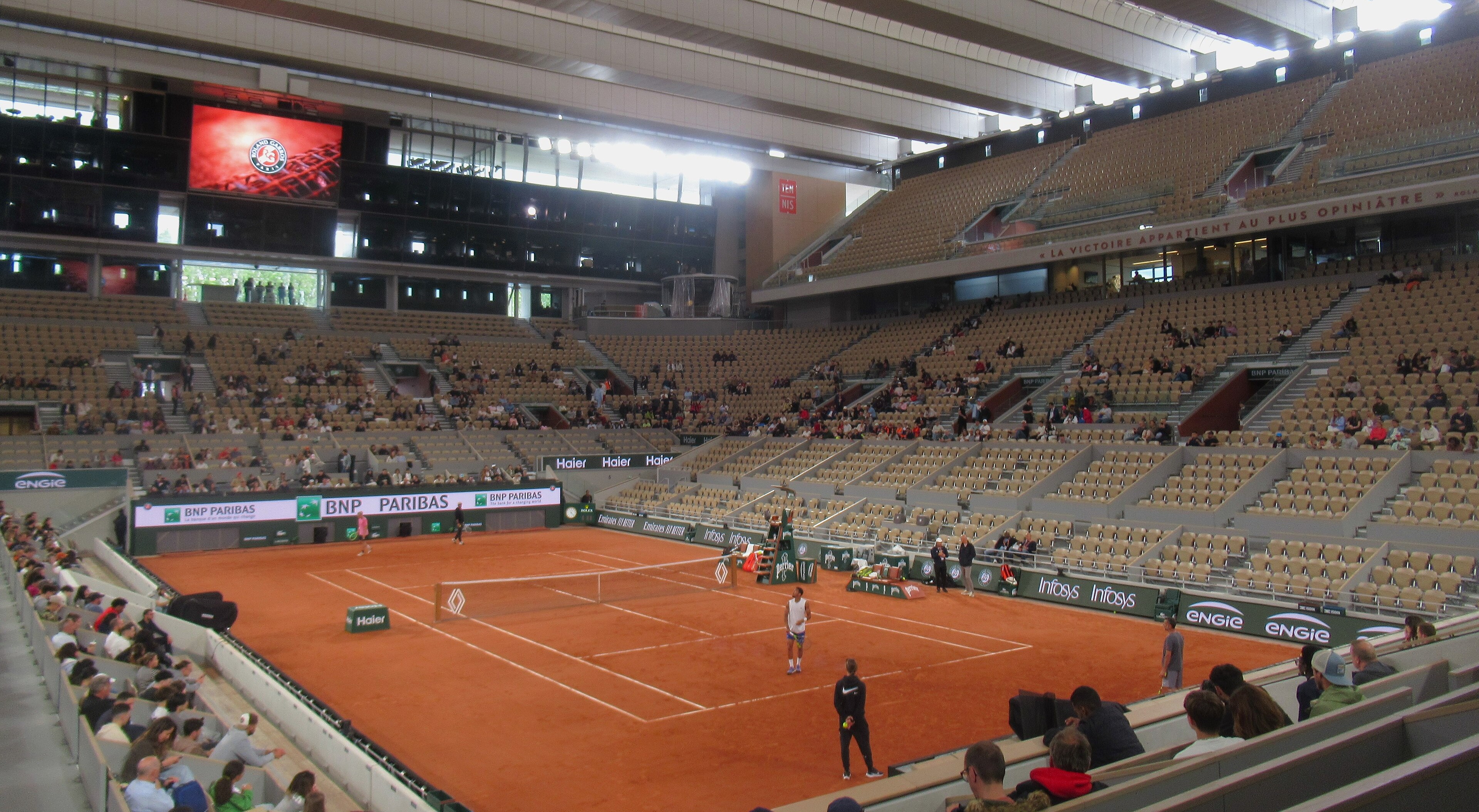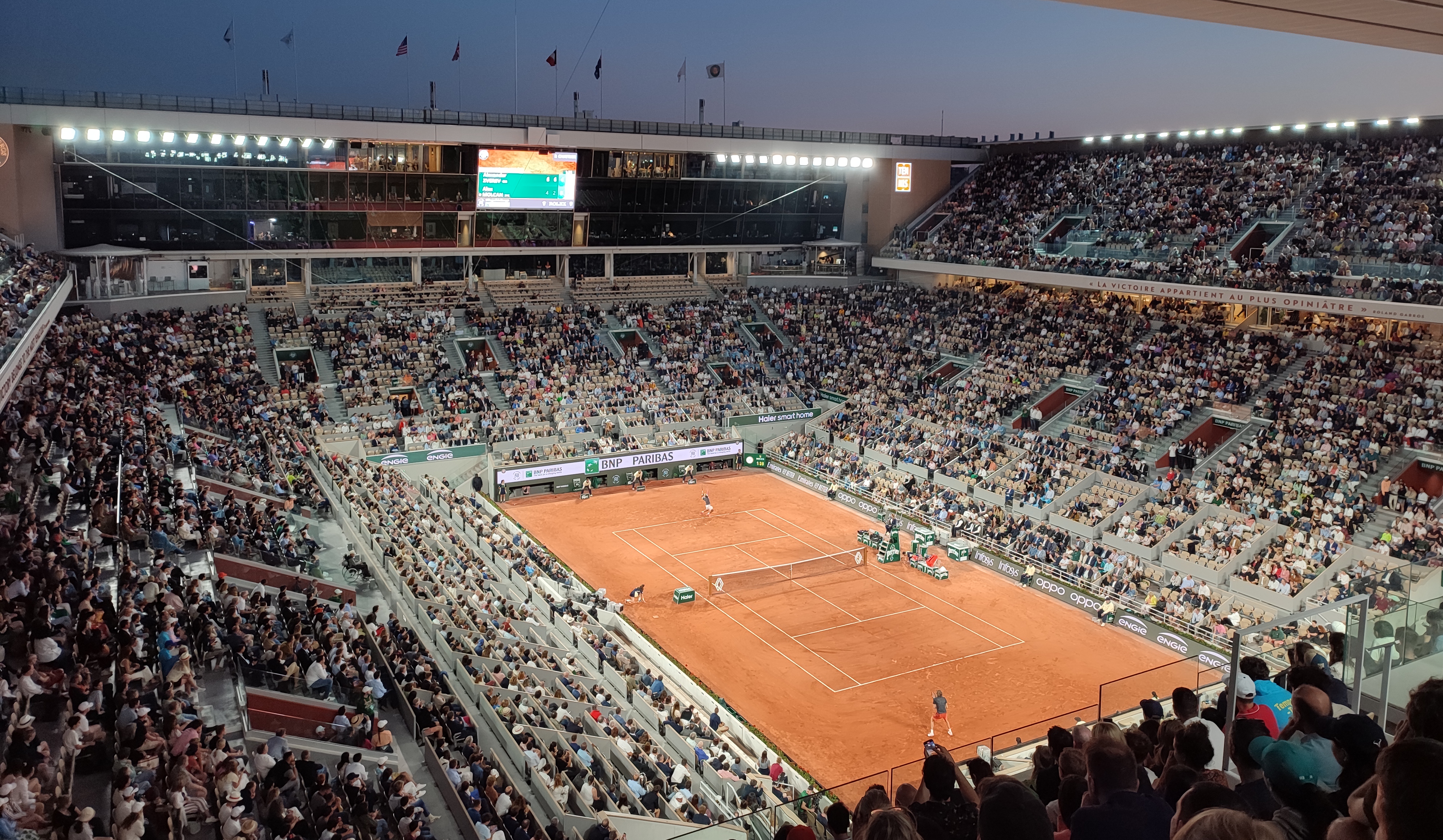
Night play at Roland-Garros only exists because the roof does. Before Court Philippe-Chatrier's 2020 renovation, every match was a daylight match, weather permitting, and "permitting" was doing a lot of work in a city where late-May rain is closer to routine than exception. The retractable roof changed that. Now Chatrier hosts a genuine evening session, roof closed, lights up, one match only, guaranteed to be played regardless of what the sky is doing outside.
Gates open at 6:30pm; play doesn't start before 8:15pm. That gap matters — it's not a rushed evening add-on to the day's schedule, it's a separate session built around a single, deliberately chosen match, almost always the day's most anticipated pairing. Where a day session on Chatrier can run through up to three matches back to back, the night session commits the entire evening to one. The tournament picks that match to matter, and the crowd behaves accordingly.
The roof closing for night play does something to the room that's hard to predict from outside. Clay-court tennis is usually an outdoor, open-sky experience — the roof enclosure turns Chatrier into something closer to an arena, sound bouncing back off steel instead of dissipating into the evening air. Combined with stadium lighting replacing daylight and a crowd that's paid a premium specifically for this one match, the atmosphere runs noticeably more intense than an afternoon session on the same court.
A night session ticket includes the numbered Chatrier seat for the match plus access to outside-court open seating for anything still playing elsewhere on the grounds that evening — though realistically, once the night match starts, that's where everyone's attention goes. Prices sit at a premium over day sessions for the same court, and tickets move through both the official Roland-Garros channels and, closer to the date, secondary marketplaces once the actual matchup is known and demand becomes clearer.
Why it's special
Day tennis and night tennis are, emotionally, different sports played on the same court. A day session has rhythm and rotation — one match ends, another begins, the crowd's attention resets each time. A night session is built entirely around anticipation for a single match that the tournament has decided deserves the whole evening, and everyone in the building knows it before a ball is struck.
The roof is what actually makes this possible, and it's worth sitting with that for a second: clay-court tennis under a closed roof, at night, lit artificially, muffled and intense, simply didn't exist at Roland-Garros before 2020. It's the newest experience this 99-year-old tournament has ever created, layered onto its oldest court. Watching a five-set battle unfold under that roof, crowd noise with nowhere to go but back down onto the court, is Roland-Garros doing something it genuinely couldn't do a decade ago.