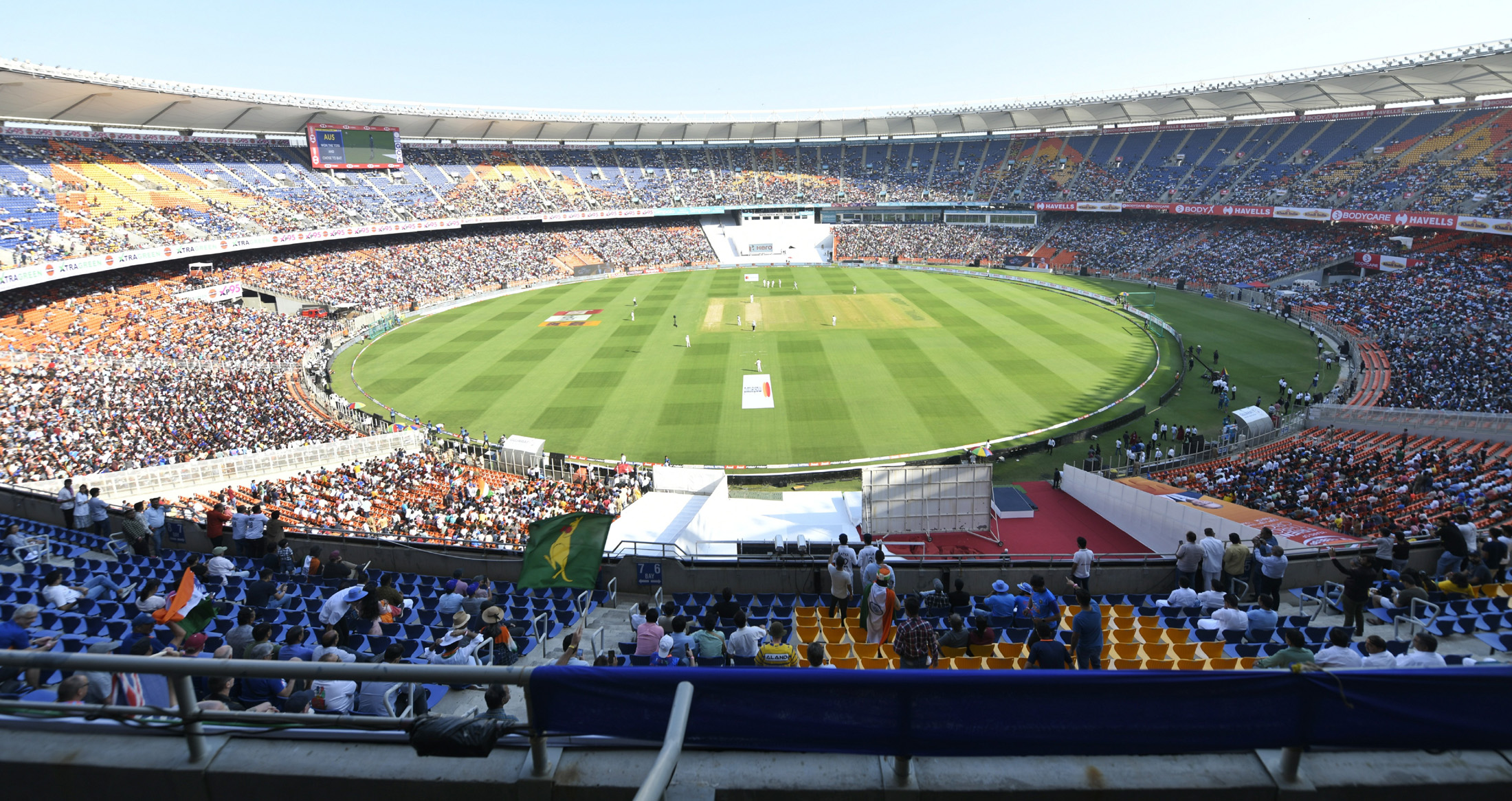
Narendra Modi Stadium seats 132,000 people, which makes it not just the largest cricket ground on earth but the largest sporting arena of any kind anywhere in the world. It sits in Motera, on the banks of the Sabarmati River, entirely rebuilt from the old Motera Stadium and reopened in 2021 with 11 different pitches cut from different soil types, an Olympic-size pool, and a 55-room clubhouse. Nothing about it is modest.
It's also, for India specifically, the site of one of the most painful nights in the country's recent cricket history. On 19 November 2023, this stadium hosted the Cricket World Cup final, India against Australia, in front of 92,453 people, still the largest attendance ever recorded for an ODI. India had gone unbeaten through the entire tournament. Australia chased down 241 with six wickets in hand, winning a record sixth World Cup title, with Travis Head's century doing most of the damage. Reports from the ground described the crowd going largely silent as the result became clear, a genuinely unusual thing to happen in a stadium built to hold more people than almost any other sports venue on the planet.
That result has nothing directly to do with the Test format this pack covers, and Australia's record in the shorter format doesn't predict how a five-day Test here will play out. But walking into this specific ground, for this specific rivalry, carries a weight that a neutral stadium wouldn't. The pitch itself is generally rated good for both batting and bowling, offering pace and bounce for quicks with some assistance for spin through the middle overs, a genuinely balanced surface rather than one that favours a single discipline.
This ground, under its earlier name of Motera / Sardar Patel Stadium, has also hosted three individual records that go well beyond that single 2023 night. On 7 March 1987, Sunil Gavaskar became the first batter in history to reach 10,000 Test runs here, with a late cut off Pakistan's Ijaz Faqih. On 8 February 1994, Kapil Dev took the wicket of Sri Lanka's Hashan Tillakaratne here to reach 432 Test wickets, overtaking Richard Hadlee's record to become the leading wicket-taker in Test history at the time, a moment the ground marked by releasing 432 balloons. And on 20 November 2009, Sachin Tendulkar became the first cricketer to pass 30,000 international runs, also at this ground, in a Test against Sri Lanka. Three of the format's most significant individual milestones, all set on the same patch of turf, decades apart.
For the final Test of this pack's three-city stretch, and the last of the whole five-match series, Ahmedabad closing things out at the scene of India's most-watched cricketing defeat in recent memory adds a layer of stakes that goes beyond the scoreline.