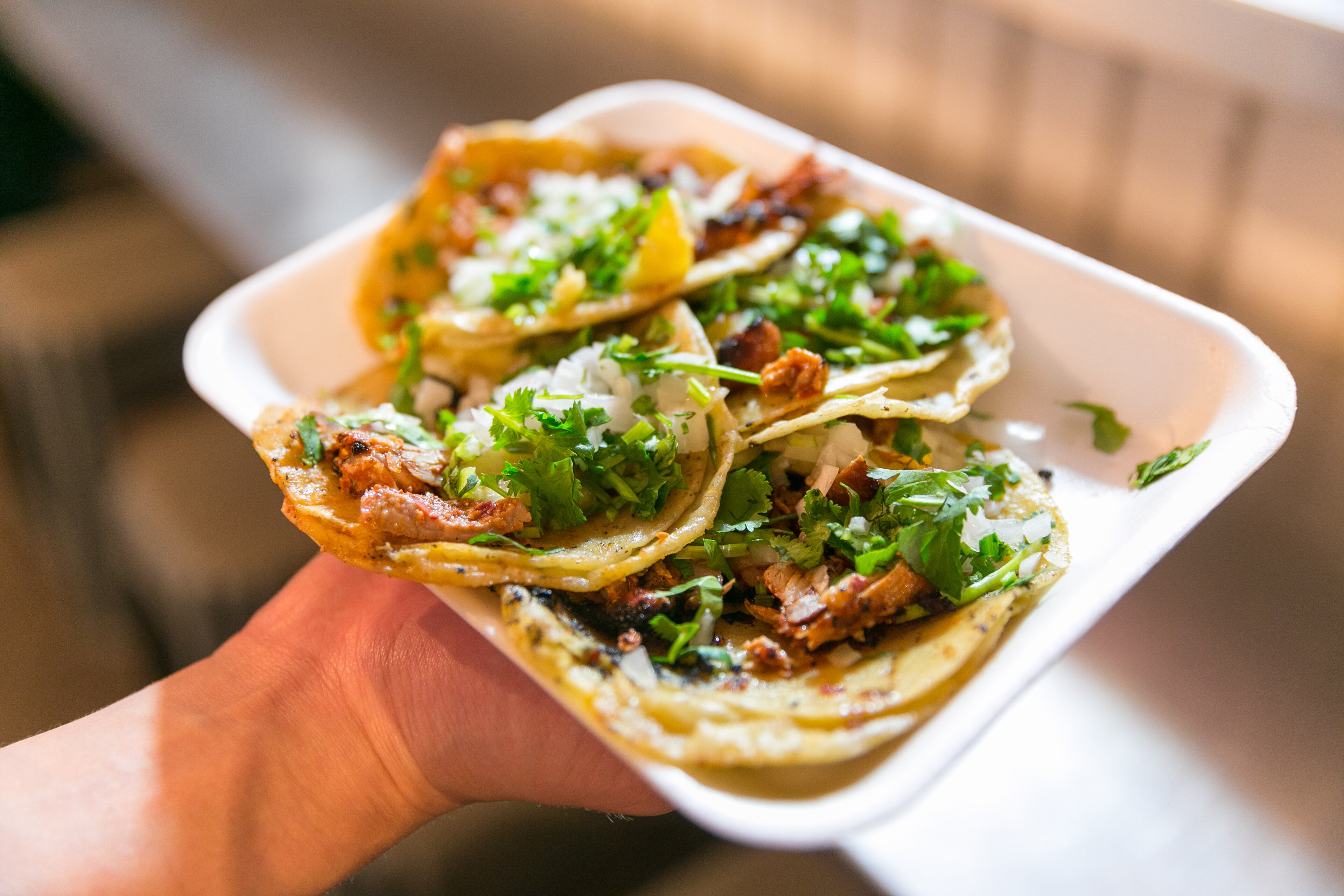
Tacos al pastor didn't originate in Mexico — the trompo, the vertical spit the pork rotates on, came from Lebanese immigrants who arrived in central Mexico in the late 19th century bringing shawarma technique with them. What developed over the following decades is genuinely Mexican: pork instead of lamb, a marinade built on dried chiles and achiote, and the signature move of shaving a piece of pineapple off the top of the spit to land directly on the meat as it's carved into the tortilla. It's one of the clearest examples anywhere of immigrant food culture becoming something new rather than staying a transplant, and Mexico City is still the place to actually taste that history rather than read about it.
El Vilsito is the most distinctive entry point: an actual working car repair shop in the Narvarte neighborhood by day that turns into one of the city's most talked-about taquerias by night, mechanics' tools still visible around the trompo. It stays open until 3am on weekdays and 5am on weekends, and its specialty, the gringa de pastor (al pastor folded into a flour tortilla with melted cheese), is worth ordering alongside the standard corn tortilla tacos. See live rating and reviews on Google Maps
Los Cocuyos, in the Centro Histórico, is the classic late-night stand — order the campechano, a mix of maciza (lean pork) and longaniza sausage, alongside the al pastor itself, and don't skip the surtido if you want a genuine sampling of everything on the trompo in one order. See live rating and reviews on Google Maps
Taquería Orinoco is the third name that comes up constantly in Mexico City taco conversations, but it's worth knowing going in that it's a genuine multi-location chain rather than a single stand — there are Orinoco branches across several neighborhoods, including ones in Nápoles and Tabacalera, each independently reviewed. Rather than treat this as "one restaurant," pick whichever branch sits closest to where you're already staying (Roma Norte and Condesa both have reasonably close options) and expect the consistent quality the brand is known for rather than one specific "original" location's exact character. See live rating and reviews on Google Maps