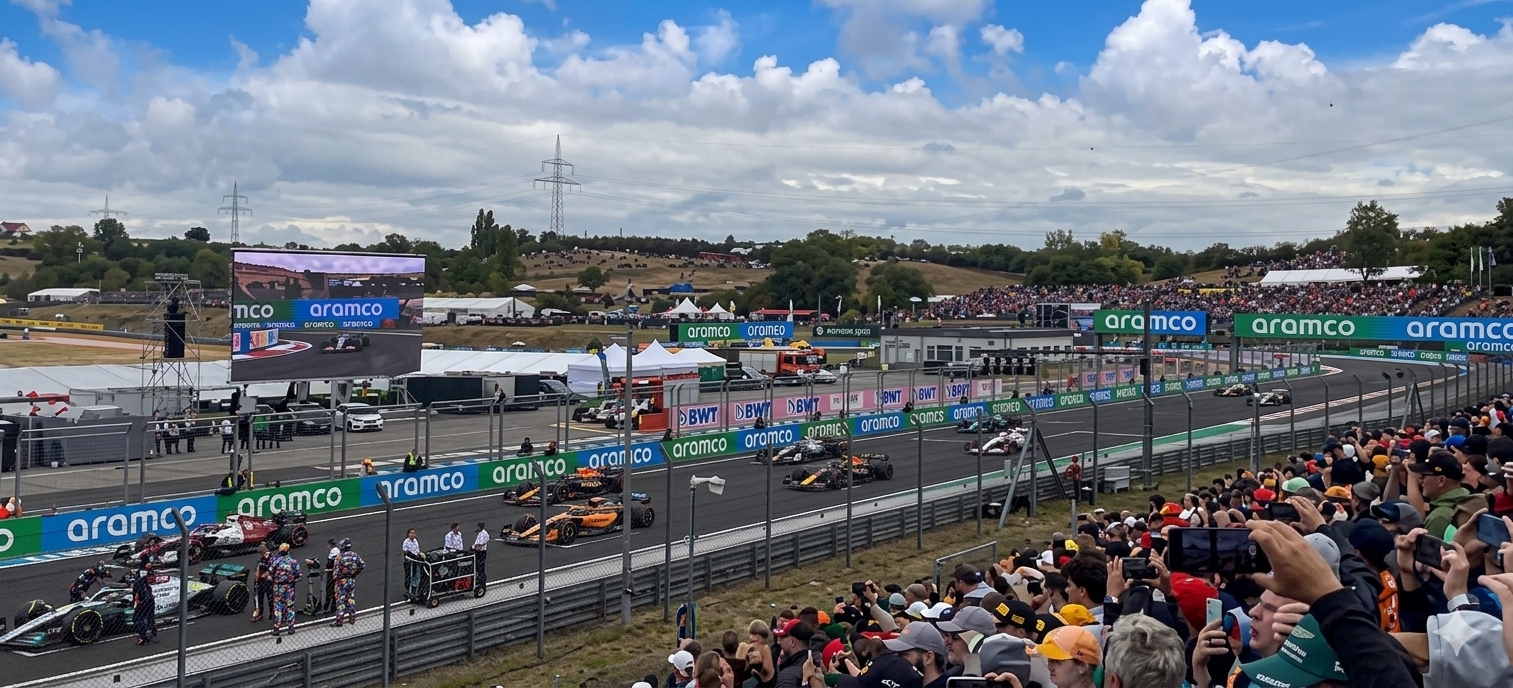
Grid 1 is new since the Hungaroring's 2025 reconstruction, built from what used to be two separate stands, Gold 2 and Silver 2, merged into one six-sector structure directly facing the starting grid. Sectors A through F, 25 rows each, Sector A closest to Turn 1 and the finish line, Sector F closest to Turn 14. The grid itself forms up directly in front of every sector, which is the actual reason to book this stand over most others at the circuit.
What you get here is the pre-race ritual up close, cars rolling into position, mechanics working the grid, drivers doing their walk, the kind of people-watching that doesn't happen anywhere else on the lap. Sector A sits nearest the finish line and the podium sits just across the track to its left, with the pit garages' opening boxes close enough that you'll catch the first few teams' stops, though not the full pit lane. Higher rows matter here more than most stands, since they clear the pit wall and give you an actual look into the start of pit lane rather than a wall of concrete.
The trade-off is Turn 1. The new main grandstand sits to Grid 1's left and blocks the view toward it almost entirely, worse the further left you sit. You'll watch cars cross the start line and then lose them within a few seconds as they disappear behind the stand. Sector E or F, furthest from that blind spot, trades some of the grid-front intimacy for a clean look at cars exiting Turn 14 and accelerating onto the straight instead, arguably the better pick if you want actual racing alongside the grid spectacle rather than just the spectacle itself.
It's uncovered, same as nearly everything at this circuit except the main grandstand, and Grid 3 sits immediately to the right, physically part of the same structure under a different name.
Why it's special
Most grandstands at the Hungaroring sell you a corner. Grid 1 sells you something most fans never get close to anywhere else on the calendar, the thirty-odd minutes before lights out, when the grid is genuinely a working space, not a photo opportunity behind a rope line. Mechanics making last adjustments, drivers doing their pre-race routine, the occasional celebrity or team principal working the grid before the formation lap, all of it close enough to actually watch rather than catch on a broadcast feed.
That's a specific kind of value that doesn't show up in a sightline comparison. A seat here isn't really competing with T1 or the Chicane on racing drama, it's offering something those stands can't: the one part of a Grand Prix weekend that's genuinely ceremony as much as sport, watched from close enough that it feels like you're part of it rather than watching it happen.


