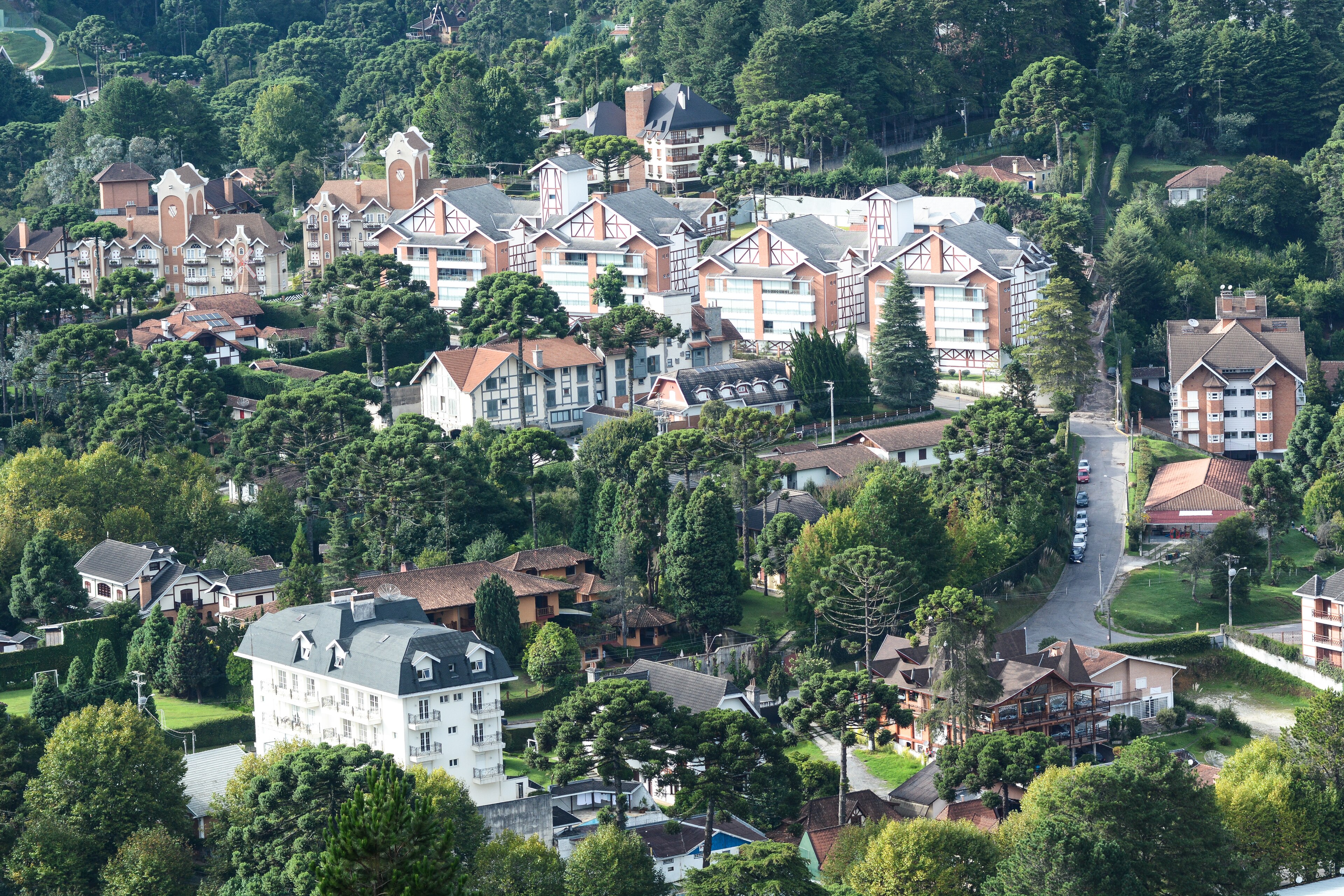
Campos do Jordão sits roughly 1,700 metres up in the Serra da Mantiqueira, about a 2-hour drive from São Paulo, and it's the highest city in Brazil — which explains why it's nicknamed the "Brazilian Switzerland." Swiss, German, and Scottish influence shaped the town's architecture over the last century, and the result is a genuinely strange, charming contrast to São Paulo's modernist skyline: alpine-style buildings, a cooler climate, and a pace that feels imported from somewhere else entirely.
A typical day tour runs around 12 hours total, including the drive both ways, with stops at Palácio Boa Vista — the state governor's official residence, carrying a strong, large-sample rating — and Ducha de Prata, a waterfall right in town with a craft market built around it. Vila Capivari and Vila Inglesa, the town's two most walkable central neighborhoods, are where most tours build in free time — Vila Capivari specifically has its own small cable-car-style ride up Morro do Elefante for panoramic views over the town and mountains, a genuinely well-reviewed, if smaller-scale, attraction. The town is also known regionally for its chocolate production, and most tours build in a stop at a chocolate factory retail store on the way back to the city — regional wine and cheese sold alongside the chocolate itself.
At altitude and this far from the city, the climate genuinely shifts — cooler year-round than São Paulo, which is part of why the town became a resort destination in the first place. Food and drinks aren't typically included in the base tour price, so budget separately for lunch in one of the town's cafés or restaurants.
Why it's special
Race weekends tend to get judged entirely on the track and the host city, and both are worth the trip on their own — but Campos do Jordão is the reminder that São Paulo state is bigger and stranger than the metro area most visitors ever see. A mountain town at nearly 1,700 metres, built by Swiss and German immigrants to look nothing like the rest of Brazil, sitting two hours from a circuit hosting Formula 1, is the kind of contrast that makes a trip memorable beyond the racing itself. It's a genuinely long day — 12 hours including the drive — but for anyone with a rest day built into their schedule, it's the single biggest change of scenery available from São Paulo.