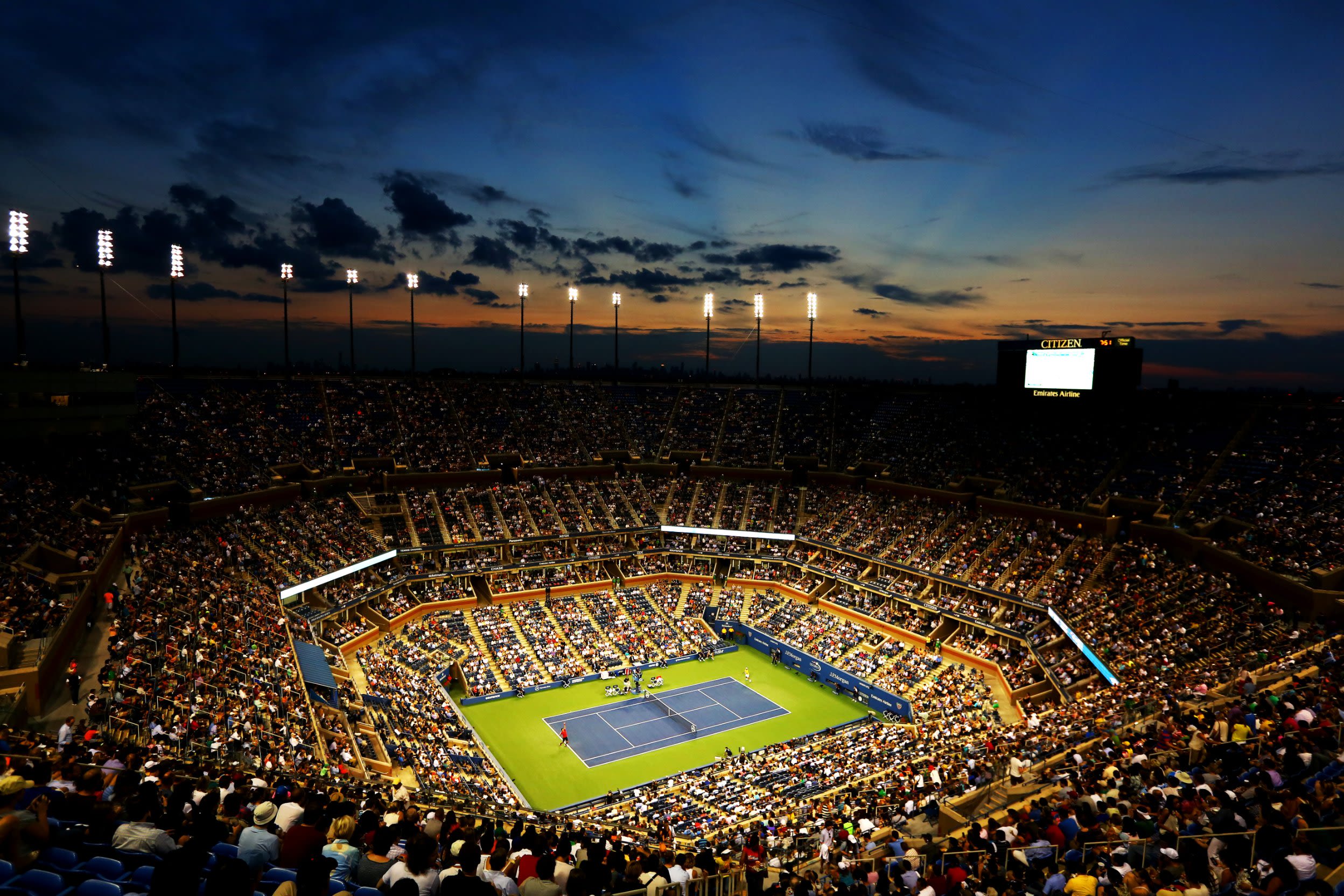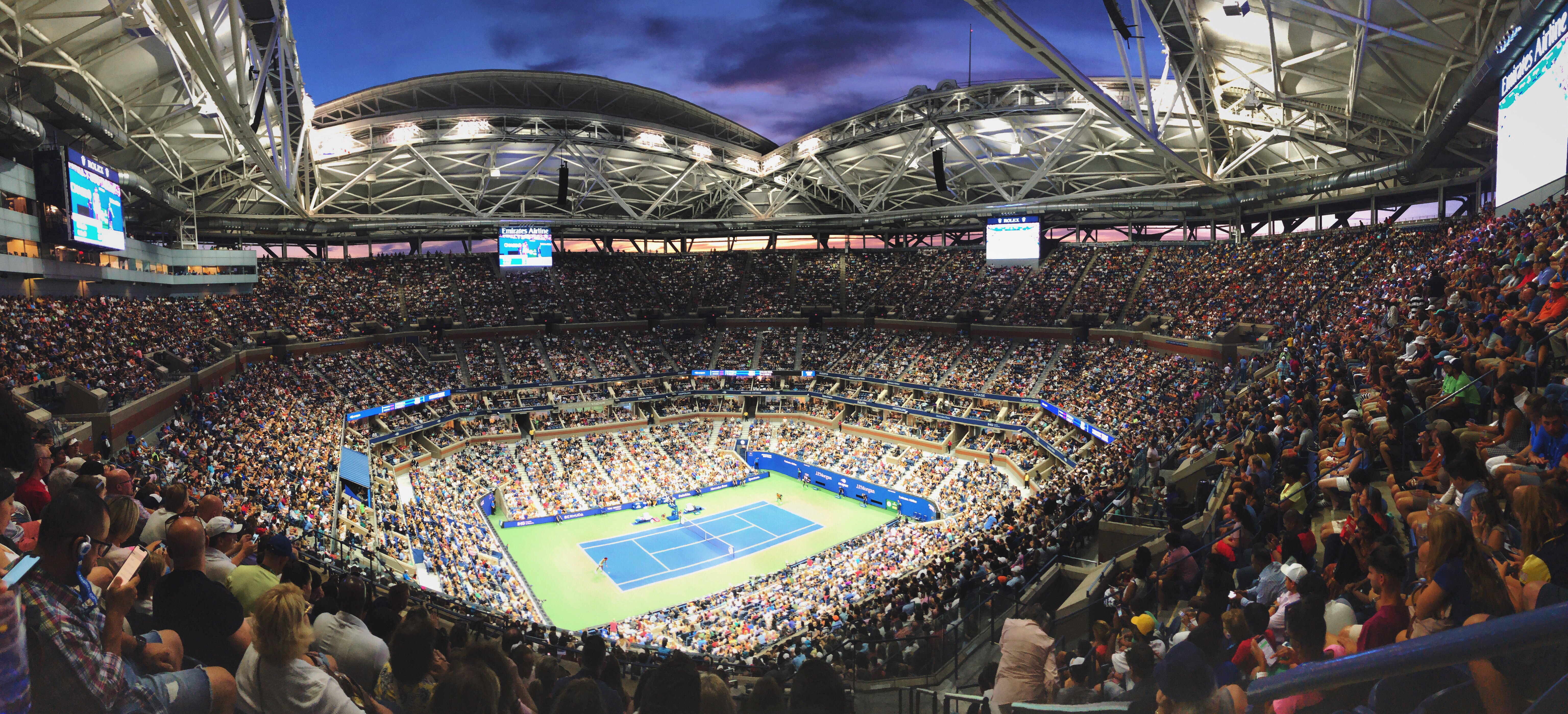
Arthur Ashe Stadium seats 23,771 people. That number is worth sitting with for a moment — it's bigger than Madison Square Garden, bigger than the O2 Arena in London, bigger than any other tennis stadium on earth. The scale of it doesn't fully register until you're inside, looking across at the far side of the upper deck and realising the people there are small.
The stadium opened in 1997, named for the American tennis champion and humanitarian Arthur Ashe. A retractable roof was added in 2016, making it the last of the US Open's three main courts to be weatherproofed. The roof closes automatically when rain or extreme heat conditions require it — in practice this mostly means you'll see it used during afternoon sessions when the heat index exceeds the USTA's threshold, or during the evening when storms roll in off the Atlantic.
Day vs night
The stadium runs two daily sessions: day (starting around 11am) and night (7pm). They are different experiences. The day session is calmer, the crowd more spread out across the stadium, the light hitting the blue court surface in a way that makes the yellow ball easy to follow. The night session is something else entirely. The upper deck fills by 8pm. The noise amplifies. The lighting drops the court into vivid relief against the dark New York sky. Prime matches — semifinals, marquee matchups, the biggest names in the draw — are scheduled for night sessions, and the atmosphere during a close third set in Arthur Ashe at 10pm on a Tuesday is unlike anything else in sport.
Book night session tickets before anything else in your trip planning. They sell out months in advance, scale in price based on round and expected match quality, and cannot be replicated with a same-day grounds pass.
Getting to your seat
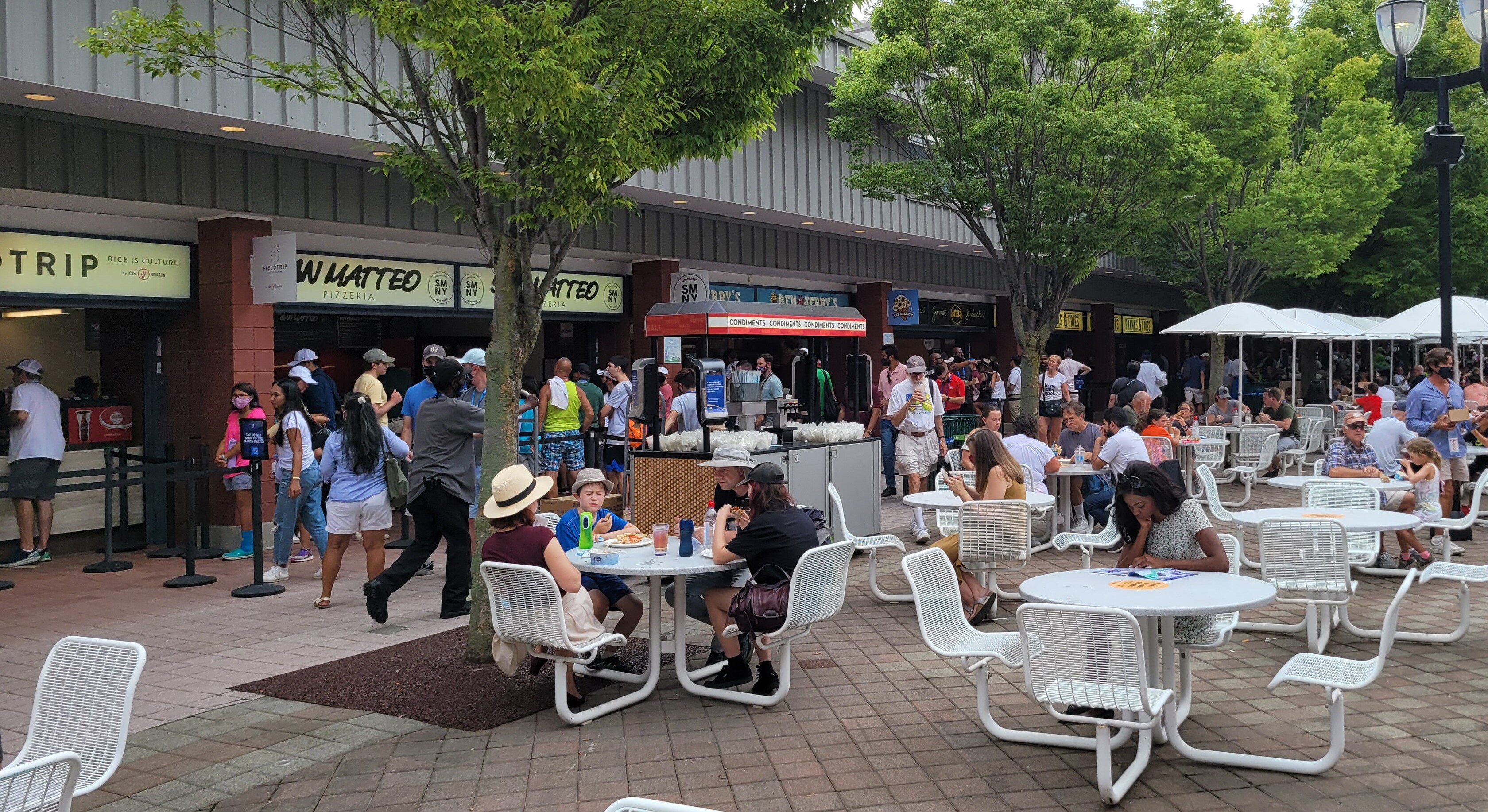
The stadium has multiple entry gates and the ground level concourse runs all the way around. Food and drink concessions are on every level — the variety is better than any other tennis venue in the world, because this is New York. Find your section early; the seating is steep in the upper levels and the sight lines are excellent from almost anywhere.
Hawk-Eye and the replay screens
One thing that distinguishes the US Open experience from Wimbledon: large replay screens at each end of the court, and Hawk-Eye instant replays shown to the crowd after challenges. The crowd reaction to a challenge — the collective lean-in as the ball's trajectory appears on screen — is one of the specific pleasures of watching tennis at this venue.