A proper Gujarati thali is a genuinely different eating experience from most Indian regional cuisine: a rotating spread of small dishes, sweet, savoury, and spiced all served together, refilled continuously rather than plated once, built around the idea that a meal should cover every flavour note at once rather than build toward one.
Agashiye, the rooftop restaurant inside The House of MG heritage hotel in the old city, is the polished, sit-down version done properly. The menu rotates daily rather than staying fixed, running through dishes like dhokla, handvo, undhiyu, and kadhi depending on what's being served that day, and it draws a strong, large-sample rating befitting its reputation as one of the city's defining thali experiences. See live rating and reviews on Google Maps
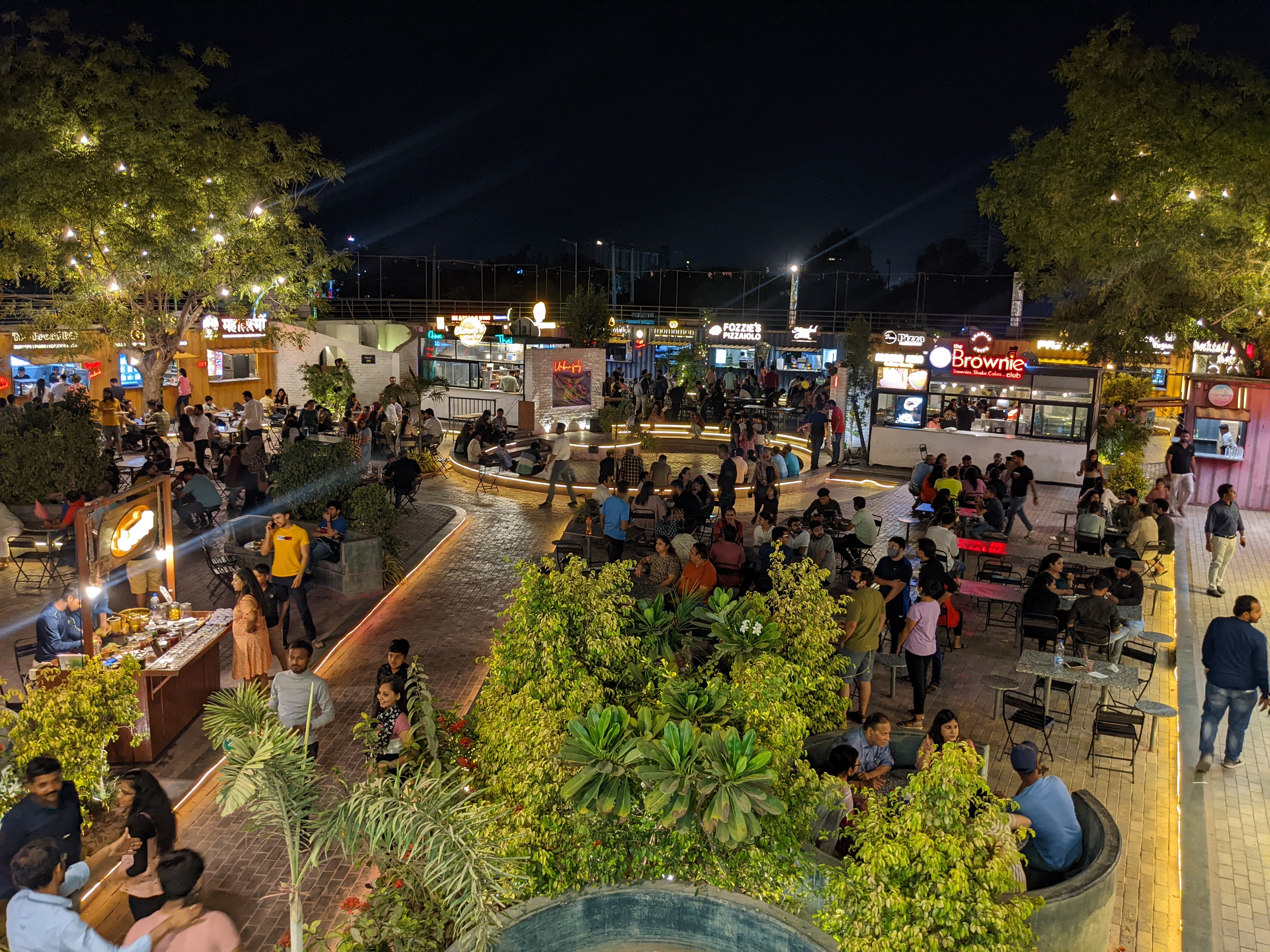
For the after-dark version of Ahmedabad's food identity, Manek Chowk transforms from a daytime jewellery market into one of India's most legendary street food destinations once the sun goes down, typically from around 8pm onward. Crispy fafda, bhaji pav, Gujarati-style street pizza, kulfi, and masala chaas all get served from stalls packed into the same square, and it carries an enormous, consistently strong review base reflecting decades of the same reputation. See live rating and reviews on Google Maps
Between the two, you get both ends of how Gujarat actually eats: a formal, rotating thali in a heritage setting, and a loud, crowded night market built entirely around snacking your way through a dozen different stalls.
Why it's special
Gujarati food has a real identity, sweeter and more varied per meal than most regional Indian cuisines, and it's poorly served by being lumped in as generic "Indian food" the way it often is outside the state. Agashiye and Manek Chowk show two genuinely different, equally legitimate versions of that identity: one formal and curated, one chaotic and street-level. Trying both in the same trip gives a more honest sense of what Gujarat actually eats than either one alone would.