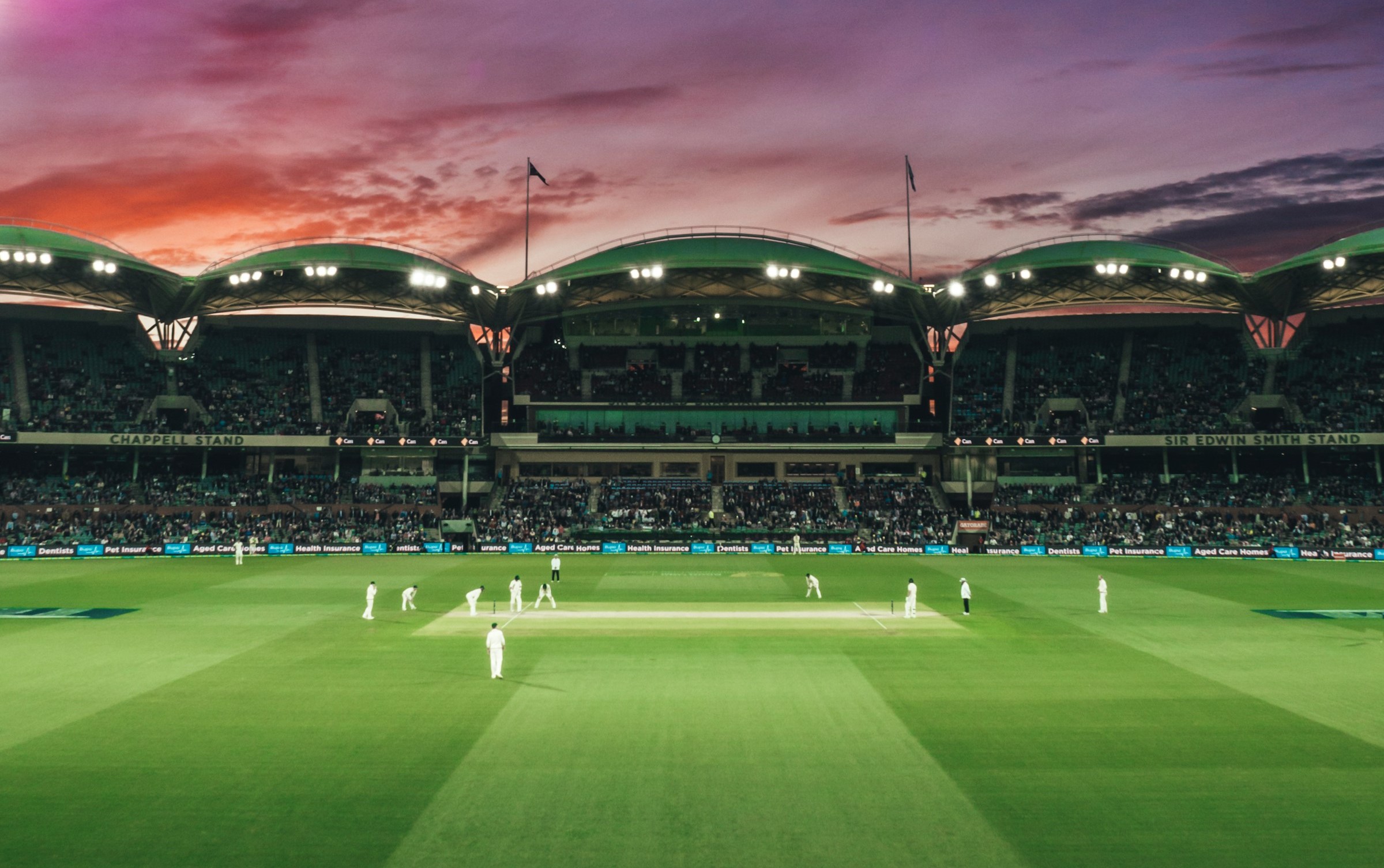
Adelaide Oval has been playing Test cricket since 1884, longer than any Australian ground bar the MCG and SCG, and it still looks like nowhere else in the country. St Peter's Cathedral rises behind the northern end, close enough that its spires sit inside the frame of almost every TV broadcast from the ground. Locals call the two ends River End and Cathedral End rather than anything sponsor-named, and the old hand-operated scoreboard — heritage-listed, still in use — sits on the same footprint it has occupied since 1911. The 2014 redevelopment doubled capacity to roughly 53,500 with new southern and eastern stands, but the brief was explicit: keep the grass hill, keep the scoreboard, keep the cathedral view. It worked. This is a stadium that expanded without losing the thing that made it worth visiting in the first place.
Cricket history here runs deeper than most touring fans realise. The Bodyline series reached its ugliest point at Adelaide Oval in January 1933, when Bert Oldfield was struck and mounted police had to help control a crowd of over 50,000. The pitch itself plays fair through most of a Test: good pace and bounce early for the quicks, before it dries out and starts turning for the spinners from around day three onward — a genuine contest for bat and ball across all five days, rather than a surface that decides the game in the first session.
The ground sits about a kilometre north of the CBD, an easy walk over the Riverbank footbridge from Adelaide Railway Station on North Terrace. On match days the free Footy Express tram and bus network — usually associated with AFL, but running for major cricket fixtures too — covers the short hop from the city centre, and the closest tram stop, Festival Plaza on King William Road, is about 500 metres from the gates.
Why it's special
Most modern stadiums solve the capacity problem by demolishing what came before. Adelaide Oval didn't: it kept the hill where you can still sit on the grass with a picnic rug for a fraction of grandstand prices, kept the 1911 scoreboard doing its job by hand, and kept the cathedral in the skyline behind the northern stand. That's rare, and it's why photographers and players alike single this ground out as their favourite in Australia. For this series specifically, Adelaide is the second Test — daytime cricket, not day/night as some past New Zealand tours here have used — so the ground plays as it always has: quick early, harder work for the bowlers as the match wears on. If you want one photograph that captures what touring for this series actually looks like, it's taken from the hill, cathedral in the background, gates onto the outfield still visible from a hundred years ago.