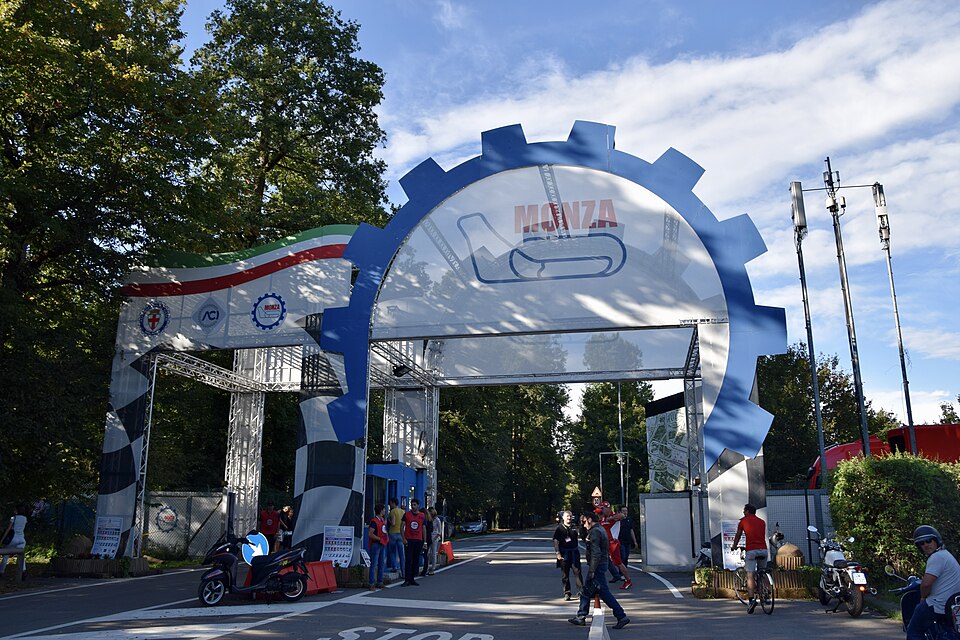
What facilities are available at Monza?
Built in 110 days in 1922 — still F1's fastest circuit, on its original ground
Monza broke ground in spring 1922 and opened on 3 September that same year, a week before hosting its first Italian Grand Prix — the third purpose-built race circuit ever constructed, after Brooklands and Indianapolis, and the only one of the three still running a modern F1 calendar round on close to its original site. What F1 races today is a 5.793km configuration, 53 laps, with cars at full throttle for roughly 80% of every lap — the lowest-downforce, highest-speed layout left on the calendar.
The abandoned oval banking
The original layout combined a 5.5km road circuit with a 4.5km high-banked oval, run separately or combined into a full 10km lap. That banking is still there, decaying quietly in the trees off the modern circuit — abandoned since the 1960s, too dangerous by any current standard, but walkable if you know where to look. It's the clearest physical evidence of what this place used to demand of drivers and cars.
Corners that memorialise, not just describe
Variante Ascari, roughly two-thirds around the lap, is named for Alberto Ascari, the two-time World Champion killed testing at this exact circuit in 1955. The Parabolica, the long final corner feeding the start/finish straight, is officially Curva Alboreto now, renamed for Michele Alboreto, another Italian driver killed racing. The two Lesmo curves take their name from a nearby village. Monza doesn't memorialise casually.
Where the real racing happens
The Variante del Rettifilo — where cars go from roughly 350km/h to 70km/h in one of the hardest braking zones in F1 — is the best pure viewing spot on the circuit for overtaking. Two DRS zones (between the second Lesmo and the Ascari chicane, and from the Parabolica back to the Rettifilo) consistently produce real racing here, because Monza's long straights give a trailing car enough time in the slipstream to actually complete a move.
The circuit map
Credit: Anthony Alessio Tralongo, CC BY 4.0.
On-site facilities
Food — trackside catering exists, but the Fan Zone is the better bet
Catering outlets and food trucks operate throughout the circuit on all three race weekend days (no alcohol or glass containers permitted in). Trackside food near the gates tends to be overpriced and underwhelming — the Fan Zone's food market is the stronger option, running from casual street food to a more gourmet end (proper risotto next to a burger van is a genuine Monza combination) — entry to the Fan Zone itself is included with any race ticket.
Bags — 15 litres, no exceptions
Any colour bag is fine up to 15 litres, but suitcases and oversized luggage don't get through security at all, and there's no bag storage at the gates themselves. Water is capped at 500ml per bottle; alcohol isn't allowed in.
Cameras — genuinely welcome here
Monza allows personal cameras and lenses, tripods included with security approval — unusually permissive for a modern F1 venue, most of which have gone the other way. If serious photography is part of the trip, this is one of the better circuits left for it.
Re-entry — allowed, but budget time for it
Unlike some circuits that lock you in for the day, Monza lets you leave and come back on the same ticket. The tradeoff is queuing again on the way in, and that line runs long in the gaps between sessions when everyone else has the same idea.
Getting between zones
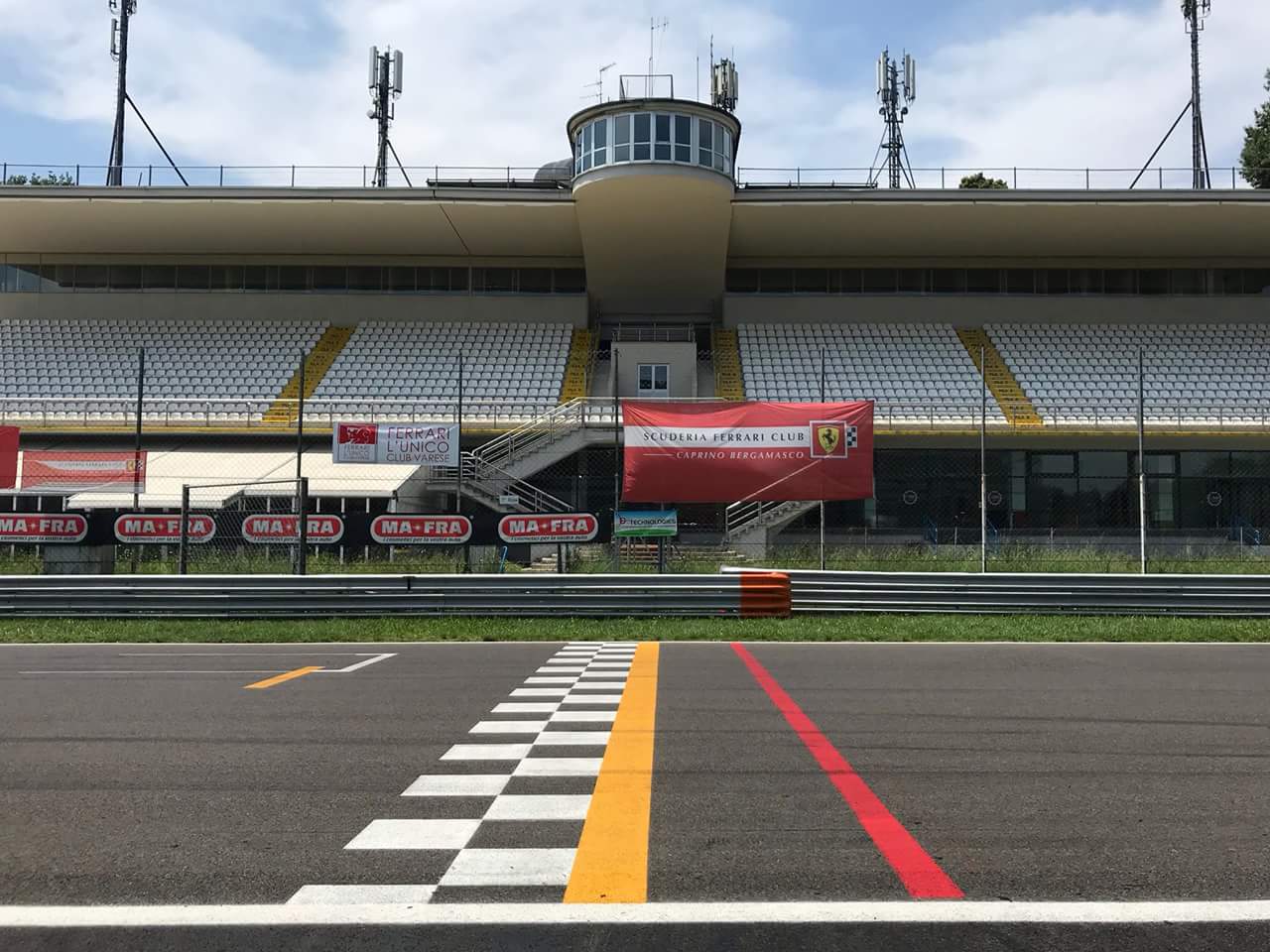
Monza runs six lettered spectator gates (A-G), each serving a different section of the circuit — confirm your gate against your grandstand or GA section before race day. See the Arrival & Queue Guide for the full gate breakdown, and the Ticket Guide for pricing and seating type on each grandstand.
What we'd actually check before buying
If racing action and overtaking matter most, look at a grandstand or GA section near the Variante del Rettifilo or the Lesmo-Ascari sequence rather than assuming any seat on the long straights gives you the same view of real passing. Juan Pablo Montoya set F1's fastest lap speed in history here in 2004 practice (260.6km/h average), and Rubens Barrichello's 2004 race lap record has stood since — a reminder of how little margin this layout leaves for a mistake at the limit.