What facilities are available at Interlagos?
A bowl-shaped circuit between two reservoirs, shortened once in 1990
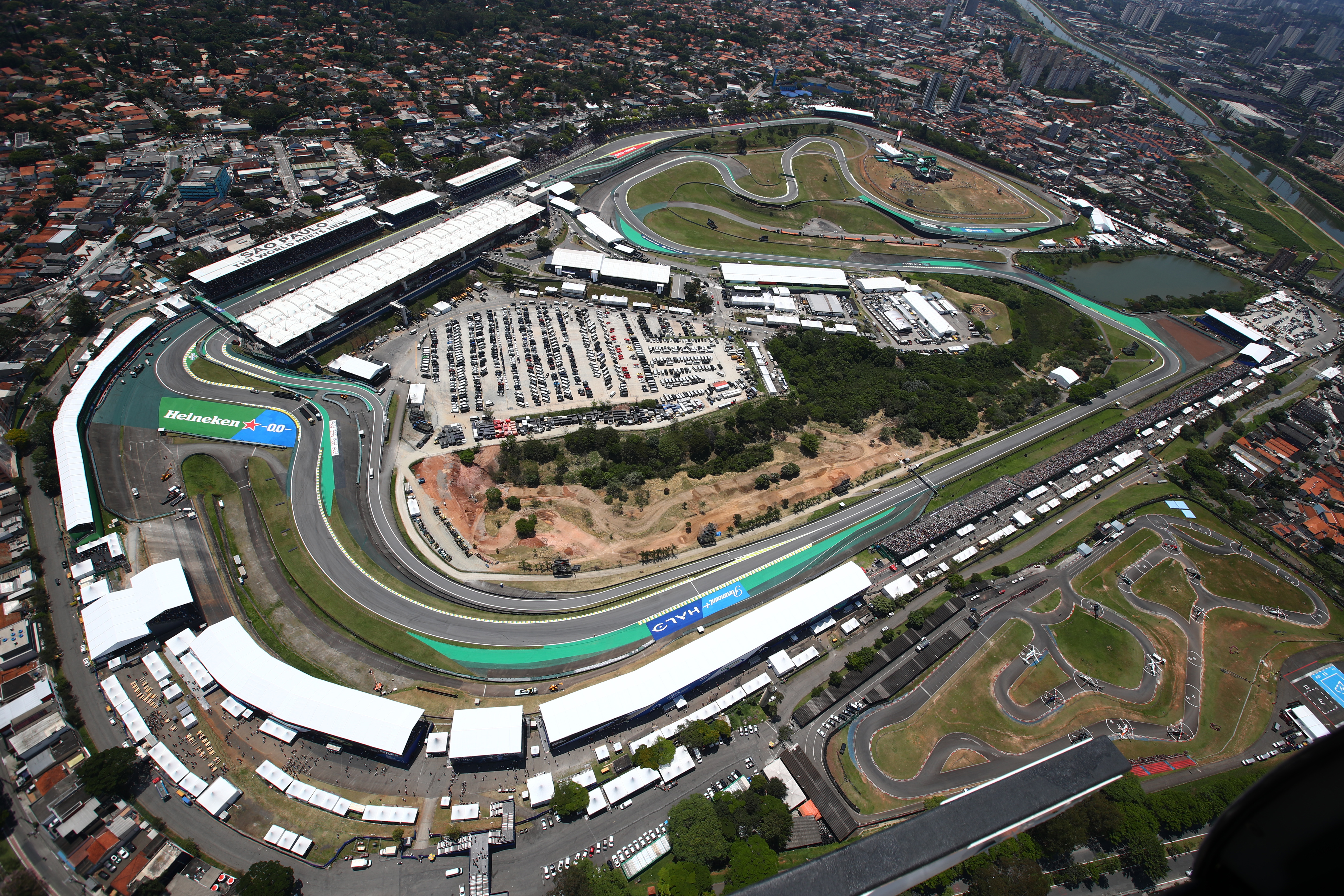
Interlagos opened in May 1940, built into a strip of land between two reservoirs — Guarapiranga and Billings — that the city had dammed decades earlier for water and power. "Interlagos" just means "between lakes." The original layout ran a genuinely enormous 7.8km, and F1 raced that full circuit through the 1970s before a 1990 rebuild cut it down to today's 4.309km to meet new FIA length limits. The circuit was renamed in 1985 for José Carlos Pace, Brazil's first F1 race winner, killed in a plane crash in 1977.
Circuit map
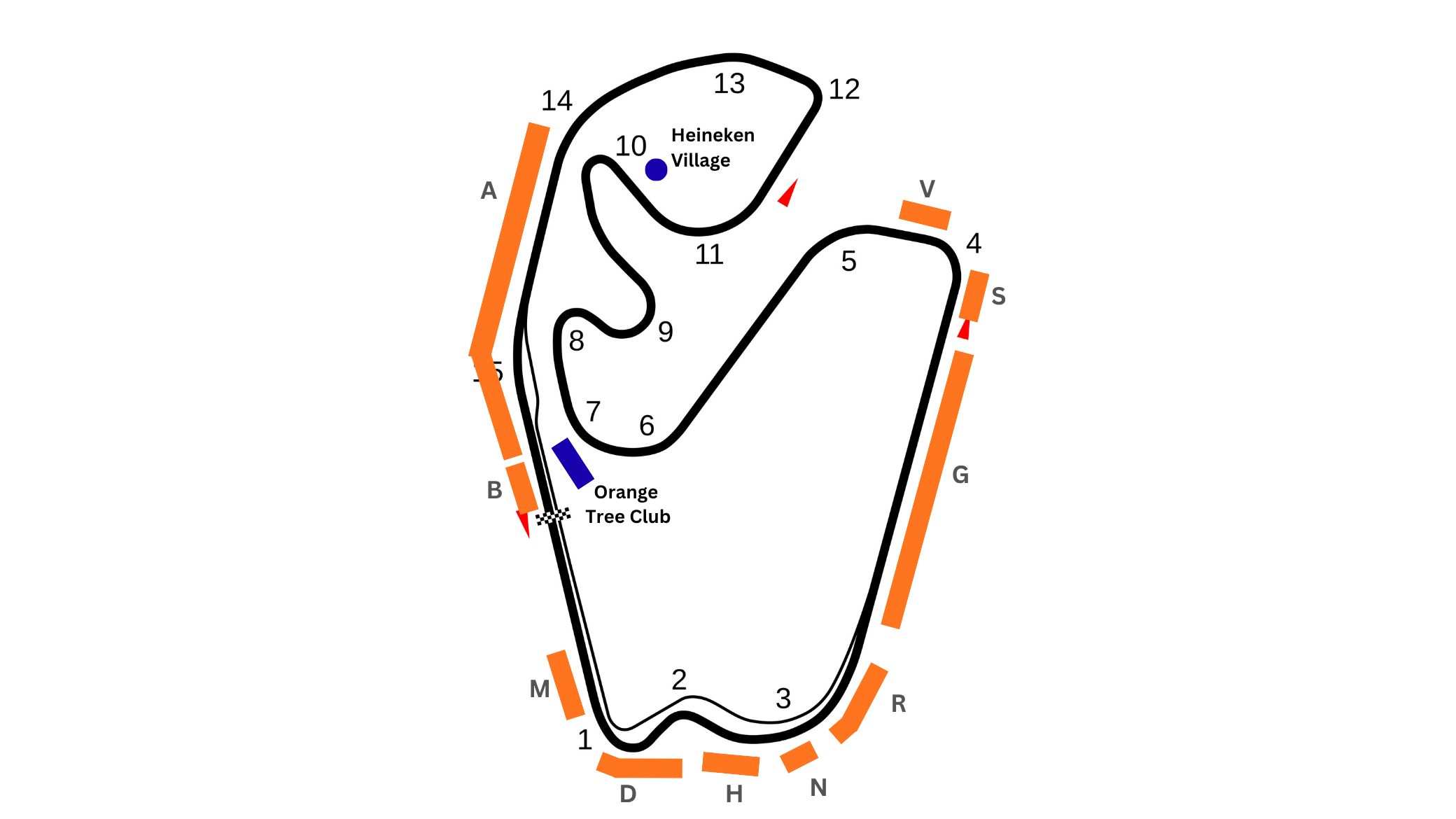
Grandstands A and G line the main straight's banked entry — uncovered, bleacher-style, and by wide agreement the loudest, most social part of the circuit. Grandstand M sits right at Turn 1, the downhill first-lap fight into the circuit's best overtaking spot, with Grandstand R nearby covering Turn 3 and the DRS zone — both of these are covered, numbered, reserved seating. Heineken Village and the Orange Tree Club / F1 Paddock Experience — the circuit's two hospitality products — sit trackside near the same start-finish area, marked separately on the map from the numbered grandstands. The remaining lettered stands (B, D, H, N, S, V) circle the rest of the lap; see the Ticket Guide for pricing and seating type on each.
The layout that shapes every grandstand
The lap runs short, anticlockwise, and drops over 40 metres of elevation in one direction only — the bowl-shaped layout is why grandstands like A give you sightlines into the infield that most flat circuits can't offer. Two DRS zones sit back-to-back on the main straight and Reta Oposta with minimal recovery time between them, a real, track-specific reason overtaking chains happen here more often than almost anywhere else on the calendar. The S do Senna — named for the corner where Ayrton Senna made his opening move in the 1990s — sits early in the lap and still carries the weight of Brazil's biggest sporting hero.
No general admission
Entry is via a race-weekend grandstand or hospitality ticket only — Interlagos has no separate general admission product, unlike most other circuits on the calendar. See the Ticket Guide for the full grandstand-by-grandstand breakdown.
On-site facilities
Food & drink — cashless only
Refreshment bars run throughout the grandstands, but every trackside purchase goes through Interlagos' Cashless Consumer Card system — load credit onto the card before you need it rather than at the vendor when you're already hungry. You can't bring drinks in, but up to 3 food items per person are allowed (any fruit has to be cut and in a transparent container).
Toilets & accessibility
Toilets sit within each grandstand rather than in one central block, so it's a walk downstairs, not across the venue. Every grandstand, the Fan Zone, and the VIP areas have adapted, accessible restroom facilities for reduced-mobility visitors.
Phone signal on race day
Mobile networks genuinely struggle under race-weekend crowds, Sunday worst of all — agree a physical meeting point with anyone you might get separated from rather than counting on being able to call or message them.
Noise — bring earplugs if you're close to the track
The standard grandstands are loud but manageable; anywhere genuinely close to the cars is not, and earplugs are a real, practical add rather than overcaution — worth it for kids specifically.
Age restrictions
Children under 5 aren't permitted entry to the circuit at all, and Heineken Village is 18+ only with ID checked at the gate — plan around both if you're bringing a family or considering that sector.
Getting between zones
Follow the entry gate matched to your specific grandstand letter — official race-weekend signage directs ticket holders from the Autódromo train station to the correct gate. See the Getting There guide for the full route.
What we'd actually check before buying
If racing action and sightlines matter most, confirm your grandstand sits near Turn 1 or the main straight rather than assuming any covered stand gives you the same view — Grandstand M and Grandstand B are the two that actually put you on top of the circuit's real drama. If atmosphere matters more than sightline quality, Grandstand A's bowl-shaped position into the infield trades comfort for genuine crowd energy that some of the quieter covered stands don't have.