History
The Track That Crosses Itself
Formula 1·2 min read·September 23, 2026
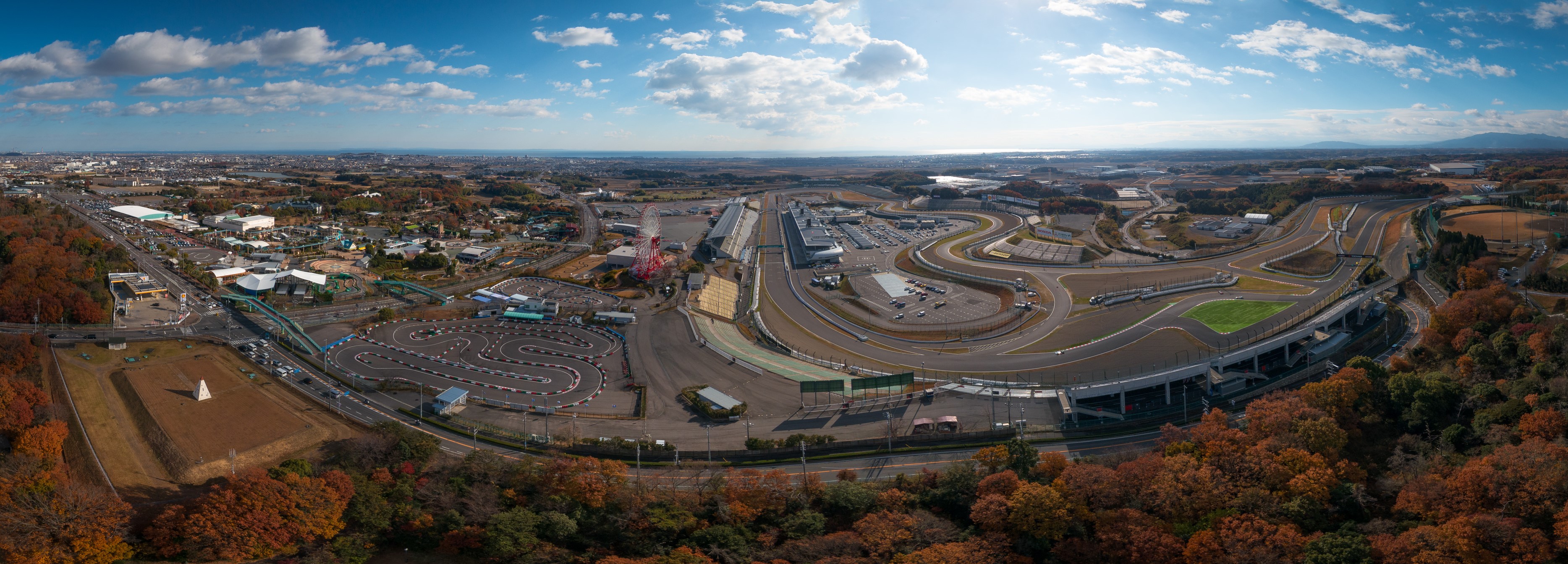
carloshonda, CC BY 3.0
A shape nobody was really trying to make
Suzuka's most obvious feature — the back straight passing directly over the front section on a purpose-built overpass — wasn't a design flourish. Dutch track architect John Hugenholtz drew the circuit in the late 1950s to fit a plot of land hemmed in by surrounding rice fields, and the figure-eight was the layout that used the available ground most efficiently. The crossover existed to solve a land problem, not to create a spectacle, and it's stayed the circuit's signature ever since.
That land constraint had a second effect nobody was planning for either. Because the lap loops back over itself, Suzuka runs both directions within a single circuit — ten right-hand corners and eight left-handers — which spreads cornering load more evenly across both sides of the car and both sides of a driver's neck than almost any other track on the calendar. Most circuits favour one direction; Suzuka structurally can't.
Corners that don't get easier with modern cars
The layout that resulted is unusually unforgiving for a circuit this old. The Esses in the first sector demand a string of direction changes at speed with essentially no room for a defensive line. 130R, taken at close to full throttle in a modern F1 car, has stayed on the calendar's short list of genuinely committing corners for three decades, even after a 2003 reprofiling eased its most dangerous edge. Drivers who've raced at circuits built specifically for modern aerodynamics still single Suzuka out as the layout that rewards a clean, committed lap more than raw car performance.
Built for driving, not for shortcuts
None of what makes Suzuka distinctive was engineered top-down for entertainment value the way some newer circuits are. It's a shape that came from a land survey and a construction budget in 1962, run in both directions because the ground left no other option, and it has outlasted nearly every circuit built with a bigger budget and a cleaner sheet of paper since. Drivers rarely explain exactly why they rate it above smoother, faster, more modern tracks — usually they just point at the Esses and 130R and leave it there.