The Night Sessions
Prime-time tennis starting at 7pm — the US Open's signature offering and the loudest atmosphere in the sport
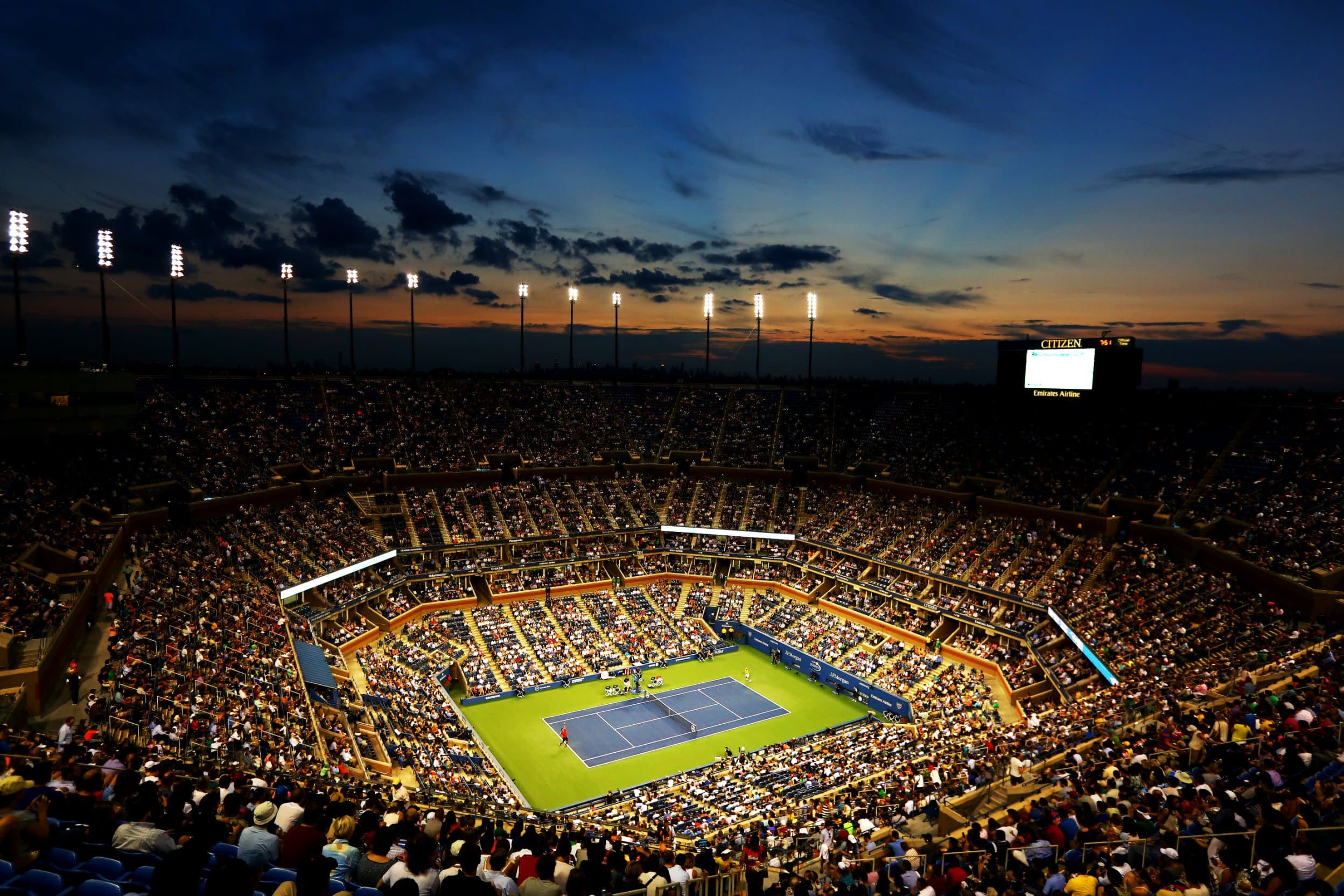
The US Open introduced night sessions in 1975. No other Grand Slam has fully replicated what New York does with them. Wimbledon ends play by around 8pm. The French Open schedules a single evening session late in the tournament. The Australian Open has night sessions, but the culture around them is different. The US Open puts its best matches on at 7pm in the world's largest tennis stadium and runs until midnight or later. That's the product.
What to expect
Night session tickets are reserved seating in Arthur Ashe Stadium — they are not covered by a grounds pass and must be booked separately. The session begins at 7pm with the first of two scheduled matches, typically a men's and women's singles match in the early rounds scaling to quarterfinals and beyond in the second week. The second match of the night often starts at 9:30pm or later, and if it goes to five sets, you'll be leaving the stadium well past midnight.
The crowd that comes out for night sessions is different from the day session crowd. Earlier in the tournament, it skews younger, louder, more willing to be partisan. Later in the draw, when the biggest names are playing, the stadium fills with people who have been planning this evening for months.
Booking
Night session tickets go on sale through the US Open website, typically in the spring before the tournament. Early rounds cost less; second-week night sessions (when the matches are genuinely high-stakes) book out quickly. If you can only do one night session, target the second week when the draw has been reduced to the last 8 or 16 players and every match is consequential.
After the match
The 7 train runs late. Mets-Willets Point station handles the post-session crowd efficiently — the platforms fill but the trains come frequently. From there, Manhattan is 40 minutes and the Queens restaurant and bar options are open much later than the trains. Plan accordingly.
Why it's special
The night session is the answer to the question "what makes the US Open different?" at every level: different from Wimbledon, different from the other Slams, different from any other live tennis experience. The match quality is deliberately maximised — the USTA schedules its best available matchups into prime time because that's what sells the session.
But the atmosphere is what people remember. The New York crowd at 10pm in Arthur Ashe during a close match is not restrained about it. People cheer, groan, argue with line calls out loud, make noise between first and second serves in ways that Wimbledon would never permit. All of it adds up to an energy that tennis, as a sport, doesn't usually produce — and the US Open has been cultivating and leaning into that energy for fifty years.
Book these tickets before you book anything else in your trip. Then build the rest of the plan around them.
Insider tips
- 1
Tickets go on sale in spring via usopen.org — second-week night sessions (quarterfinals, semifinals) sell out fastest. Set an alert for the general sale date.
- 2
The second match of the night starts late, often 9:30pm or after. If a fifth set is in play, midnight is not unusual. Factor this into transport planning before you book.
- 3
Bring a layer. Arthur Ashe air conditioning when the roof is closed is cold, especially in the upper levels after an hour in the heat outside. The temperature contrast surprises people.
- 4
The 7 train runs late enough to handle post-session crowds — trains are frequent after sessions end and the crowd spreads across several trains. No need to bolt for the exit on the last point.
- 5
Order of play for night sessions is announced around 6pm the evening before. Check the US Open app at that point — you'll know exactly who's playing before you leave your hotel.
Practical info
What to avoid
Don't book last transport if you're staying for the second match — it will regularly run past midnight, and the worst part of the US Open experience is watching the end of a close set while watching the time. Don't assume early-round night sessions are lower quality; the USTA schedules its best available matchups for prime time regardless of round, and a third-set tiebreak at 10pm with 23,000 people in the building is not a consolation experience. And don't book upper-level seating as a budget shortcut if you're choosing only one night session; mid-level is the correct choice for the night session specifically — the atmosphere at height is thinner.