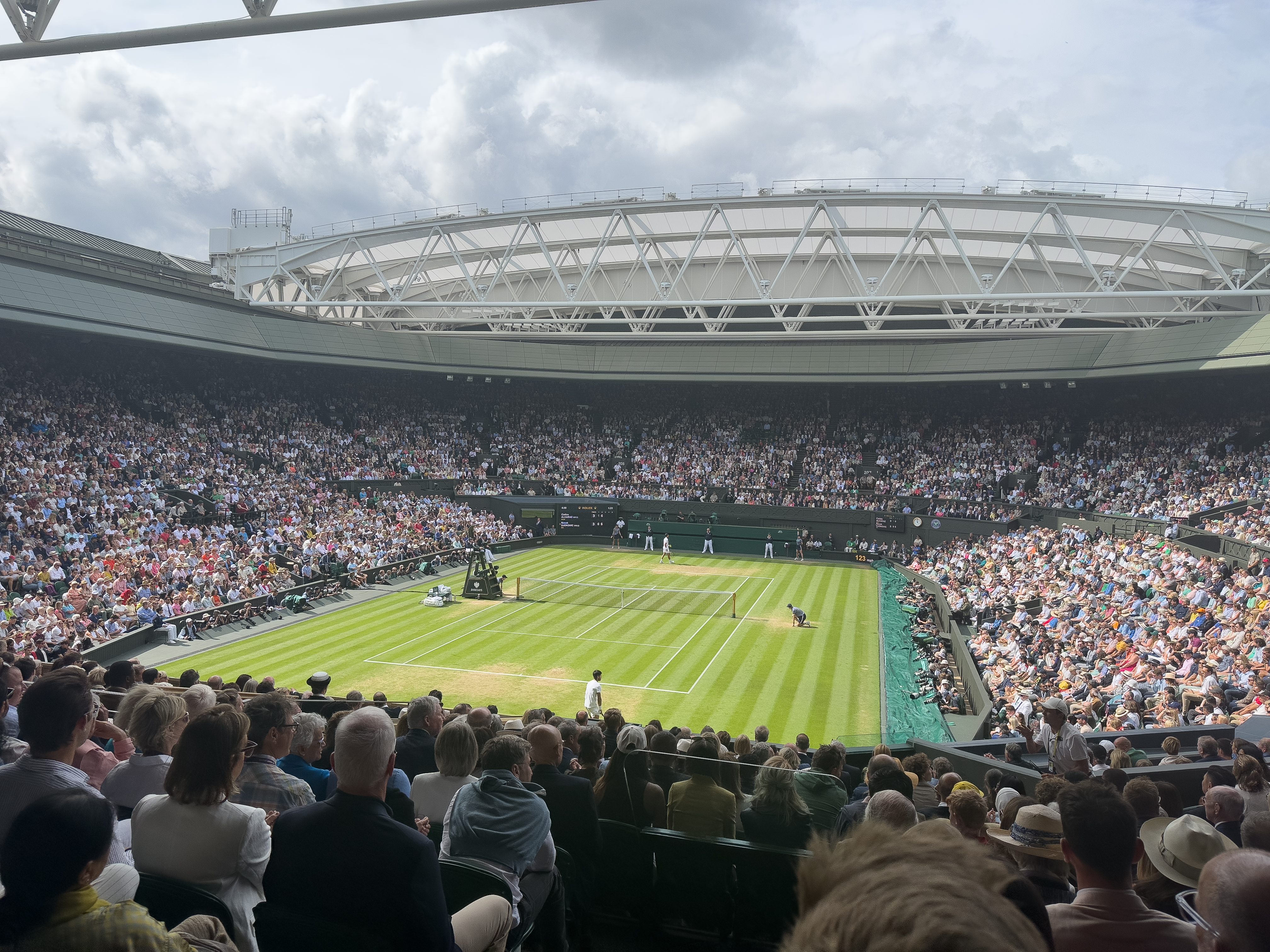
The Wimbledon Queue is not an accident. Every year, the All England Club deliberately holds back a portion of Centre Court and Court 1 tickets and refuses to sell them through any advance channel. The only way to get them is to show up, join a line that will stretch several kilometres by the early hours, and wait.
They give it a capital Q. They issue Queue Cards — numbered, laminated — so you know exactly where you stand. They publish a Queue Guide. They have stewards who wake you at 6am and ask you to take your tent down. In almost every respect, this is a managed ritual. And the ritual is the whole point.
You join on Church Road and Wimbledon Park Road, the streets running alongside the grounds. The official queue opens the afternoon before each day's play. When you arrive, a steward gives you a Queue Card. That card is your place. Don't lose it. If you need to leave briefly — food, a walk, the portable facilities — your card holds your spot for up to 30 minutes. The stewards are strict about this. They have seen every variation.
Gates open at 10:30am, but day tickets are released to queuers earlier, at 9:30am. Gate 3 is where you want to be: it's the most direct route toward Centre Court once you're inside. Most people in the Queue don't know this. Now you do.
The honest answer on when to arrive is: it depends. The Club's own guidance says to join the Queue before midday the day before, and serious queuers do exactly that — arriving the previous afternoon to secure a good position before camping overnight. Demand shifts year to year, day to day, based on the draw, the weather, the players still in the tournament. Before you decide when to leave home, check @TheWimbledonQ on X — it's the real-time feed that regulars use, and it's more reliable than any fixed time you'll read elsewhere. One thing that consistently holds: a rainy forecast means a shorter queue. If the weather looks grim, don't stay home. That's your advantage.
What to bring: the Club hands out a Queue Guide with your Queue Card, and its packing list earns its place. Sleeping bag or heavy blanket, a camping mat (the pavement is harder than it looks), enough food and water for the overnight stretch, a fully charged portable charger — your phone will die otherwise — and layers for cold and rain. English summer does not behave. The Club also runs a bag storage facility near the gates. When the stewards wake you at 6am and ask you to take your tent down, you can drop your overnight kit there and walk in carrying nothing. A few pounds and completely worth it.
The Queue has its own social life, and this is the part nobody mentions until you've done it. People who make this an annual pilgrimage know each other by sight. Strangers become temporary neighbours for eight or ten hours. There's a rhythm to it: the arrival, the setup, the first coffee from someone's thermos in the small hours, card games in the dark, conversations that happen at 3am that wouldn't happen anywhere else, the sky going slowly from black to grey to the particular pale blue that means it's actually morning. There are cocktail parties in the tents. Singalongs. People passing strawberries down the line to people they've never met. The stewards who patrol through the night are, almost without exception, excellent at their jobs and oddly cheerful about doing them.