Soweto and the Apartheid Museum aren't a sightseeing add-on to a Johannesburg trip, they're closer to essential context for understanding the city and country you're in. Most day tours combine the two, and that combination is deliberate - the museum gives you the structural history, Soweto gives you the place where a lot of that history actually happened.
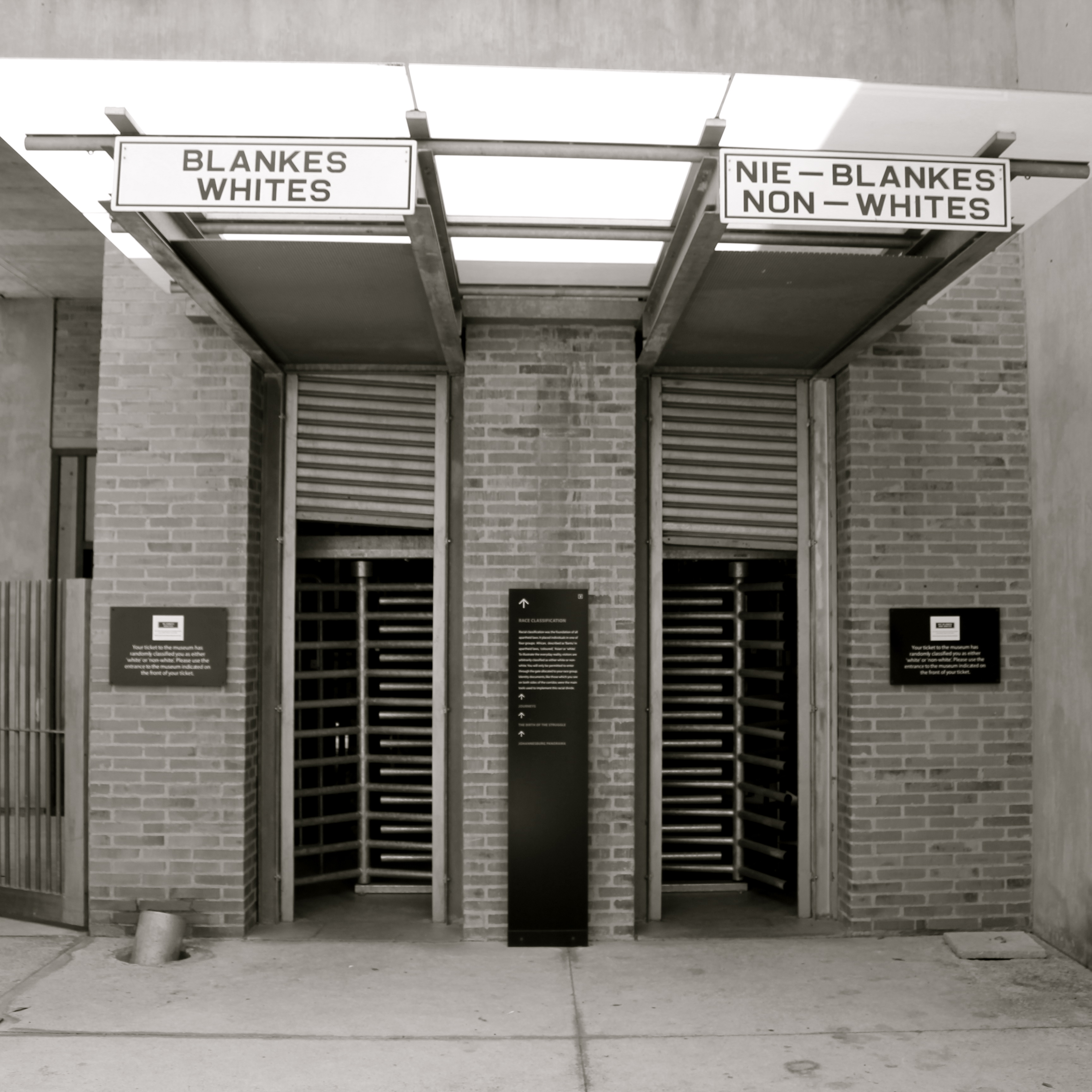
The Apartheid Museum sits south of the city centre and is built to disorient you on purpose. Visitors are randomly assigned a "white" or "non-white" entrance on arrival, a small, blunt piece of design that sets the tone before the exhibits even start. From there, the museum runs as a sequence of 22 distinct exhibition areas along a timeline, not a single open hall. Journeys opens the visit with life-size photographs of Johannesburg residents and their descendants lining a ramp. Segregation and Apartheid follow, including large photographic murals of the forced removals that were central to the system. A Turn to Violence section documents the shift from peaceful protest to armed resistance, and a reconstructed detention cell block, narrow corridors, steep ladders, built to disorient physically, gives a visceral sense of what imprisonment under the system actually meant. A room lined with 131 hanging nooses represents government opponents executed during apartheid. The museum closes with a dedicated Nelson Mandela exhibition, tracing his life from activist to president through handwritten letters and life-sized sculptures. It's open Tuesday to Sunday, 9am to 5pm. As of May 2026, international visitor tickets run R240 for adults, R190 for students, pensioners, and children - South African citizens pay a reduced local rate with ID. The museum's own guidance says children under 11 aren't recommended, given the graphic nature of some content.
Soweto itself, a short drive further out, is where the Hector Pieterson Memorial and Museum sits at 8287 Khumalo Street, Orlando West, commemorating the 1976 student uprising against the enforced use of Afrikaans in schools, an event that reshaped the country's trajectory. A few streets over, Mandela House at 8115 Vilakazi Street is the modest, single-story brick home where Nelson Mandela lived with his family from 1946 to 1962, open daily 9am to 5pm. Vilakazi Street itself is unusual in a specific way - it's the only street in the world that's been home to two Nobel Peace Prize winners, Mandela and Desmond Tutu, who lived nearby.
Soweto is a living community, not a preserved historical site, and it's worth visiting with that distinction in mind. Local guides consistently make the point that residents take real pride in showing visitors their neighbourhood, but that pride comes with an expectation of basic courtesy: ask before photographing people directly, rather than shooting candidly from a car or bus window, and treat the area as somewhere people actually live, not a backdrop.