Soweto & the Apartheid Museum
The history that shapes Johannesburg, from a museum built to disorient you to a street that housed two Nobel laureates
Soweto and the Apartheid Museum aren't a sightseeing add-on to a Johannesburg trip, they're closer to essential context for understanding the city and country you're in. Most day tours combine the two, and that combination is deliberate - the museum gives you the structural history, Soweto gives you the place where a lot of that history actually happened.
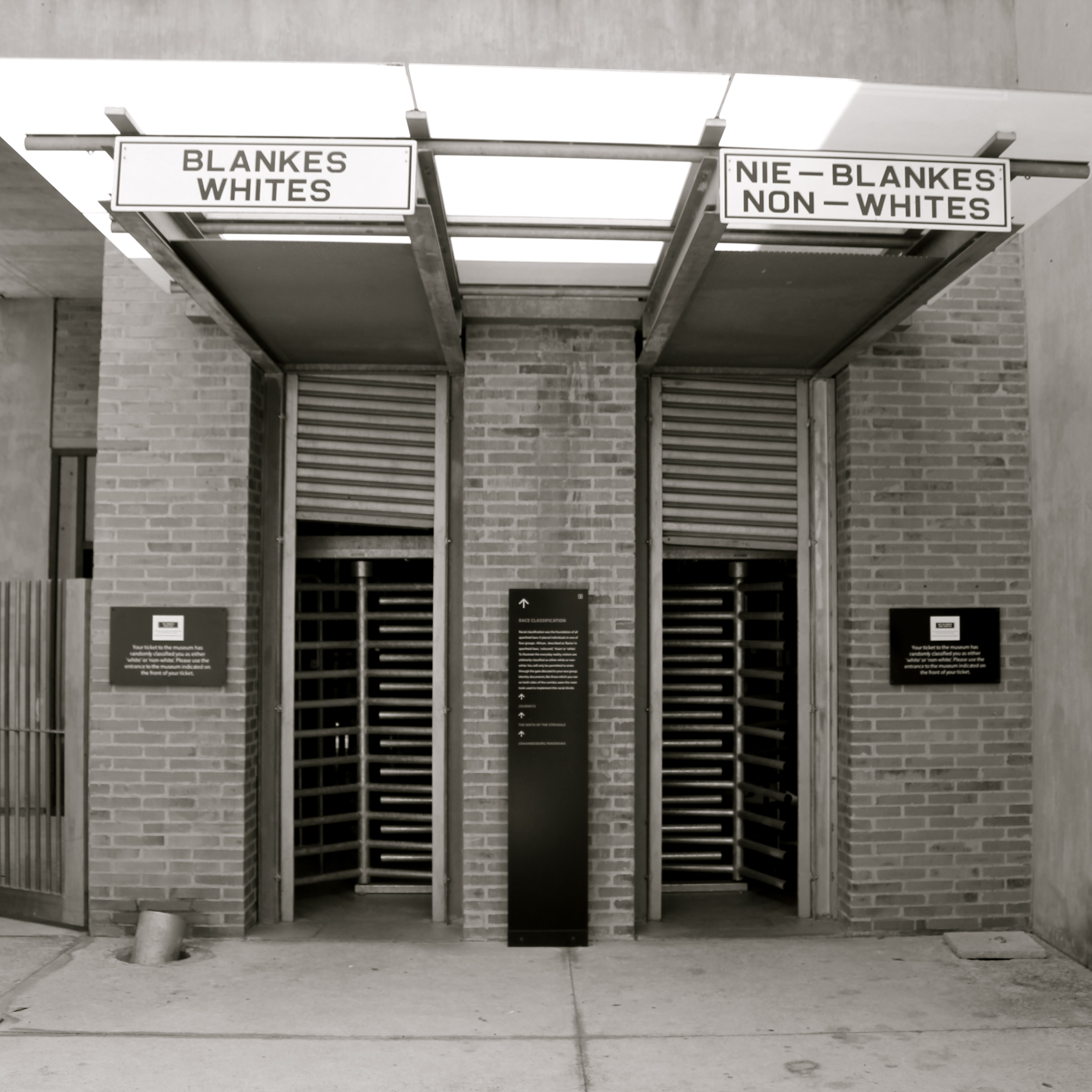
The Apartheid Museum sits south of the city centre and is built to disorient you on purpose. Visitors are randomly assigned a "white" or "non-white" entrance on arrival, a small, blunt piece of design that sets the tone before the exhibits even start. From there, the museum runs as a sequence of 22 distinct exhibition areas along a timeline, not a single open hall. Journeys opens the visit with life-size photographs of Johannesburg residents and their descendants lining a ramp. Segregation and Apartheid follow, including large photographic murals of the forced removals that were central to the system. A Turn to Violence section documents the shift from peaceful protest to armed resistance, and a reconstructed detention cell block, narrow corridors, steep ladders, built to disorient physically, gives a visceral sense of what imprisonment under the system actually meant. A room lined with 131 hanging nooses represents government opponents executed during apartheid. The museum closes with a dedicated Nelson Mandela exhibition, tracing his life from activist to president through handwritten letters and life-sized sculptures. It's open Tuesday to Sunday, 9am to 5pm. As of May 2026, international visitor tickets run R240 for adults, R190 for students, pensioners, and children - South African citizens pay a reduced local rate with ID. The museum's own guidance says children under 11 aren't recommended, given the graphic nature of some content.
Soweto itself, a short drive further out, is where the Hector Pieterson Memorial and Museum sits at 8287 Khumalo Street, Orlando West, commemorating the 1976 student uprising against the enforced use of Afrikaans in schools, an event that reshaped the country's trajectory. A few streets over, Mandela House at 8115 Vilakazi Street is the modest, single-story brick home where Nelson Mandela lived with his family from 1946 to 1962, open daily 9am to 5pm. Vilakazi Street itself is unusual in a specific way - it's the only street in the world that's been home to two Nobel Peace Prize winners, Mandela and Desmond Tutu, who lived nearby.
Soweto is a living community, not a preserved historical site, and it's worth visiting with that distinction in mind. Local guides consistently make the point that residents take real pride in showing visitors their neighbourhood, but that pride comes with an expectation of basic courtesy: ask before photographing people directly, rather than shooting candidly from a car or bus window, and treat the area as somewhere people actually live, not a backdrop.
Guided tours combining both sites typically run as a full day, with hotel pickup from Sandton available in the early morning window.
Why it's special
A lot of destinations treat their darker history as something to mention briefly before moving on to the nicer parts of the trip. Johannesburg doesn't get that option, and honestly, it shouldn't want it. The Apartheid Museum's entrance system is jarring specifically because it's meant to be, a five-second experience that tells you more about how the system actually worked than a wall of text could.
Soweto adds the human scale that a museum alone can't. Standing on the actual street where Mandela lived, a few blocks from where students were shot during the 1976 uprising, changes how the exhibits land afterward. I think this is one of the more important things you can do on a South Africa trip, cricket schedule or not.
Insider tips
- 1
The museum's reconstructed detention cell block, with narrow corridors and steep ladders, is easy to walk past quickly, but it's one of the most physically disorienting exhibits in the building and rewards slowing down rather than treating it as a corridor to get through.
- 2
If your Soweto stop includes a meal, Sakhumzi Restaurant on Vilakazi Street (established 2001, Soweto-born owner) is the most established sit-down option for traditional dishes like mogodu and tripe — or grab a kota, a hollowed-out quarter loaf stuffed with chips and fillings, from one of the street food stalls for a genuinely local lunch instead of a tourist-menu version.
Practical info
- Hours
- Apartheid Museum: Tuesday-Sunday, 9am-5pm, most public holidays. Mandela House: daily, 9am-5pm.
- Cost
- Apartheid Museum (from May 2026): international adults R240, students/pensioners/children R190. Mandela House and Hector Pieterson Museum have their own separate, lower entry fees - check each site directly. Guided full-day tours combining all three typically run higher as a package price.
- Access
- The Apartheid Museum and Mandela House can both be visited independently without a guided tour. For the combined day, a guided tour with hotel pickup (Sandton pickup windows typically 7:30-9:30am) is the more practical option - book via GetYourGuide, Viator, or a local operator like Moafrika Tours.
- Book
Affiliate link — we may earn a small commission at no extra cost to you.
- Getting there
- The Apartheid Museum is roughly 25-30 minutes from Sandton by car. Soweto (Vilakazi Street, Hector Pieterson Memorial) is a further 20-30 minutes from the museum. A guided tour with hotel pickup is the simplest way to cover both without self-driving unfamiliar routes.
- Address
- Apartheid Museum: Northern Parkway and Gold Reef Road, Johannesburg. Hector Pieterson Memorial and Museum: 8287 Khumalo Street, Orlando West, Soweto. Mandela House: 8115 Vilakazi Street, Orlando West, Soweto, 1804.
What to avoid
Don't rush the Apartheid Museum in under 90 minutes - reviewers consistently note the exhibits reward a slower pace, and treating it as a quick stop before Soweto undersells what's actually a dense, well-built museum. And in Soweto specifically, don't photograph residents, their homes, or daily life candidly from a moving vehicle or without asking first - Soweto is an actively lived-in community, not a preserved museum site, and treating it like one (photographing people as scenery rather than acknowledging them) is the single most common way well-meaning visitors cause real offence.