Louis Armstrong Stadium
The second show court — where upsets happen, where the atmosphere is closer, and where the interesting tennis plays out
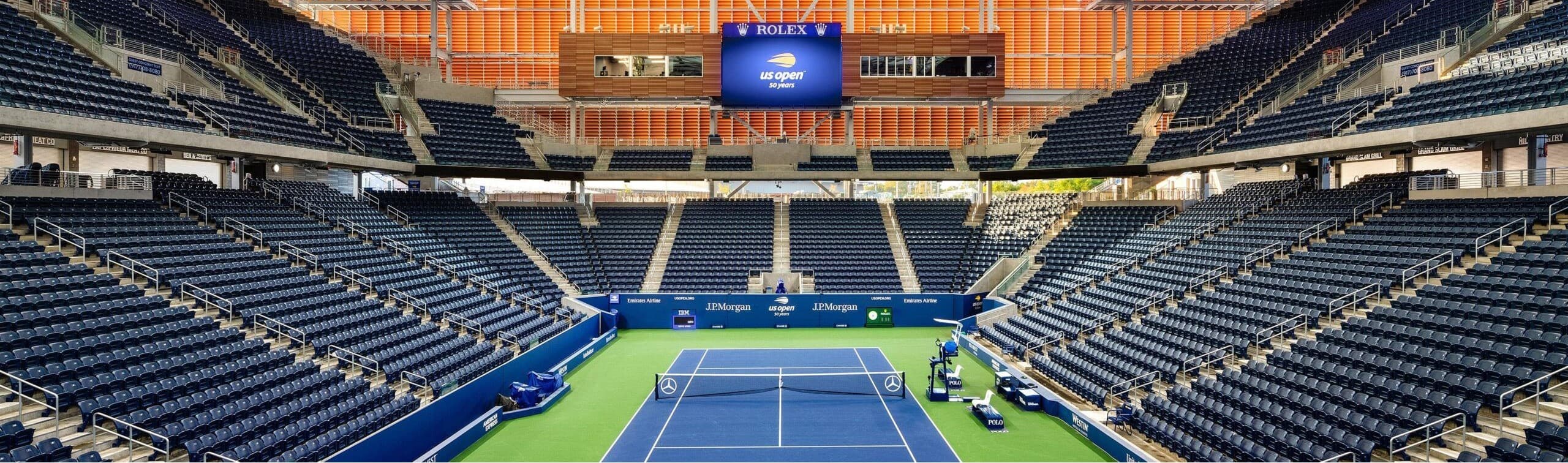
Louis Armstrong Stadium is the US Open's second show court, with 14,061 seats and a retractable roof added in 2018. Named for the jazz musician who lived in nearby Corona, Queens, it sits adjacent to Arthur Ashe and shares the same blue hard court surface.
Why Armstrong often beats Ashe
Counter-intuitive but true: for many first-time US Open visitors, Louis Armstrong Stadium delivers a better experience than Arthur Ashe. The reasons are straightforward. The stadium is smaller, which means the crowd is closer to the court and the noise more focused. The matches scheduled there — typically seeds in the range of 8 to 20, or unseeded players who've made deep runs — are often more competitive and unpredictable than the Ashe matches where a top-3 seed is heavily favoured. And the tickets are more accessible, either as reserved seats or via grounds passes for outer court sessions.
The first week of the tournament is when Armstrong is at its best. Early round matches between top seeds and lower-ranked opponents, or the all-important third-round clashes where the draw starts to open up, frequently land on Armstrong. Pay attention to the schedule the night before — if there's a match between two players you recognise, Armstrong in the first week is where you want to be.
The roof
The roof closes automatically at 11pm or when weather requires it. Unlike Arthur Ashe's roof, which changed the acoustic of the stadium noticeably when it was first introduced, Armstrong's roof has been integrated long enough that play under cover feels normal. The change in light quality when the roof closes — the court going from evening natural light to full artificial — is one of the small pleasures of being there when it happens.
Getting in
Louis Armstrong Stadium matches are covered by reserved seating tickets (purchased in advance) or, for certain sessions, by grounds passes. Check the schedule: grounds passes give access to the stadium concourse and general seating areas, though specific reserved sections require a ticket. Gates open 90 minutes before the session begins.
Why it's special
Louis Armstrong Stadium is where you go to watch tennis rather than to watch an event. The distinction matters. Arthur Ashe at night is a spectacle — 23,771 people watching the sport's biggest names on the world's biggest stage. Armstrong is closer, tighter, and more likely to contain a match that's actually in doubt.
The upsets that define US Opens — the high-seeded player who loses in four sets on a muggy Wednesday afternoon, the unseeded qualifier who's been grinding through the draw and suddenly finds themselves on a show court — happen disproportionately at Armstrong. The crowd there is also more knowledgeable; the tourists go to Ashe, and the people who know the draw are at Armstrong tracking the match they wanted to see.
If you have a grounds pass and the evening session at Ashe is sold out, Louis Armstrong is the correct backup. If you have time and want the better chance of witnessing something memorable, Armstrong in the first week is where to put your hours.
Insider tips
- 1
Check the schedule the evening before — if two players you recognise are on Armstrong in the first week, that's where the interesting tennis is. The seeds ranked 8–20 play here, and the upset rate is higher than Ashe.
- 2
Grounds passes cover access to the Armstrong concourse and certain general seating sections during some sessions. Check which session type your pass covers before assuming you need a reserved ticket.
- 3
The retractable roof has been there since 2018 and is now routine — play continues through rain without the drama. Weather is not a reason to avoid Armstrong the way it might have been before the roof.
- 4
Queues at Armstrong are lighter than Ashe. Arriving 20 minutes before a match starts is generally enough; you won't need the 45-minute buffer you'd allow for Arthur Ashe on a busy session day.
- 5
The acoustics in Armstrong are tighter than in Ashe — the crowd noise is more focused and the court feels closer. If you want to hear the match as well as see it, Armstrong in the first week beats Ashe.
Practical info
What to avoid
Don't treat Armstrong as a backup to Arthur Ashe. In the first week of the tournament, the tennis on Armstrong is frequently more competitive and more uncertain than the matches scheduled on the main court. The biggest upsets in US Open history have disproportionately happened on Armstrong, and the crowd there — generally more knowledgeable, lighter on first-time visitors — reacts accordingly. Don't leave after the first match if a second is on schedule; session tickets cover both matches and the second one is often the better draw.