Every other Grand Prix on the calendar happens where it happens because a circuit already existed there. Las Vegas is the opposite: Liberty Media, F1's owner, spent roughly $500 million buying land and building a permanent pit and paddock facility specifically to run a race down a street that wasn't built for one. This is the first Grand Prix Liberty has promoted itself rather than handing to a third-party promoter, and the entertainment-first approach shows in nearly every decision about how the weekend is built — night sessions timed to show off the Strip lit up, a concert stage inside the T-Mobile Zone, hospitality products named after casino landmarks. The race is a Liberty Media product as much as a sporting event, built to sell hospitality, broadcast rights, and the city's own brand at once.
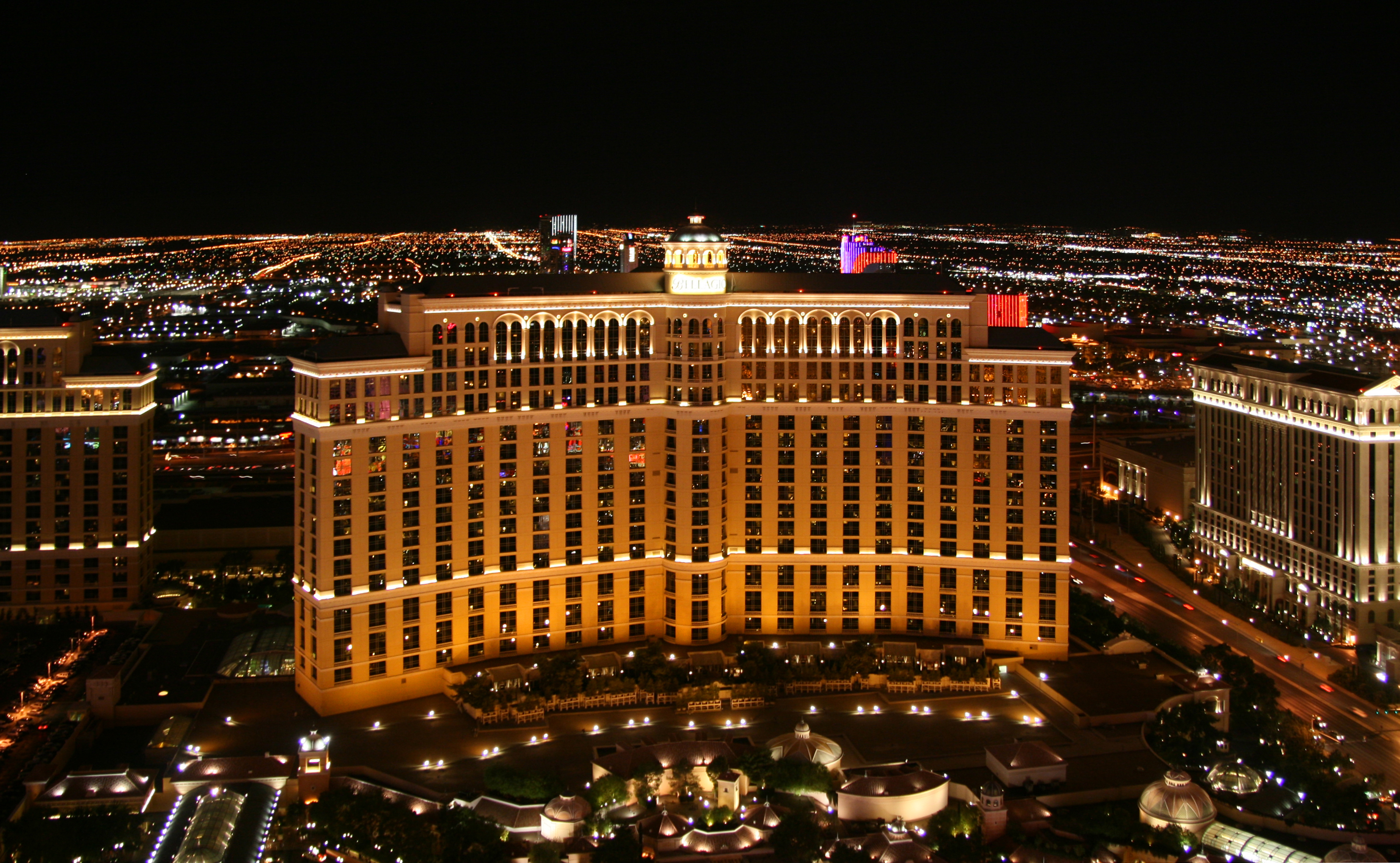
That context changes how the Strip itself is worth experiencing during race week, separate from anything happening on track. Vegas's resorts are built for night viewing — the Strip's landmark recreations (the Eiffel Tower at Paris, the New York skyline at New York-New York, the canals of Venice) are designed to be seen after dark, when neon and LED lighting do the work sunlight can't. The STRAT's observation deck, at 1,149 feet, gives a view across the entire glowing Strip from above, genuinely different from the street-level walk. The High Roller Ferris Wheel does something similar closer to the ground, lit in shifting neon as it turns.
Pedestrian bridges cross Las Vegas Boulevard at several points along the Strip, keeping foot traffic separated from vehicle lanes — useful year-round, and specifically useful during race week when the road itself may be closed anyway. Walking the Strip after dark during race week means doing it alongside a genuine spectacle built on top of the usual one: race cars, concert stages, and fan zones layered onto a street that was already designed to be seen exactly this way at night.
Why it's special
Understanding why this race exists changes how you experience the week around it. Liberty Media didn't drop a circuit into Las Vegas, it built the entire event as a piece of entertainment the city was already built to host — the Strip's night lighting, its landmark recreations, its culture of spectacle were all already there, and the race was designed to sit inside that rather than compete with it. I'd tell anyone walking the Strip during race week to notice how deliberately the two things reinforce each other: the neon was built for tourists decades before F1 arrived, and the race was built, quite literally, to run through it rather than around it. That's a genuinely different premise than any other Grand Prix on the calendar.