Sumo is one of those experiences a lot of visitors to Japan assume they'll need to plan a whole separate trip around, and for the real professional tournament, that's mostly true — worth being upfront about before recommending anything here.
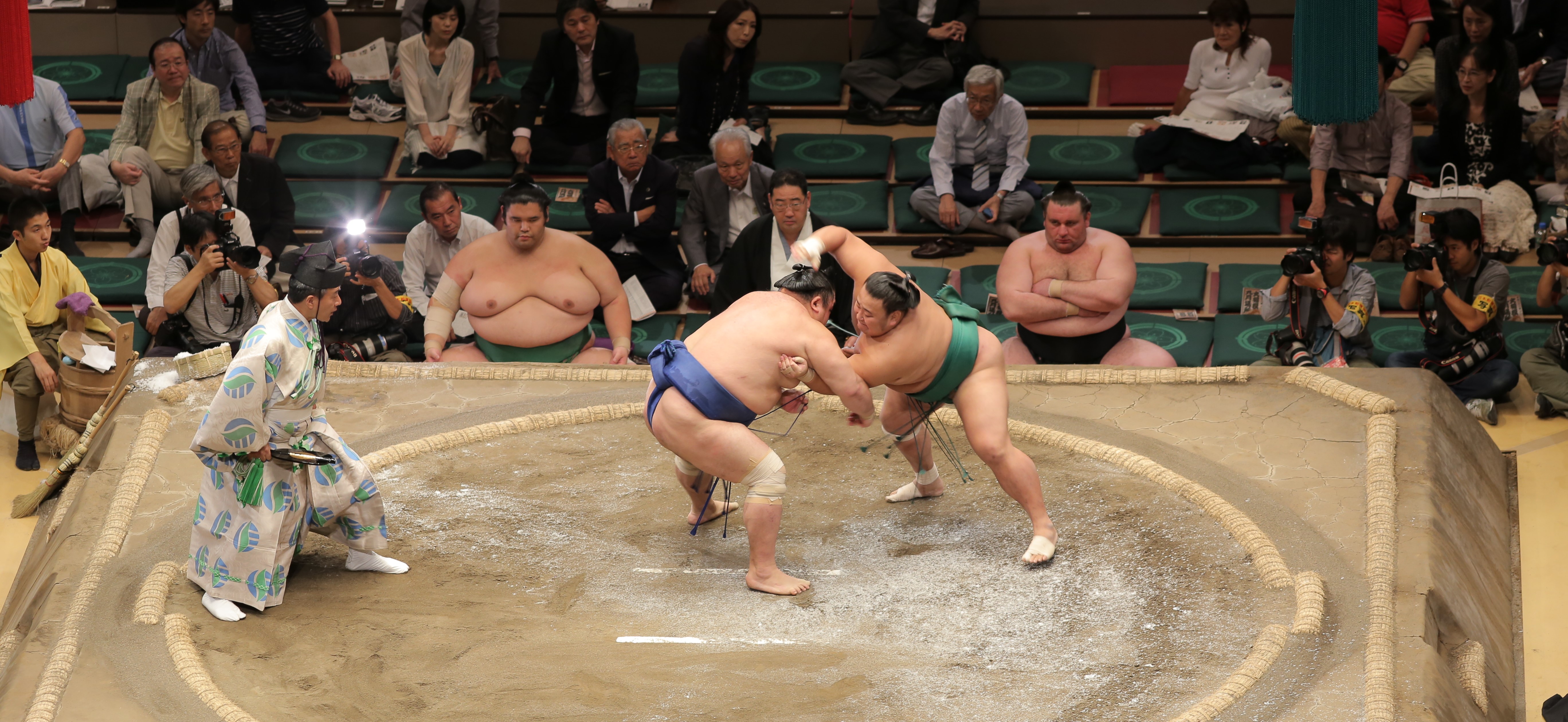
Nagoya does host a genuine grand sumo tournament: the Nagoya Basho, a full 15-day professional event held every July at IG Arena, right next to Nagoya Castle. It's the real thing — professional rikishi competing across every division, with proper tamari ringside seats, traditional tatami box seating, and Western-style chair seating for anyone who'd rather sit in something familiar. But July is the operative word — a Grand Prix trip in April sits nowhere near this tournament's calendar, so if watching a real Basho is the goal, that's a separate trip, not something to fold into race weekend.
What does actually work for an April visit is Sumo Studio Osaka, about fifty minutes from Nagoya by train — not a tournament, but a genuine, year-round interactive program worth being clear-eyed about rather than oversold. It's a 90-minute session led by a former professional rikishi, in English, combining live demonstration with hands-on participation — you get to step onto a real dohyo yourself, not just watch from a seat. It's the honest alternative for anyone visiting outside July: a real, structured introduction to the sport from someone who actually competed, rather than a tournament seat you can't get at this time of year.
The distinction matters. This isn't a lesser version of watching the Basho — it's a genuinely different kind of experience, closer to a masterclass than a spectator event, and for a lot of first-time visitors it's arguably a better introduction to the sport's actual technique and culture than watching from a distant seat at a full tournament would be.
If your Suzuka trip happens to land in July on a future edition, plan around the Nagoya Basho properly and treat it as the real thing it is. For an April visit, Sumo Studio Osaka is the genuine, bookable option — not a consolation prize, just a different and honestly good way to actually engage with the sport.
Why it's special
Most sumo content aimed at tourists either oversells a generic "sumo show" as equivalent to the real tournament, or doesn't mention the seasonal mismatch at all. Being upfront that Nagoya's actual grand tournament is a July-only event — genuinely irrelevant to an April Grand Prix trip — and then pointing to a real, honest alternative instead of a vague generic "sumo experience" is what makes this worth including at all.