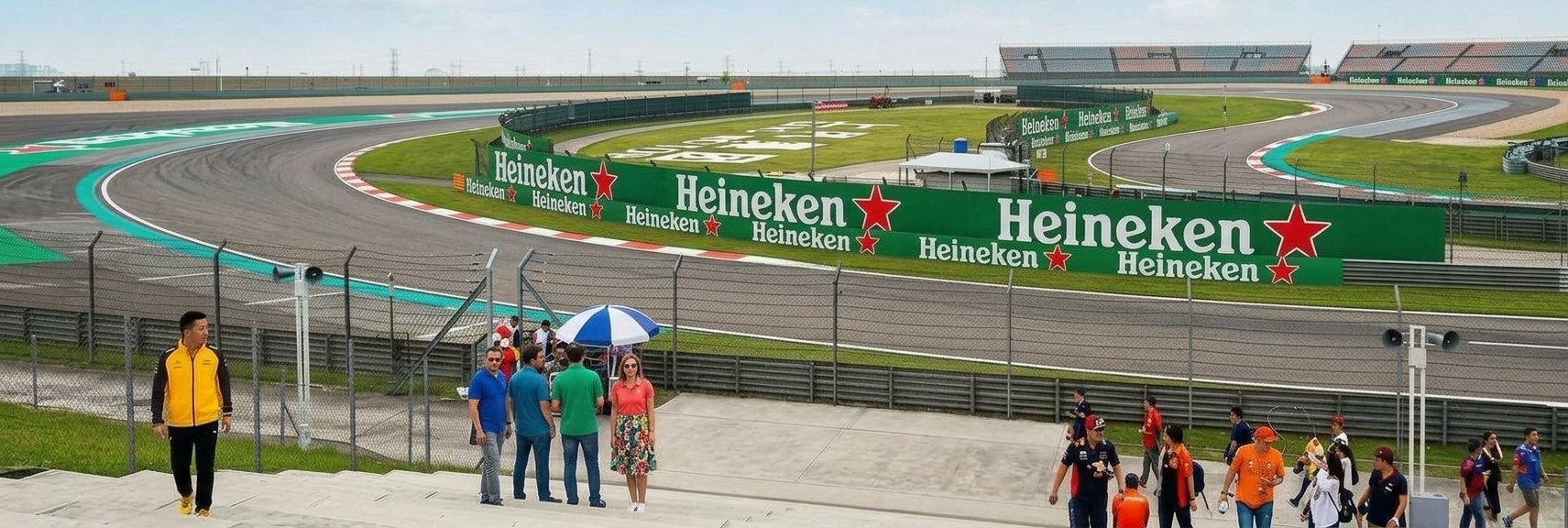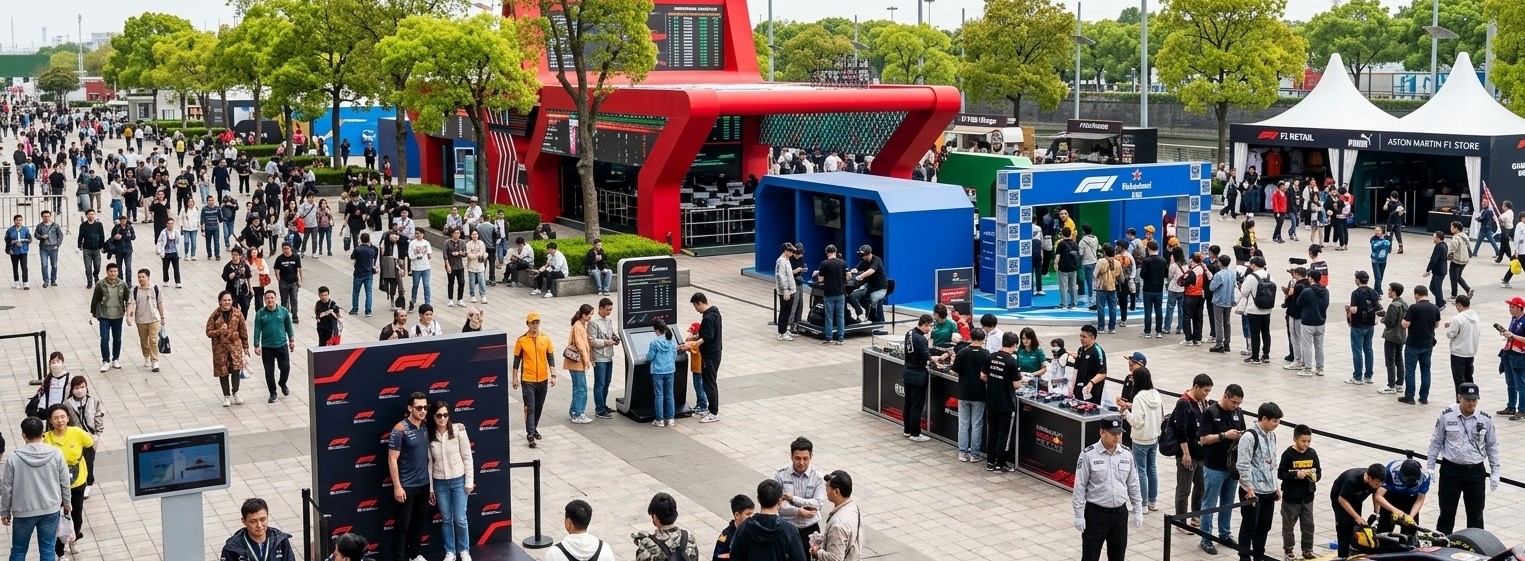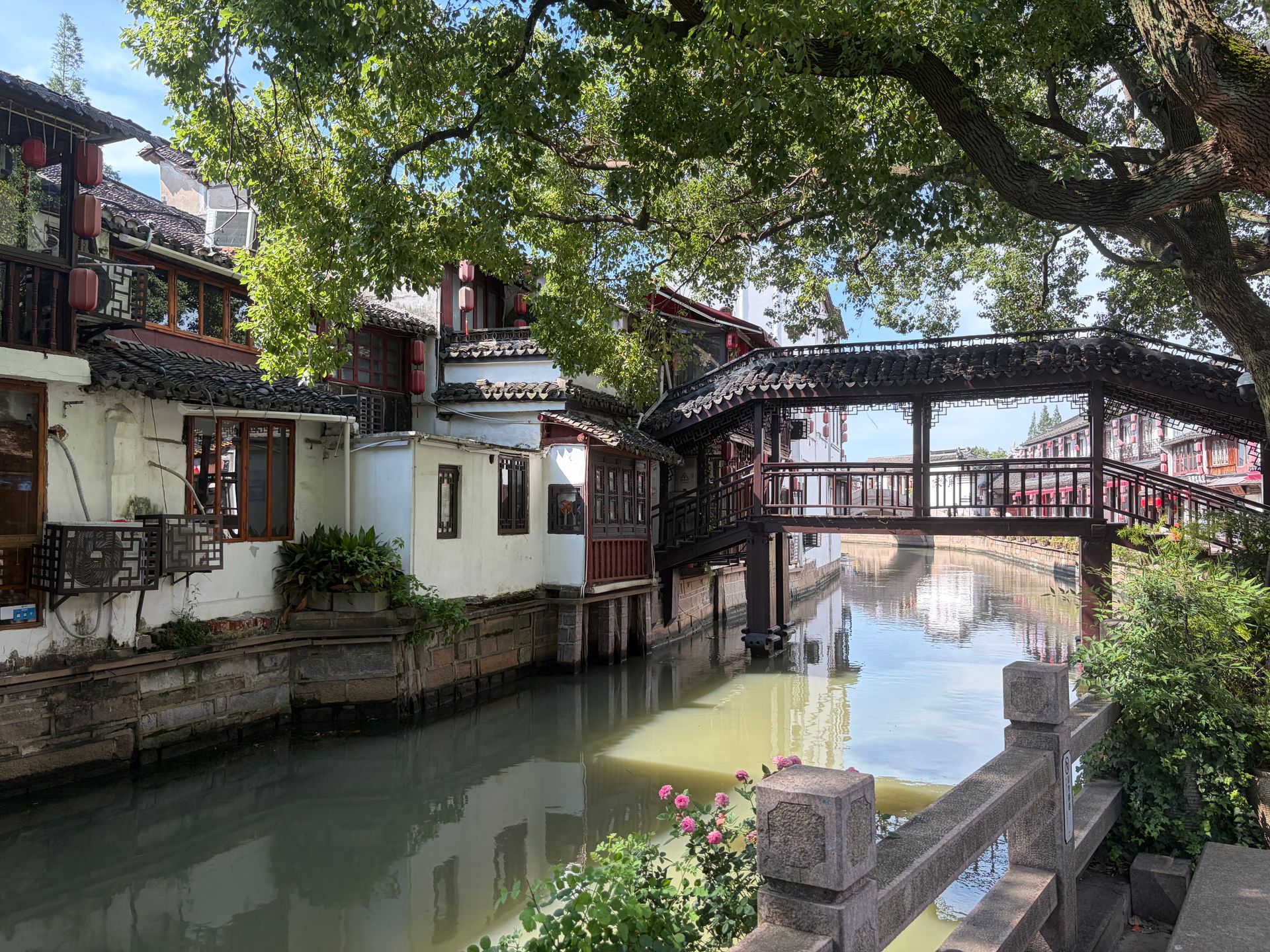
Anting Old Street sits a short distance from Shanghai International Circuit, and the contrast between the two places is the whole point of visiting. The circuit is glass, tarmac, and modern automotive infrastructure. Anting Old Street traces its history back to 239 AD, when the Puti Temple was built and a town gradually grew up around it — one of the oldest settlements in what's now Shanghai's Jiading District, restored to reflect its Ming and Qing dynasty character.
The street follows a genuine "road-river-street" layout, built along the Anting River with the historic Yansi Bridge, dating to the Ming dynasty, at its center. Traditional buildings line both sides, housing snack restaurants, tea shops, fruit sellers, and craft stores selling porcelain and local specialties. Mornings bring real local commerce — vendors, foot traffic, the sounds of an actual working street rather than a preserved museum piece — with a quieter afternoon lull that picks up again as local schools let out.
This is casual, inexpensive eating: traditional Shanghai and Jiangnan-region snacks rather than a sit-down restaurant experience, closer in spirit to grazing your way down a market street than booking a table. It's exactly the kind of stop that fits naturally around a race weekend — close enough to the circuit to visit in a spare few hours between sessions or on the day you arrive, without requiring a dedicated trip into central Shanghai.
The old street sits in direct, almost pointed contrast to the modern Shanghai International Auto City development that now surrounds it — worth noticing as you walk from one to the other, since it's a genuinely rare thing to have nearly 1,800 years of continuous local history sitting a short walk from a Formula 1 circuit.
Why it's special
Most race weekends offer a choice between the circuit and a long trip into the host city's actual character — Shanghai's version of that trade-off is usually framed as Jiading versus downtown, full stop. Anting Old Street breaks that framing. It's genuine historic Shanghai, dating back nearly 1,800 years, sitting close enough to the circuit that it doesn't cost you a commute to experience it. For a visitor whose race-weekend schedule doesn't leave room for a full downtown day, this is what "seeing real Shanghai" looks like without sacrificing time you'd rather spend at the track. The food here won't be the most refined meal of your trip, but it's an honest one, and the setting — a working river-street town that's been here since long before the automotive industry arrived next door — earns its place on the list.