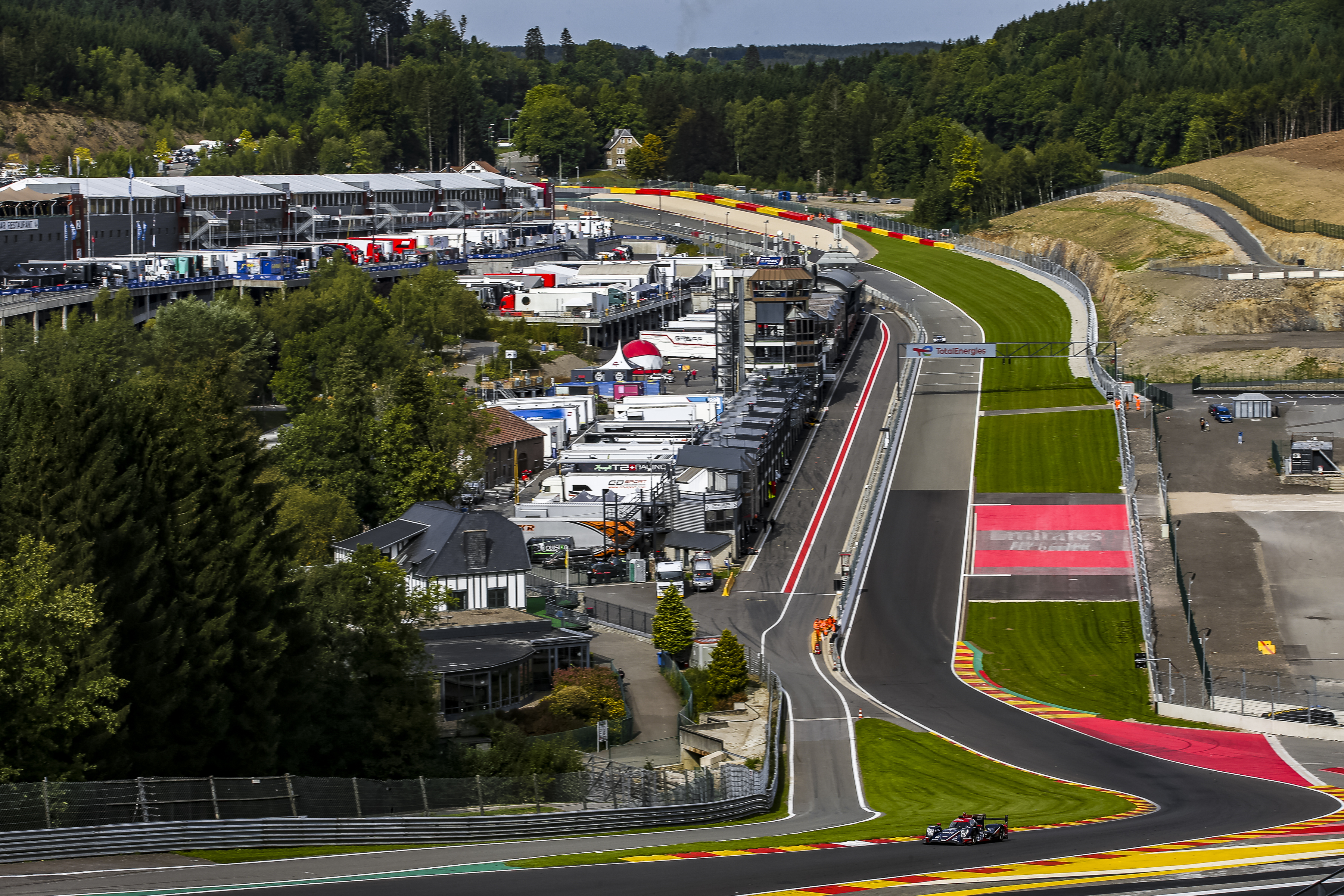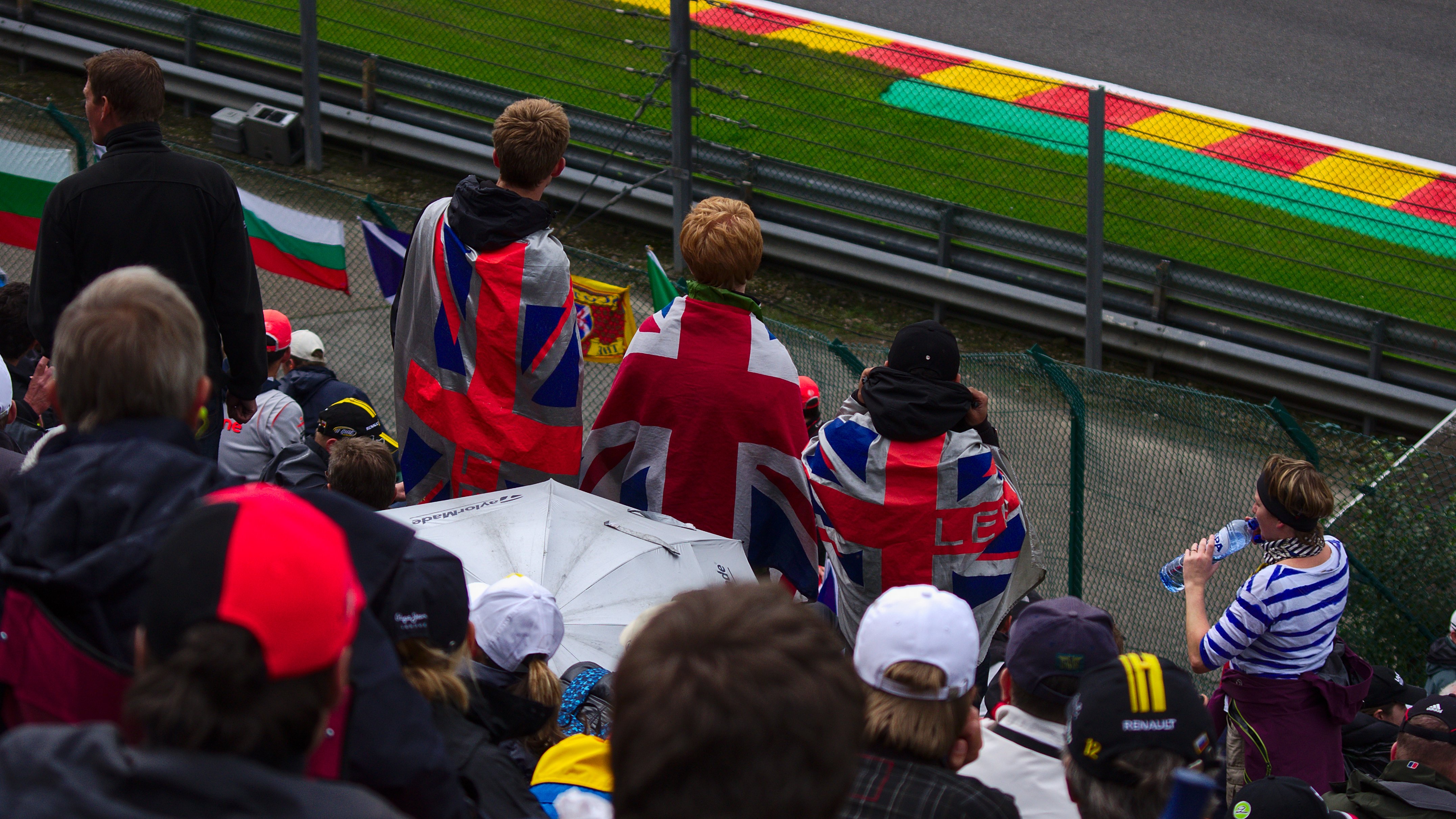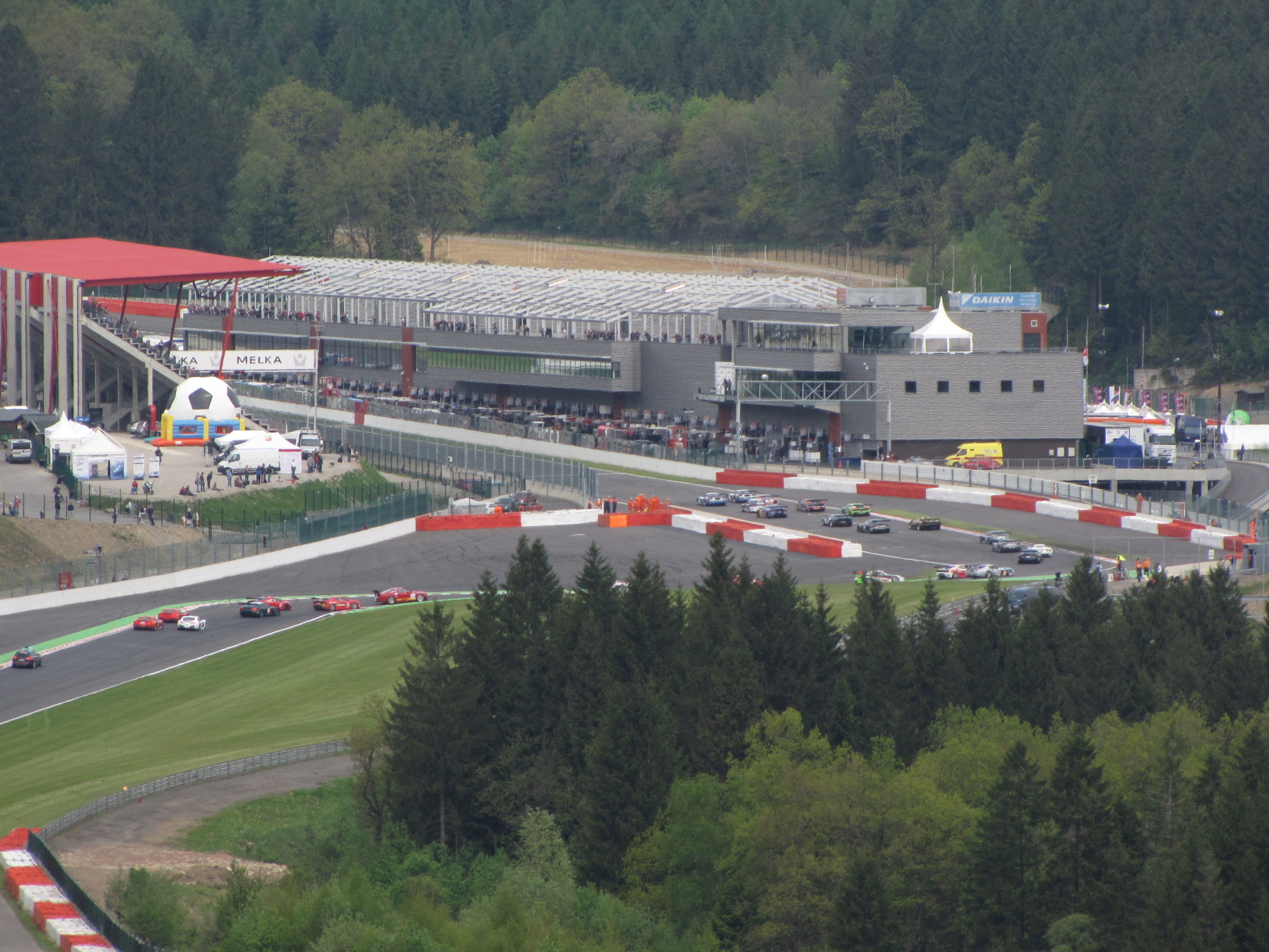
The Bus Stop Chicane is the final corner sequence at Spa-Francorchamps before the pit straight — a tight left-right flick named, as the official circuit history records it, after a public bus stop that once stood on this stretch of road when it still doubled as an open public highway between race weekends. It's the last place on the lap where a position can change before the start-finish line, which makes the two grandstands here, Gold 6 and Gold 11, genuine end-of-lap tension points.
Gold 6 sits at the heart of the chicane itself — the direct view of the corner sequence, cars snapping left then right under braking after a long run down from Blanchimont. Gold 11 is positioned at the exit, giving a different angle: the final two corners plus the entrance to the pit lane, so you see not just the chicane but what happens immediately after it — cars peeling into the pits, or continuing on toward the line.
Because this is the last corner of the lap, it carries a specific kind of significance that earlier sections of the circuit don't. A move made here, successful or not, is the one a driver carries across the line. Defensive lines get tighter, braking gets later, and mistakes are costlier because there's no following straight to recover lost time. It's also the corner where fuel-saving strategies and tyre management most visibly run out — a driver nursing a worn set of tyres through 6 kilometres of fast corners can find the chicane is where it finally catches up with them.
Both grandstands are reserved, numbered seating. Gold 11 is a premium variant with a view extending into the pit lane entrance, useful if you want to track strategy calls as cars dive in for a late stop.
Why it's special
Spa-Francorchamps is built around a handful of corners that each tell a different part of the story — Eau Rouge for commitment, Les Combes for tactics, La Source for proximity to the chaos of a standing start. The Bus Stop Chicane tells the final chapter: what happens when 6 kilometres of racing comes down to the last 200 metres before the line.
Its naming is a small piece of the circuit's own history — a reminder that Spa-Francorchamps began as, and in parts still resembles, a public road circuit threaded through the Ardennes forest, not a purpose-built racetrack. Watching the modern chicane that replaced the old public bus stop is a way of seeing that history made physical.
Positionally, this is also simply a high-tension seat: the last corner means the last chance to make or defend a move, and years of Spa races have been decided here in the closing laps — cars running out of tyre life, fuel-saving strategies reaching their limit, drivers forced into one final defensive line before the chequered flag. For a fan who wants to watch a race's tension resolve in real time, rather than unfold gradually across a long straight or technical sequence, the Bus Stop Chicane is where that resolution happens.