Helge Høifødt, CC BY-SA 3.0
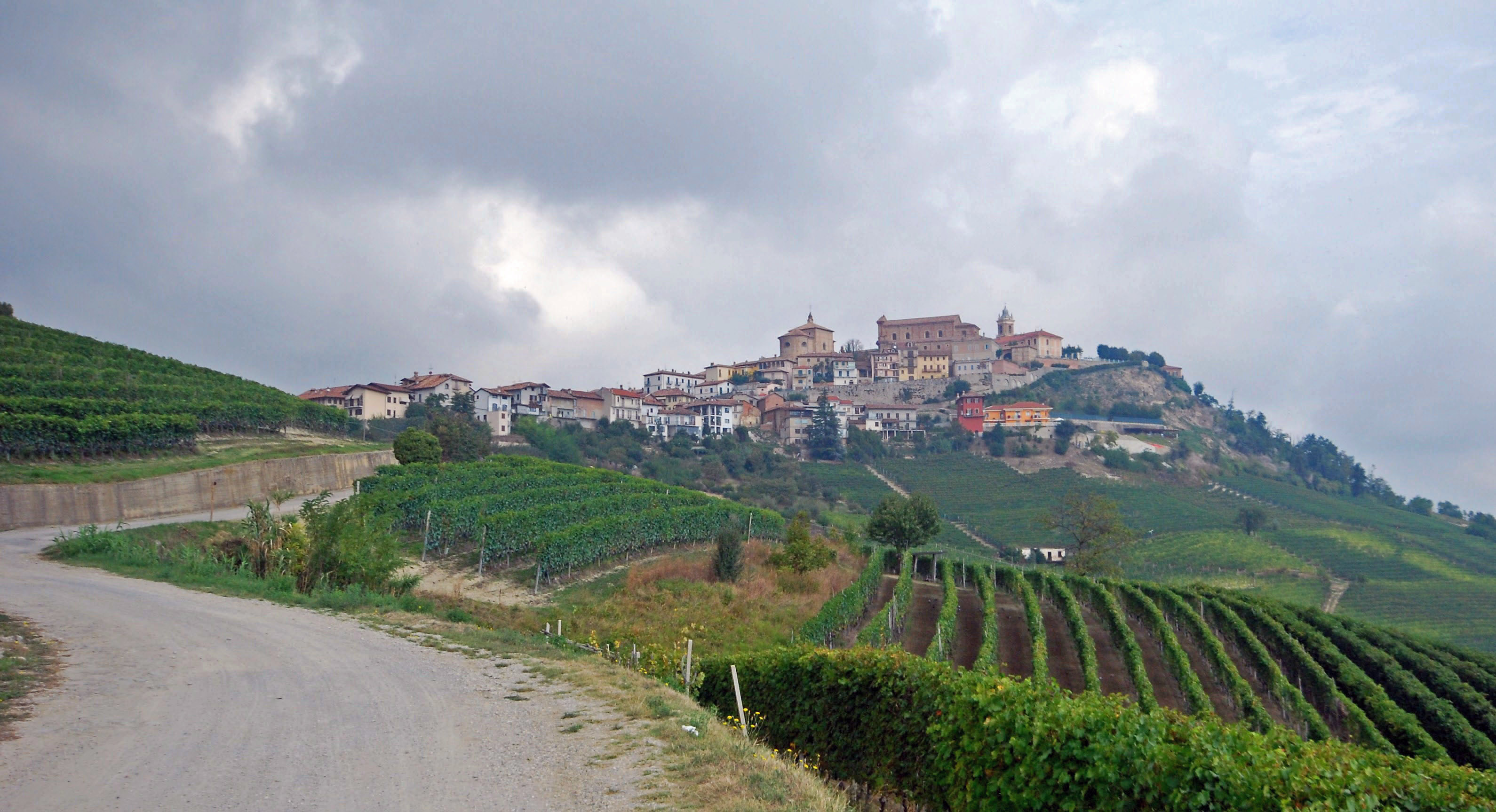
UNESCO wine hills 80km south of Turin, source of the Nebbiolo wines on every restaurant list
The Langhe hills, UNESCO-listed for their wine landscape, sit roughly 80km south of Turin. This is Nebbiolo country: the one grape behind both Barolo DOCG and Barbaresco DOCG, aged a minimum of 38 months (18 in oak) for Barolo and 26 months (9 in oak) for Barbaresco, which is why Barolo tends to be the more powerful, slower-maturing wine and Barbaresco the softer, more aromatic one. If you want to taste the grape without the Barolo price tag, ask for Langhe Nebbiolo DOC, the entry tier from the same vines with no minimum ageing requirement.
Barolo DOCG covers 11 communes, and which one a wine comes from says a lot about its style. The split is geological: western villages sit on younger, sandier Tortonian soil, eastern villages on older, harder Serravallian soil. La Morra and the village of Barolo itself sit on the Tortonian side and produce the most perfumed, rounder wines, more approachable young. Serralunga d'Alba and Monforte d'Alba sit on Serravallian soil and produce Barolo built to age 15 to 25 years, structured and slow to open. Castiglione Falletto sits between the two, with mixed soils giving something in between. Knowing this before you taste turns a random flight of Barolo into an actual comparison.
Two other Piedmont reds worth trying alongside Nebbiolo, since most restaurants pour them too: Barbera, bright acidity and low tannin, the region's everyday drinking wine, and Dolcetto d'Alba, dry despite the name, soft dark fruit with firm tannin, drunk young.
Four stops make sense for a single day, and each shows a different side of the region.
Marchesi di Barolo, at Via Roma 1, 12060 Barolo, sits on the site of the historic Falletti cellars, the actual birthplace of Barolo as a wine. Open daily 10:30-18:00, booking required (+39 0173 564419). See live rating and reviews on Google Maps.
Fontanafredda, at Via Alba 15, 12050 Serralunga d'Alba, runs "The Barolo of Serralunga," a 90-minute, €45 tasting comparing three expressions from the same commune, in English, year-round including November. The estate was built as a royal hunting property and now also houses a Michelin-starred restaurant. See live rating and reviews on Google Maps.
Vietti, at Piazza Vittorio Veneto 5, 12060 Castiglione Falletto, holds some of the most respected vineyard sites in the zone, including Rocche and Villero, and is the best-reviewed of the four. Tours run at fixed times through the day; book ahead. .
Why it's special
What makes this worth the travel time, rather than treating Turin's city sights as sufficient on their own, is that the Langhe is where Piedmont's food and wine identity actually comes from, not a curated urban version of it. Understanding the commune split before you go changes the day: instead of a generic flight of "Barolo," you're tasting the actual geological reason La Morra's wines are perfumed and Serralunga's are built to age two decades. Marchesi di Barolo puts you in the literal birthplace of the wine; Vietti and Fontanafredda show two different serious producers' takes on the same grape from different soils; the Enoteca lets you taste across all 11 communes side by side if you'd rather compare than commit to one cellar. For a genuinely committed food-and-wine traveller, standing in the hills that produce what you've been drinking in Turin's restaurants all week closes a loop the city alone can't offer.
November timing works in your favour here too. Harvest is over, so cellars are pouring the new vintage from barrel alongside older bottles already open, and the Alba White Truffle Fair runs the entire length of ATP week, so a Langhe day can double as a truffle-market stop if timing allows.
Fontanafredda's tasting is the one to book if you want a fixed price and a confirmed November slot: €45, 90 minutes, English-language, comparing three Barolo from the same Serralunga commune so you can actually taste the difference terroir makes within one village.
The Enoteca Regionale del Barolo only opens Thursday to Sunday — a Monday-to-Wednesday day trip will find it shut, so check your match schedule against the calendar before building a route around it.
Affiliate link — we may earn a small commission at no extra cost to you.
Don't attempt this on a day with an early-afternoon match session — the travel time alone (1.5 hours each way, plus time in the region) doesn't leave enough margin for a session before mid-to-late afternoon at the earliest, and a rushed return risks missing your session entirely.
To taste across producers rather than committing to one winery's cellar, the Enoteca Regionale del Barolo, inside the Castello Falletti at Via Collegio Barolo, 12060 Barolo, pours over 120 Barolo labels spanning all 11 communes. It only opens Thursday to Sunday, 10:30-18:30, so check the day of your visit before building it into the plan. See live rating and reviews on Google Maps.
By car, Barolo village is about 50 minutes from Turin on mostly scenic roads; the villages themselves are close together once you're in the zone, Barolo to La Morra is under 10 minutes. By train, Torino Porta Nuova to Alba takes about 1.5 hours, but that puts you in Alba rather than the hilltop villages, which are easier reached by car or a private tour from there.
A realistic day looks like two winery visits plus one village stop, not three tastings squeezed into an afternoon. A documented loop covering Barolo, La Morra and Grinzane Cavour runs to roughly 3 hours 15 of pure driving, which is the real reason to book a driver rather than self-drive after tasting: not luxury, just the maths of wine and roads.