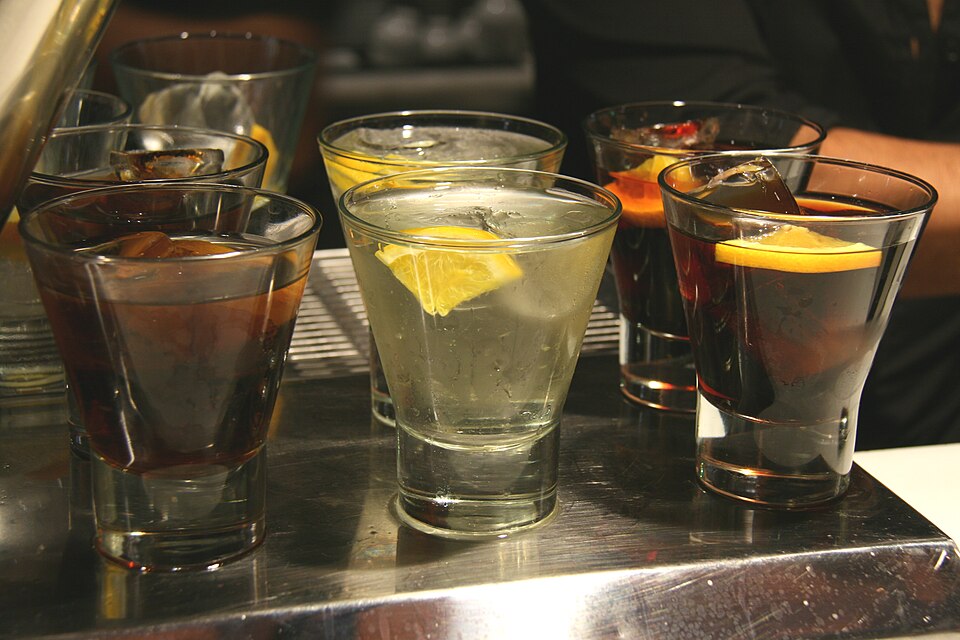
Turin is where vermouth was first produced, dating to 1786 — before Milan, before anywhere else associated with Italian aperitivo culture claims the tradition, it started here. That history is the reason Turin's aperitivo scene isn't a generic version of something you'd find across Italy; it's the source.
The format is specific to the city: order an evening drink — traditionally vermouth itself, though the tradition has expanded to cover a wider range of aperitivo drinks — and it typically arrives with a genuinely generous buffet included, not a small bowl of chips. This is standard practice across Turin's bars during aperitivo hour, not an upsell or a premium option at a few select spots.
Piazza San Carlo's historic cafés are the most atmospheric place to do this, and two are worth naming specifically.
Caffè Torino, at Piazza San Carlo 204, inaugurated in 1903 under the square's arcades, is the most historically significant — a meeting place for Turin's academics, writers, and politicians for generations, with figures like Cesare Pavese and Luigi Einaudi among its documented regulars. See live rating and reviews on Google Maps.
Caffè San Carlo, at Piazza San Carlo 156, open since 1822, is the older of the two — the first café in Europe lit by gas lamps, and a genuine Risorgimento-era gathering place for politicians and intellectuals including Antonio Gramsci. Its interior (statues, gilded stucco, crystal chandeliers) is worth the visit on its own, reopened in 2022 as part of the Gallerie d'Italia project. See live rating and reviews on Google Maps.
The tradition runs across the whole city — Turin residents genuinely treat aperitivo hour as a real, near-daily social ritual, not a special-occasion outing. For a visitor with match sessions structuring the day, an early-evening aperitivo before a night session, or after an afternoon one, fits naturally into the schedule the tournament itself creates.
Why it's special
The detail that reframes this for most visitors is the origin date — 1786 puts Turin's vermouth tradition well over two centuries deep, and treating aperitivo here as "the same as anywhere in Italy" misses that this is genuinely the source city, not a participant in a wider trend. Ordering a vermouth specifically, rather than defaulting to a spritz or another more internationally familiar aperitivo drink, is the more authentic choice here — it's asking for the thing Turin actually invented, in the city that invented it.