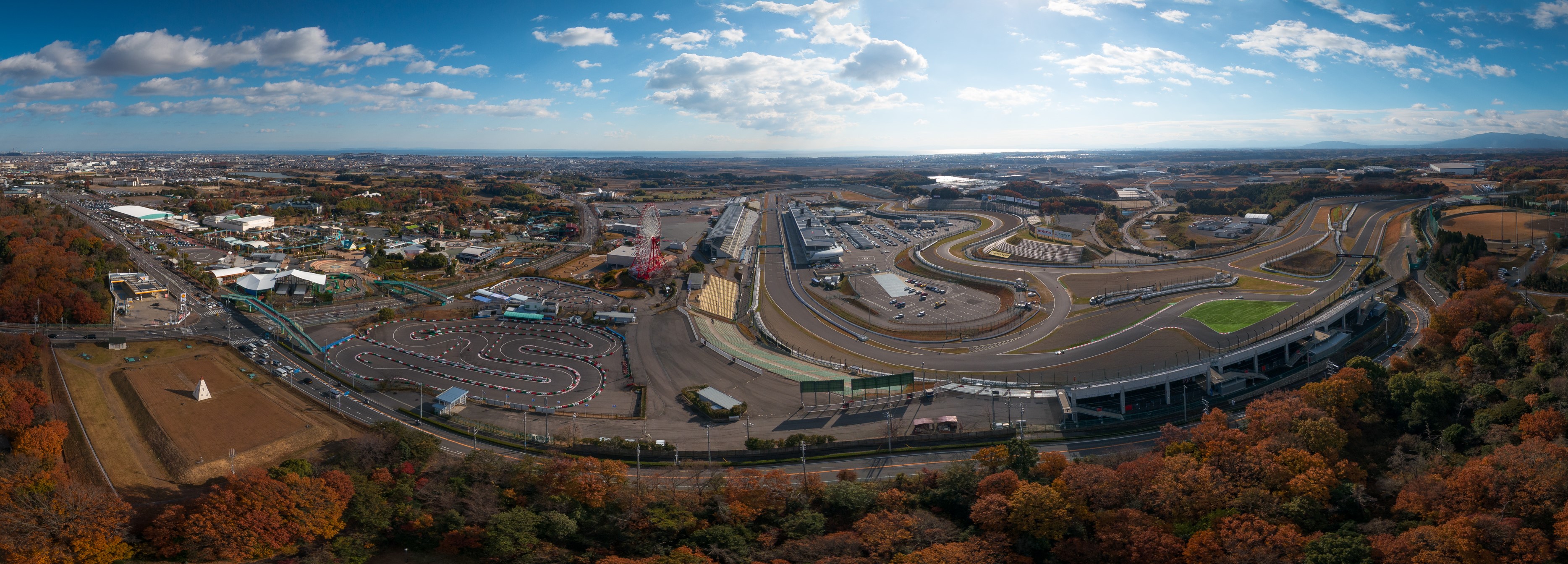
Suzuka opened in 1962 as Japan's first full-scale international racing course, built on the conviction of Honda founder Soichiro Honda that racing was essential to improving road cars. Dutch designer John Hugenholtz gave it a genuinely unusual layout — a figure-eight, with the track crossing over itself on a bridge after the Dunlop Curve — rather than the simple loop most circuits use. The Esses and 130R, both on this course, are among the most respected sequences in motorsport specifically because that figure-eight layout demands a different kind of car balance from a standard circuit.
Circuit Map
Credit: suzukacircuit.jp
The map above marks the circuit's grounds in full — the East Course (the Grand Prix layout), the grandstands ringing turns 1 through the final corner, Suzuka Circuit Park and Motopia sitting inside the venue rather than beside it, and the entrance gates covered in the Arrival guide. Unlike most F1 venues, Suzuka is genuinely a single site that's part race track and part amusement park — the map reflects that, rather than showing a track with a car park attached.
Motopia — more than 30 attractions, not a token kids' corner
Boats and mini-cars for younger kids, a small circuit-style coaster, an electric-cart track, and seasonal additions like a Ferris wheel and a summer pool complex. Suzuka Circuit Park runs on its own seasonal schedule, independent of the Grand Prix calendar — a genuine option for a rest day before or after the race.
Honda Racing Gallery — real cars, not replicas
Sits inside the GP paddock area — a real museum covering Honda's motorsport history, with actual F1 cars and MotoGP bikes on display. Pair it with the Main Theater, which replays historic F1 races on a 19-metre screen with a full sensory sound system, for a genuine sense of what Suzuka has meant to the sport across decades. It runs on Suzuka Circuit Park's general opening hours (typically 9:30am-5pm, seasonal) — how long a visit actually takes isn't published anywhere, so build in flexible time rather than assuming a quick stop.
Circuit Challenger — a real lap of the actual F1 track
The detail that separates Suzuka from almost every other F1 venue: an electric kart, developed with input from racing driver Takuma Sato, that you can drive yourself around the actual East Course — start/finish straight, first corner, S curves — on non-race days. Not the full-speed experience the drivers get (top speed is 35 km/h against a real F1 car's 350 km/h), but a genuine lap of a real Grand Prix circuit, something very few venues in the world let ordinary visitors do at all.
On-site facilities
Food inside the circuit — genuinely more than concession-stand basics
Grandstand-area stalls cover a real spread — Suzu-tako for takoyaki, Suzu-kara for fried chicken, Yonakiya for ramen, CoCo Ichibanya's curry, and Ise Udon among them — alongside Suzuka Circuit Park's own kitchens in the Putti Town and Adventure areas. Course Side Pizzeria "Grand View" is the one worth planning around specifically: real pizza and gelato from 84 trackside seats overlooking Ise Bay. The Center House restaurant "SUZUKA-ZE" runs 10:00am-2:00pm (170 seats) with dishes like stamina sticky udon and pork cutlet curry, both around ¥1,480.
Standard trackside meals run roughly ¥1,000-2,500, soft drinks around ¥250, beer around ¥500. Premium pre-order bento from Nadaman are the other real option — from a ¥3,000 sukiyaki-sauce box up to a ¥10,000 Kobe/Matsusaka/Iga beef kaiseki box, ordered ahead rather than bought on the day. Cash remains the most reliable payment method — cashless is accepted at Center House and growing elsewhere, but isn't universal, and some vendors have genuinely run out of food and drink later in the day on busy sessions, so don't plan on eating late in the afternoon as your only option.
Toilets & accessibility
Toilets are available at each parking lot, including temporary race-weekend lots, with dedicated baby-care rooms for feeding and diaper changes. The circuit is equipped with elevators, ramps, and designated accessible seating for visitors with disabilities.
Phone signal on race day
Mobile networks can become overloaded during the race weekend, Sunday worst of all — download maps, tickets, and anything else you need before you arrive, and agree a physical meeting point with anyone you might get separated from rather than counting on being able to call or message them.
Noise — bring earplugs if you're close to the track
Standard grandstands are loud but manageable; anywhere genuinely close to the track is not, and earplugs are a real, practical add rather than overcaution — worth it for kids specifically.
Age restrictions
Children aged 3 and older need their own ticket, and must be supervised by an adult at all times — plan around this if you're bringing a family.
What we'd actually do
If you've got any non-race time built into the trip, the Honda Racing Gallery and a Circuit Challenger lap are the two things worth prioritizing over the rest of Motopia's attractions — real motorsport history and a genuine lap of the actual circuit, both things you can't get anywhere else on the calendar.