Rivalry
Federer vs. Nadal, 2008 — The Final That Changed What a Final Could Be
Tennis·2 min read·July 29, 2026
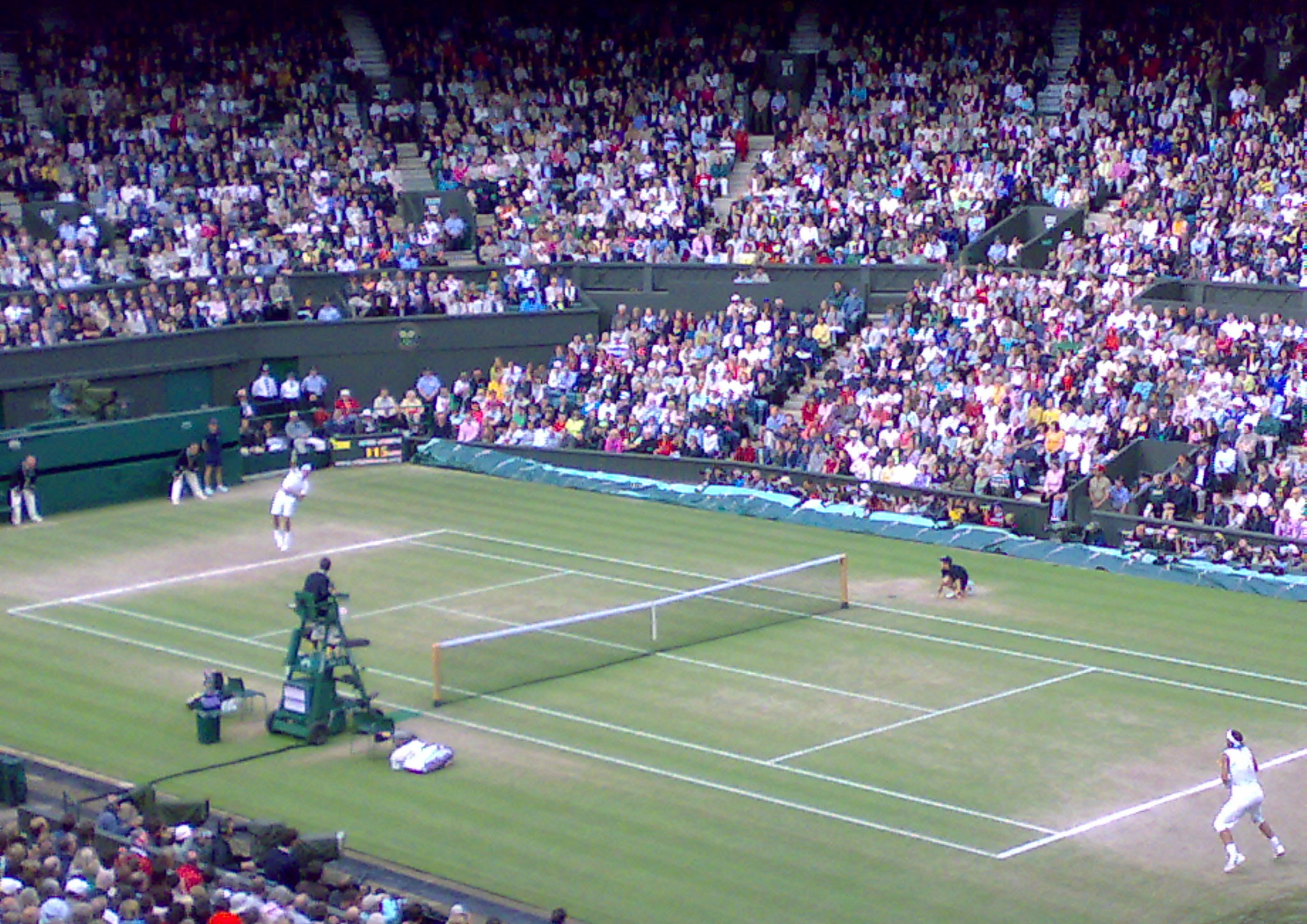
David Underdown, CC BY-SA 3.0
The 2008 Wimbledon final ended at 9:15pm, in light so dim that Hawk-Eye's cameras reportedly started misfiring on their own. Nobody who watched it needed the technology to tell them what they'd just seen.
A final that had already been played twice
Roger Federer had beaten Rafael Nadal in the previous two Wimbledon finals. By 2008, the rivalry had a clear shape: Nadal dominated on clay, Federer held the edge on grass, and neither man had done much to change that pattern at the All England Club. Nadal won the first two sets, 6-4 and 6-4 — the kind of start that, against most other opponents, would have ended the conversation.
Federer didn't let it end. He won the third and fourth sets in tiebreaks, 7-6 in both, dragging the match to a deciding fifth set neither player looked ready to lose.
The match rain wouldn't let finish
Three separate rain delays interrupted play across the afternoon and evening — a 35-minute delay before the match even started, an 80-minute break during the third set, and a further 30-minute stoppage as the match ran into the evening. By the time the fifth set reached its final stages, natural light was disappearing over Centre Court, and tournament officials were weighing whether to suspend the match until the following day.
Nadal closed it out before that decision had to be made: 9-7 in the fifth, after 4 hours and 48 minutes of play. It's often remembered as the longest Wimbledon final ever — that was true at the time, but the 2019 Djokovic-Federer final has since gone longer, at 4 hours 57 minutes. Length was never really the point of why people remember 2008; the quality of tennis played inside that time was.
Why this one still gets cited as the standard
Plenty of long matches exist. Fewer are still cited, nearly two decades later, as the match other great finals get measured against. The 2008 final worked because both players were near the peak of what they'd become — Federer's grass-court precision against Nadal's relentlessness — and neither blinked first, even as the light ran out on them. Nadal's win that day didn't just end a streak. It rewrote what people expected a Wimbledon final between the two of them could look like.